The Abbey Art Centre Postwar Utopianism and Postnational Modernism
In Utopia, the corridor always promises radical social re-assemblage.
—Roger Luckhurst, Corridors: Passages of Modernity
Artists’ colonies are usually based on notions of freedom, being close to nature, and found in rural or outlier locations, and are regarded as a “perfect antidote to the negative consequences” of a technological or capitalist society.1 They are also often utopian, attracting individuals united by specific ideologies and practices and who are transitional transnationals.2 Established on the outskirts of London by the British-born German art dealer William Ohly in 1947, and still in existence, the Abbey Art Centre is all of these and more. It falls into the category of exile, where displaced refugee German and Austrian Jewish artists resided. It was also where a swathe of young Australian artists lived between 1947 and 1954; there they were able to anchor themselves within a newly formed cosmopolitan community that traversed national boundaries within a single location, exchange ideas about modernism and traditions, and create new art amidst an extraordinary collection of reliquaries, eclectic buildings, antiquities, and ethnographic art.
In the years immediately after the war, when geo-political, economic, and cultural reconstruction was a priority in Britain, and decolonisation and the Cold War had begun, utopianism emerged as a desirable ideology. A similar response occurred at the end of the Great War, when “Utopia’s gates were opened” and, as Fredric Jameson reminds us, utopias have always been political.3 Indeed, utopianists often emerge from “fallen societies” or from the horrors of repression,4 and William Ohly’s escape from Nazi Germany and his establishment of the Abbey Art Centre exemplifies this perspective.5 Decentralised enough on the northern rail corridor for the refugees and outsiders to reposition themselves as they acclimatised to a new country, it gave accessibility to London and its art galleries, theatres, and cinemas—all popular postwar activities associated with British cultural reconstruction. Compared to the dystopian austerity of postwar London, the Abbey Art Centre at New Barnet was utopian in both concept and function. The Scottish painter Alan Davie (fig. 1), who lived there with his family from 1949 to 1954, found it conducive to his autonomy and creativity, and the pioneering German animator Lotte Reiniger (fig. 2) and her filmmaker husband Carl Koch found it attractive for much the same reason, contentedly living at the Abbey for decades.
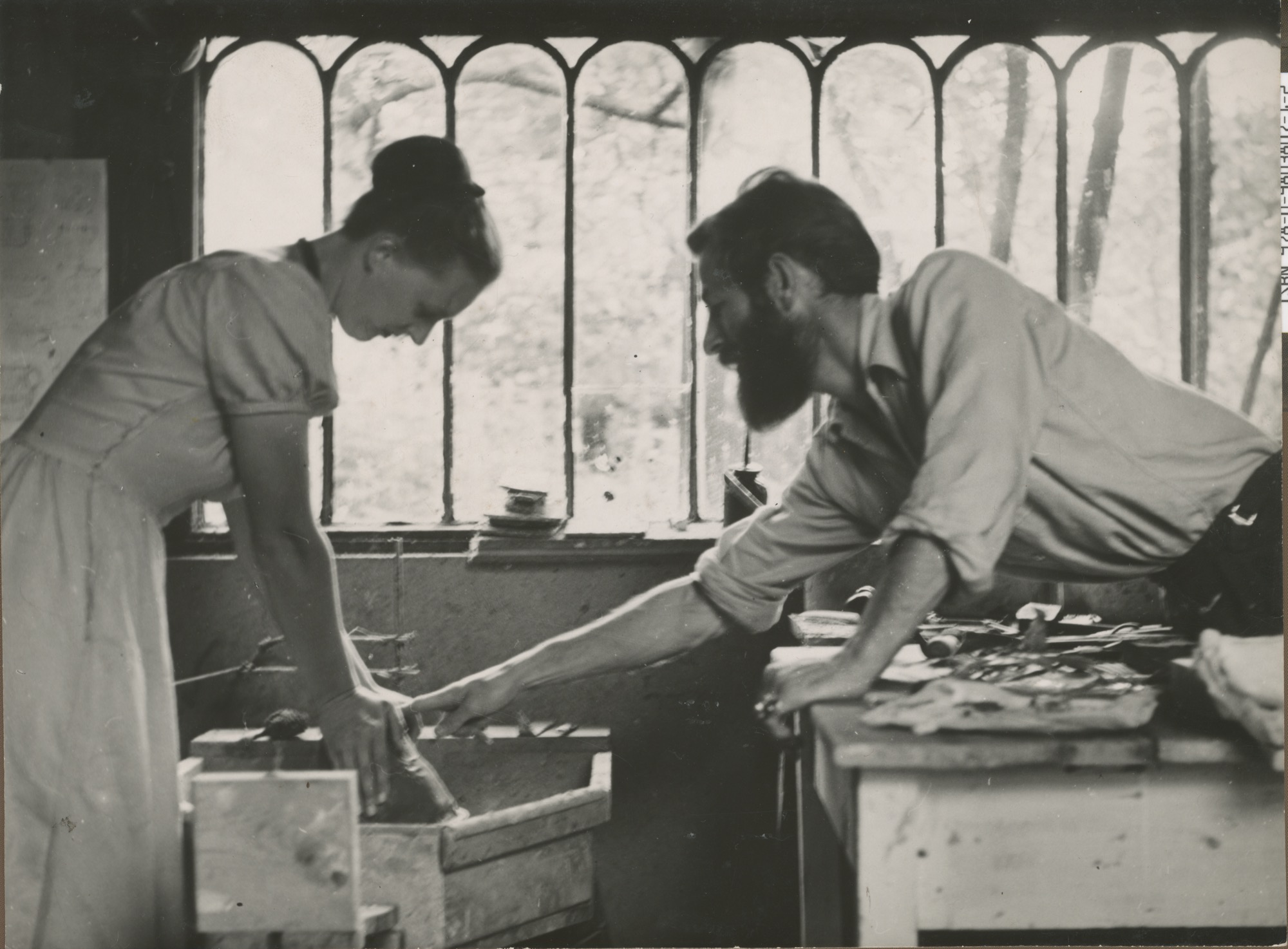
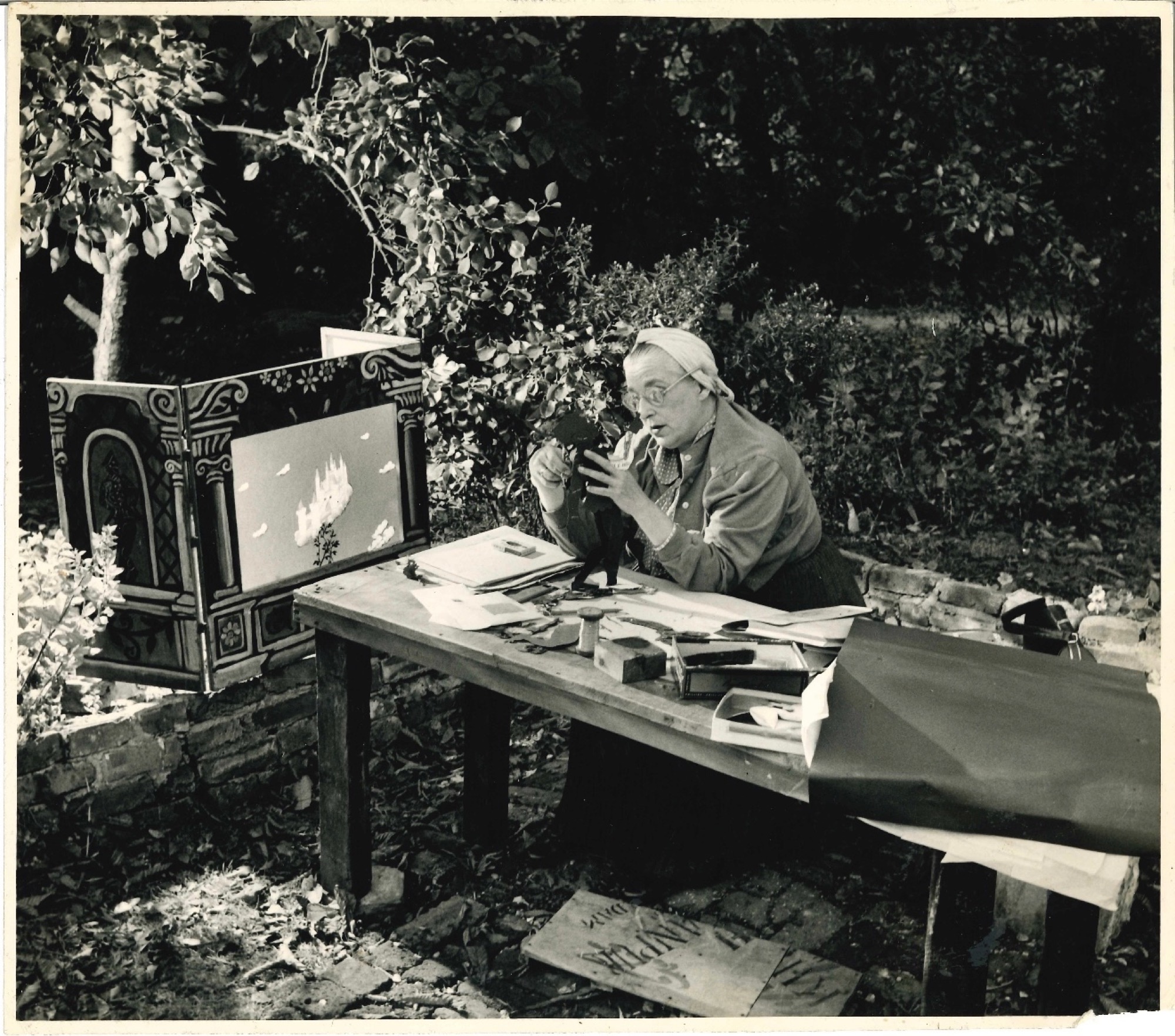
From the time artists first took occupancy in April 1947 until Ohly’s death in 1955, several historiographical approaches intersect to provide a reading of this overlooked artist colony. Apart from the utopian perspective, the Warburgian trope of mnemosyne or memory, and nachleben, or afterlife, can be applied both to the survival of humans and cultural objects as well as to the connections between antiquity and modern life. Both were central concerns of the Abbey Art Centre’s origins. Human survival was accounted for by its accommodation of refugees whose identities and cultural histories had been seared by fascism. For them, survival meant establishing themselves as artists in a foreign country. The young Hungarian painter and filmmaker Peter Foldes (1924–1977), who lived at the Abbey from 1948 to 1949, the Viennese artist Helen Grünwald (1925–1988), who was a long-term Abbey resident between 1948 and the mid-1970s, and her Viennese friend Angela Varga (1925–), who resided briefly at the Abbey in the early 1950s, all pursued this goal by establishing connections with eminent figures in the hope of gaining acceptance, visibility, and security. Peter Foldes painted a portrait of Anthony Blunt, the director of the Courtauld Institute, in 1947, and went on to have successful exhibitions in London, while Helen Grünwald’s stream of correspondence with Sir Kenneth Clark resulted in Clark’s visit to the Abbey in May 1950 and his support of Varga and Grünwald.
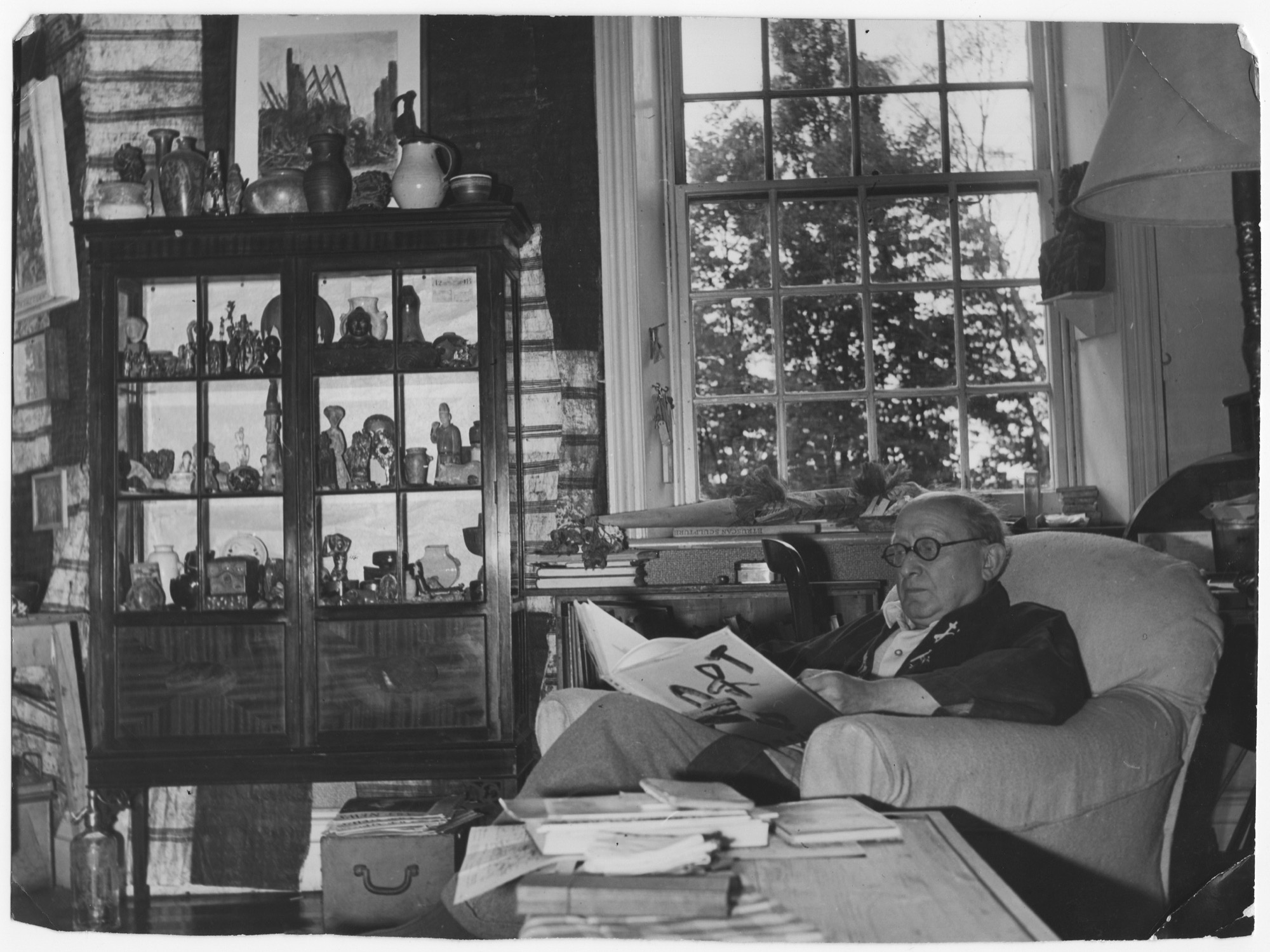
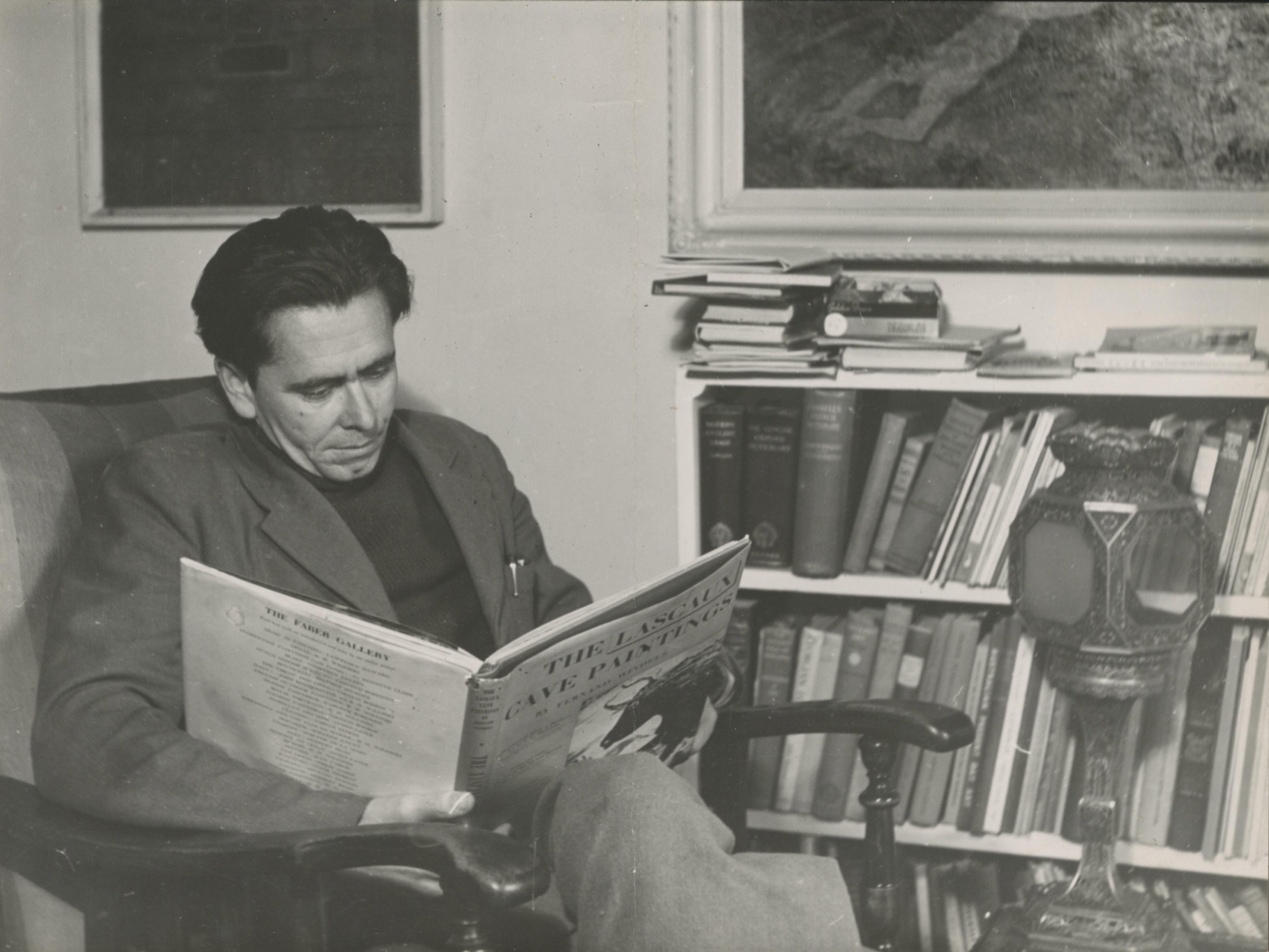
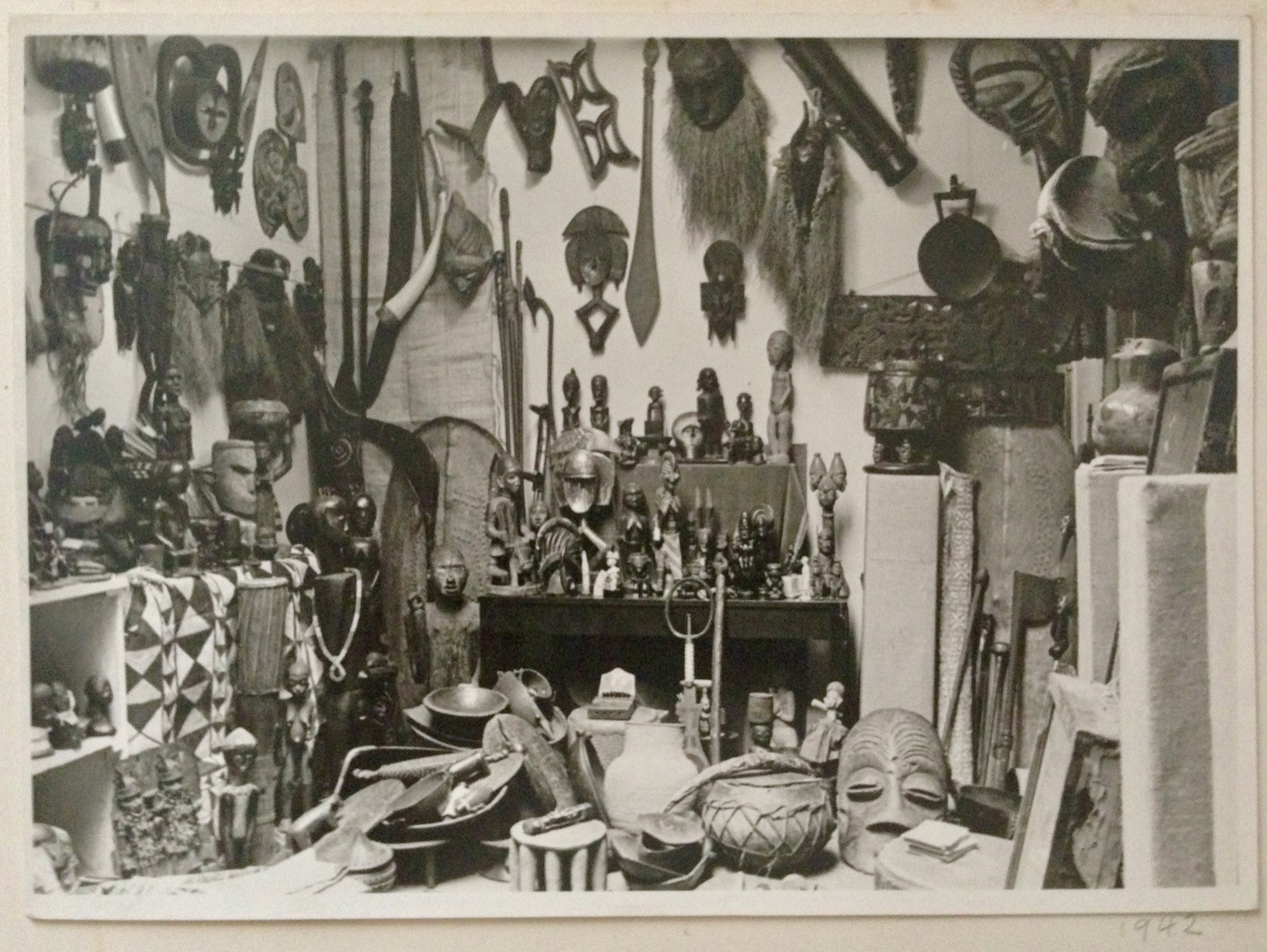
Though technically not a refugee, having been born in England and possessing a British passport, William Ohly was part Jewish and forced to leave Berlin when Hitler came to power. At the Abbey he housed a major part of his collection of antiquities and ethnographic artefacts (fig. 3), themselves historic survivors of the “cultural memory of humanity’s origins,” as well as haunting reminders of the tragic consequences of historic imperialism and colonisation.6 Displayed in the main house until recently was a dance helmet once worn by a New Irelander (PNG); it suggested contingent histories of exchange, whether by intention or violation, a cryptic narrative that questioned ownership and migration. The helmet floated out of time and out of place, leaving speculation about a lost world in which contact between a European and a Melanesian occurred. Hal Foster points out that the geographic fate of coming from “over there” maps onto “back then” and how the most remote tends to become “the most primitive”—in the case of Ohly’s collection, we might say the South Pacific, Africa, Australia, and South America—and also the most colonially tainted.7 This ethno-imperialist trope preoccupied the Australian art historian Bernard Smith (fig. 4), who lived at the Abbey with his family between 1949 and late 1950. During his time at the Abbey Smith developed his ground-breaking thesis European Vision and the South Pacific, a major study of eighteenth- and early nineteenth-century imperial expansion, exploration, and colonisation, including the western mania for collecting and categorising exotic or primitivist specimens. Amongst Ohly’s trove were items from Captain Cook’s journeys.8 Eventually Smith’s research paved the way for postcolonial studies and shaped the discourse on cross-cultural history and decolonisation, and the Abbey Art Centre should be acknowledged as contributing to this.
Ohly’s ethnographic collection conjured an atavistic, anthropic intensity that affected and inspired the artists at the Abbey as well as those who visited. Henry Moore, who lived at Much Hadham, dropped in regularly to see Ohly, as much for the interest in his friend’s collection of archaic Aztec and pre-Columbian artefacts as for securing sculpture assistants, such as the Australian Oliffe Richmond and the British artist Peter King. Moreover, as Christoph Balzar suggests, when objects become “isolated from [their cultural] contexts”, as in ethnographic collections, not only do they act as bearers of their own history but they have the capacity to “unfold enormous … interpretive potential.”9 Against this backdrop of ancient and primitivist artefacts the Abbey artists were able to query their identities within the longue durée of history as well as their place in the contemporary art world. In Hegelian terms, “identity-within-difference and the difference within identity” probably held greater resonance for the Australians who had lived under the cloak of colonialism and struggled to liberate their cultural autonomy from that of a concrete British presence.10
A profile of the Abbey’s owner is necessary for understanding the utopian nature of this remarkable artist colony. William Ferdinand Charles Ohly (1883–1955) was born in Yorkshire of German parents and in 1897 returned with his family to Frankfurt am Main, where he and his older brother Ernest attended the Städelschule.11 William subsequently was apprenticed to the German sculptor Hugo Lederer in Berlin around 1904 and worked on architectural bas reliefs, fountains, and war memorials in Frankfurt, Cologne, and Berlin. He mingled in avant-garde circles; for instance, at his Berlin studio at Siegmunds Hof 11, he befriended the charismatic American dancer Isadore Duncan and the English theatre designer Edward Gordon Craig, who were both fellow residents. Craig characterised Germany’s progressive cultural life, especially in Berlin, as a time when “artists and intellectuals were treated with esteem … not frowned upon as a group of useless bohemians but regarded as people with something to contribute to contemporary society.”12 This profoundly affected Ohly, who decided “that … should [he ever] be able to do so he would … found a community on a non-profit basis where artists could obtain studios at as low a price as possible.”13 Forty years later at New Barnet in England he fulfilled this dream when he purchased the Abbey Folk Park.
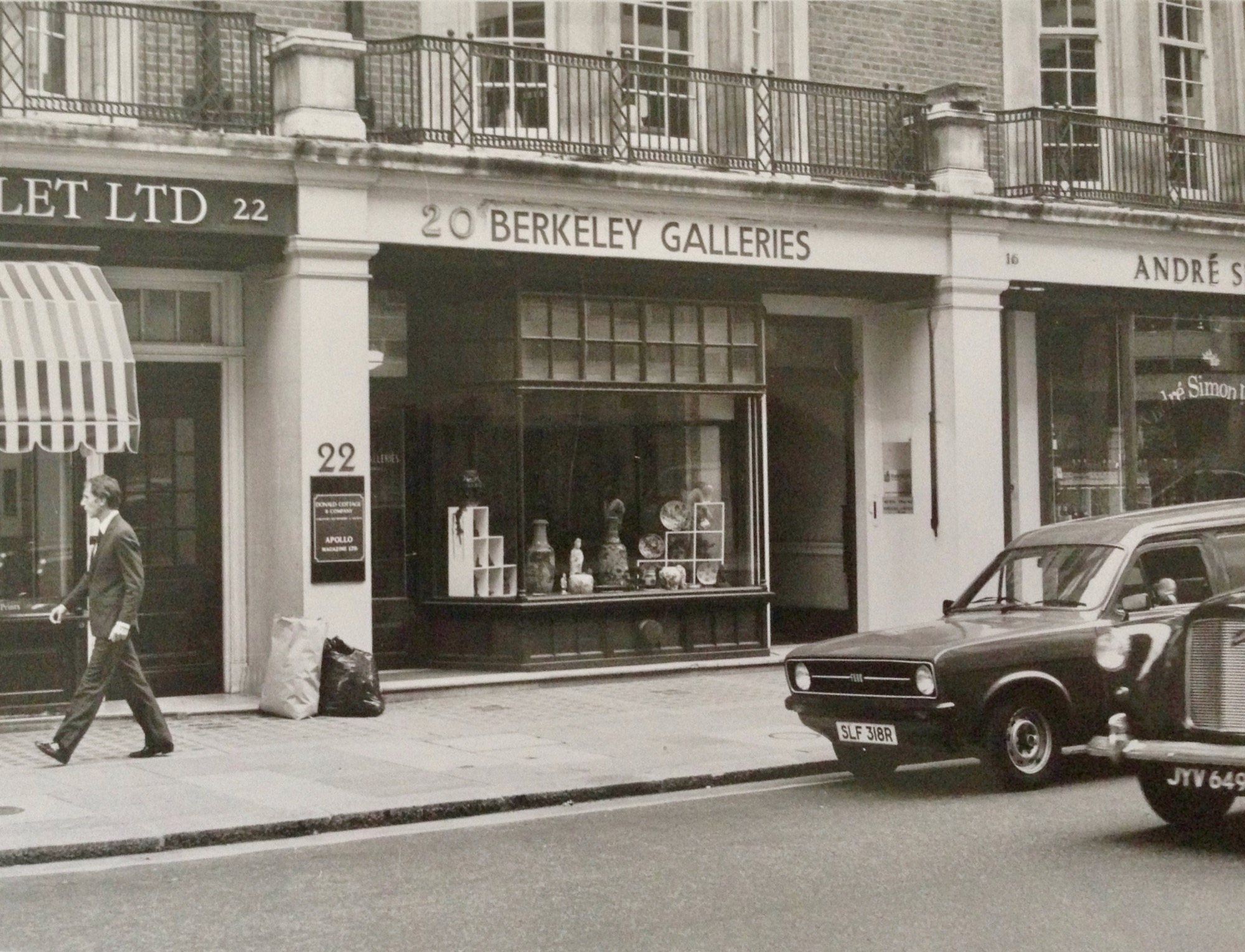
In 1933 Ohly arrived in London and engaged in émigré support networks, assisting German refugees with finding accommodation and work. He attended anti-fascist pro-working-class groups, frequented the Communist Club, helped establish the artist-led Marxist organisation the Artists International Association (AIA), and took lithography lessons at the Central School of Arts and Crafts in Southampton Row. There he became acquainted with numerous left-wing artists such as Pearl Binder, musicologist Albert (‘Bert’) Lloyd, and the New Zealander James Boswell. Gradually he established himself as an art dealer of mainly Chinese ceramics and medieval sculpture and paintings, and in December 1941 opened the Berkeley Galleries at 20 Davies Street, Mayfair, specialising in Asian, Mexican, Mesopotamian, and Oriental antiquities, African and Oceanic art, as well as modern art (figs. 5, 6). Hermione Waterfield, the African and Oceanic art specialist, considers Ohly among the top twelve collectors of ethnographic art in Britain, but as a person he was a considerably richer mix.14 In recognising—as did Aby Warburg—how entwined antiquity, primitivism, and modernism were, Ohly alternated exhibitions of modern British and European artists with Oriental and exotic antiquities, which gave him the reputation as both an enabler and a far-sighted gallerist. His passion for ethnographic antiquities—or what James Clifford calls “artefacts of Otherness”15—reflected something of Ohly’s identity as an outsider as well as how cultural production can transcend temporal time.
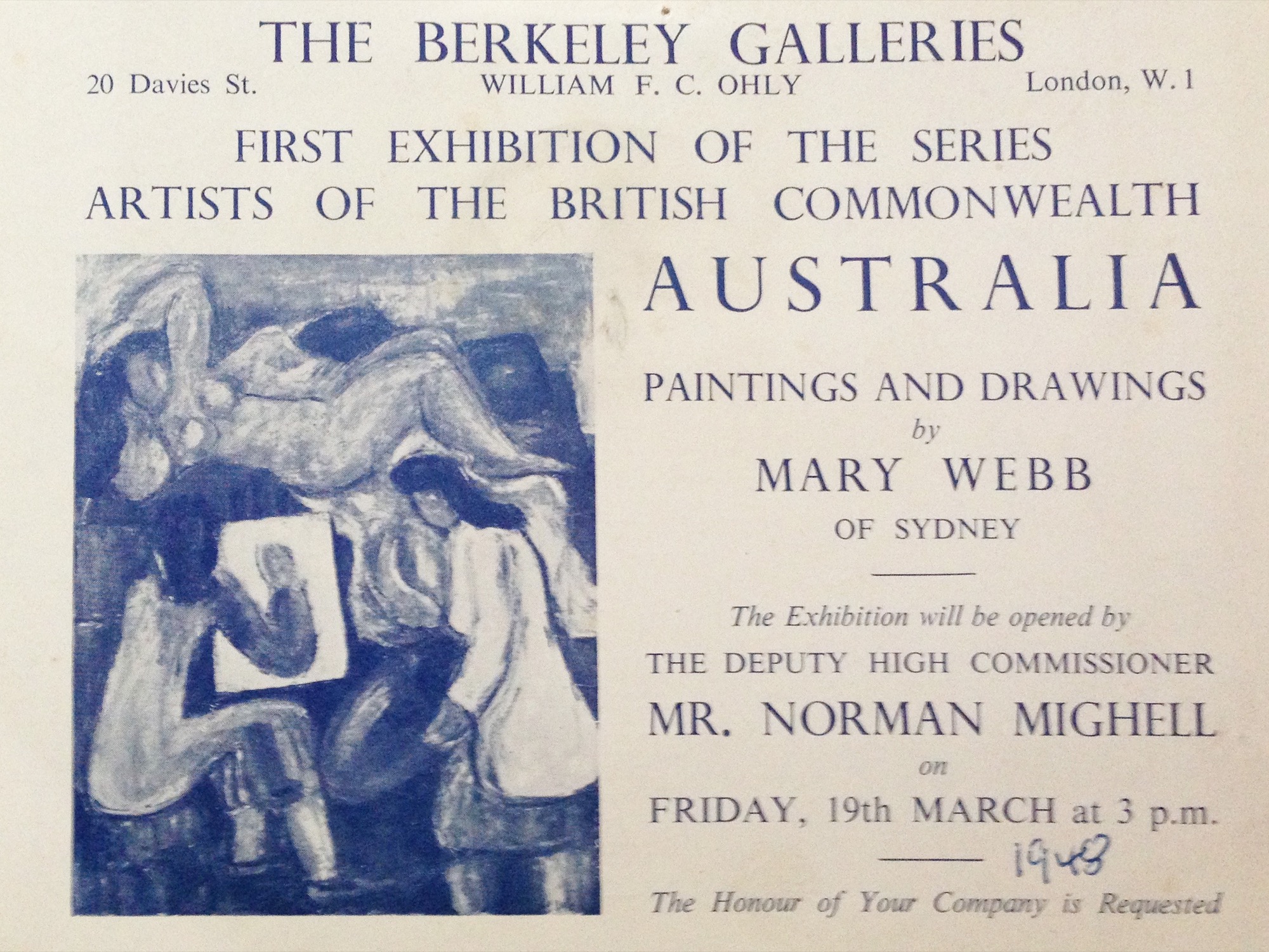
Ohly also invited contemporary artists to exhibit at his gallery, including Henry Moore, Jacob Epstein, Frances Hodgkins, Duncan Grant, Vanessa Bell, Oskar Kokoschka, Jack B. Yeats, and the potters Lucie Rie and Hans Coper. Later, the young Australian, Commonwealth, and refugee artists from his Abbey colony also exhibited with him (fig. 7), which gave them exposure and connections. His benevolence towards transient artists and foreign outsiders defined both his Berkeley Galleries and the Abbey Art Centre and, as such, “converse[d] across centuries and continents.”16 In this he was a model for what is now recognised as a forerunner of “world art.” Critics of the day frequently drew comparisons to the type of non-Western art that Ohly displayed at his Berkeley Galleries. For instance, in The Studio magazine for March 1946, Cora Gordon suggested that some of Matisse’s paintings displayed at the Matisse exhibition at the Victoria & Albert Museum could be compared to the Oriental art at the Berkeley Galleries.17 Further, such transcultural displays complemented the resurgent avant-garde fascination for ethnographic surrealism and modernist primitivism that preoccupied many artists after the war as a fractured Britain and Europe recovered.
While the Abbey functioned as Ohly’s home and a repository for his collection of antiquities and ethnographic art, by early 1947 he was advertising the property in the Berkeley Galleries’ window as the Abbey Art Centre, a not-for-profit artist colony, which he ran along utopian and socialist lines of patronage (fig. 8). It was as much a response to the displacement of people as it was a realisation of his dream for a community of international artists.
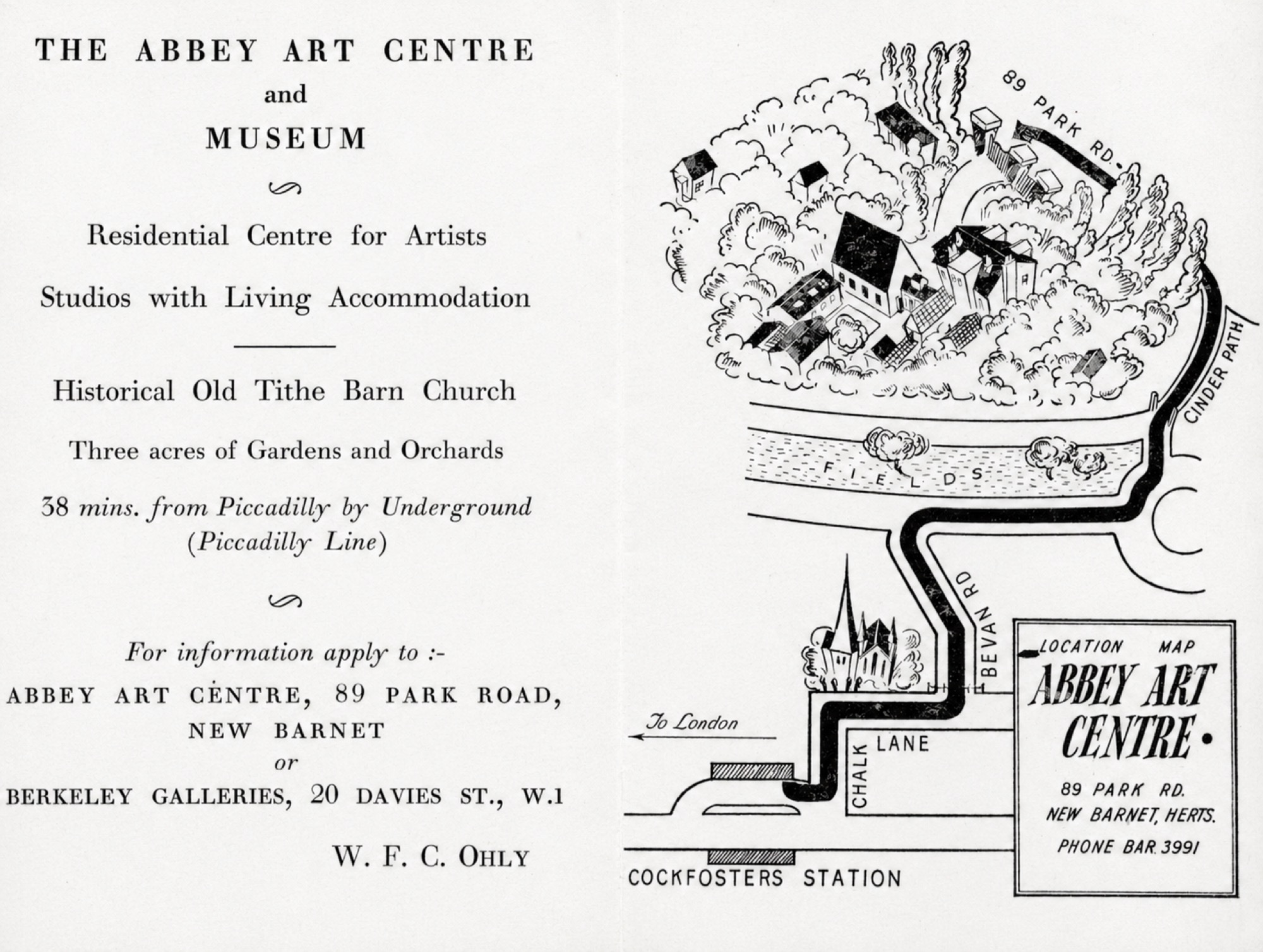
The three-acre property comprised an eclectic conglomeration of buildings, including the early nineteenth-century three-storey Hadley House, in which he let several large rooms to artists and where communal meals and after-dinner conversations were conducted. A relocated fourteenth-century tithe barn that had been used as a church and Folk Museum by its previous owner, Father J. S. Ward and his religious sect, had by 1950 some five hundred ethnographic and religious antiquities on display.18 As a museum it was more like a “hall of universal linkages” that celebrated the survival and a broad lineage of objects.19 There was a schoolhouse that had been converted into apartments, a hunting lodge, and numerous dilapidated outbuildings that artists took as studios for peppercorn rents. What distinguished this colony, apart from Ohly’s paternalist utopianism and communist orientation, were the multiple creative modalities that ranged from social realism to surrealism, animation, modernism and abstraction, sculpture, ceramics, jewellery, and printmaking, incorporating European and non-European traditions as well as experimental avant-garde modes—what some might call an anthropology of art defined by cultural diversity.
In the main house Lucie Rie and Hans Coper’s modernist vases sat alongside pre-Columbian vessels and figurines; a Henry Moore drawing, Stones in a Landscape (1936), illustrated a primordial scene of monolithic totems and classical colonnades, representative of the survival of forms within historical time; Australian Aboriginal bark paintings hung in corridors, and antique Oriental, Asian, and Chinese paintings and porcelain shared shelves and tables with African and South Pacific carvings and artefacts. Such cultural juxtapositions added to the Abbey’s mystical alterity and rich visual environment. Many of the artists were greatly stimulated by this, Alan Davie later stating that primitivism was critical to his creative autonomy and spiritual liberation. The Aztec, Mexican, and pre-Columbian cult figurines were fertile sources for his jewellery—at the time his main form of income—with animal, bird, and human motifs incorporated into exotic rings, pendants, and brooches. As Davie claimed, the importance of primitivist art was its “dynamic quality, intuition and a tremendous intensity.”20
Robert Klippel, a young Australian sculptor who arrived at the Abbey in May 1947, likewise found the African and Oceanic art, Cycladic, pre-Columbian, Mycenaean, and Greek art inspiring. Klippel’s close observation of Ohly’s artefacts at the Abbey, as well as works in the British Museum and the Natural History Museum, led him to experiment with a “language of forms” that mixed salvaged traditions into reassembled symbolic images.21 James Gleeson, another Australian artist living at the Abbey, developed further his surrealism with corroding architectonic landscapes inhabited by pseudo-homoerotic figures. Klippel and Gleeson imaginatively used the Abbey’s exotic repository of artefacts and its strange architectural environment to absolve categorisation, which allowed them to construct a collaborative carved wooden sculpture titled Madame Sophie Sesostoris: (a Pre-Raphaelite Satire) 1947–1948 (fig. 9). It reflected the religious deities and fetishistic and totemic tribal sculptures that adorned Ohly’s home.
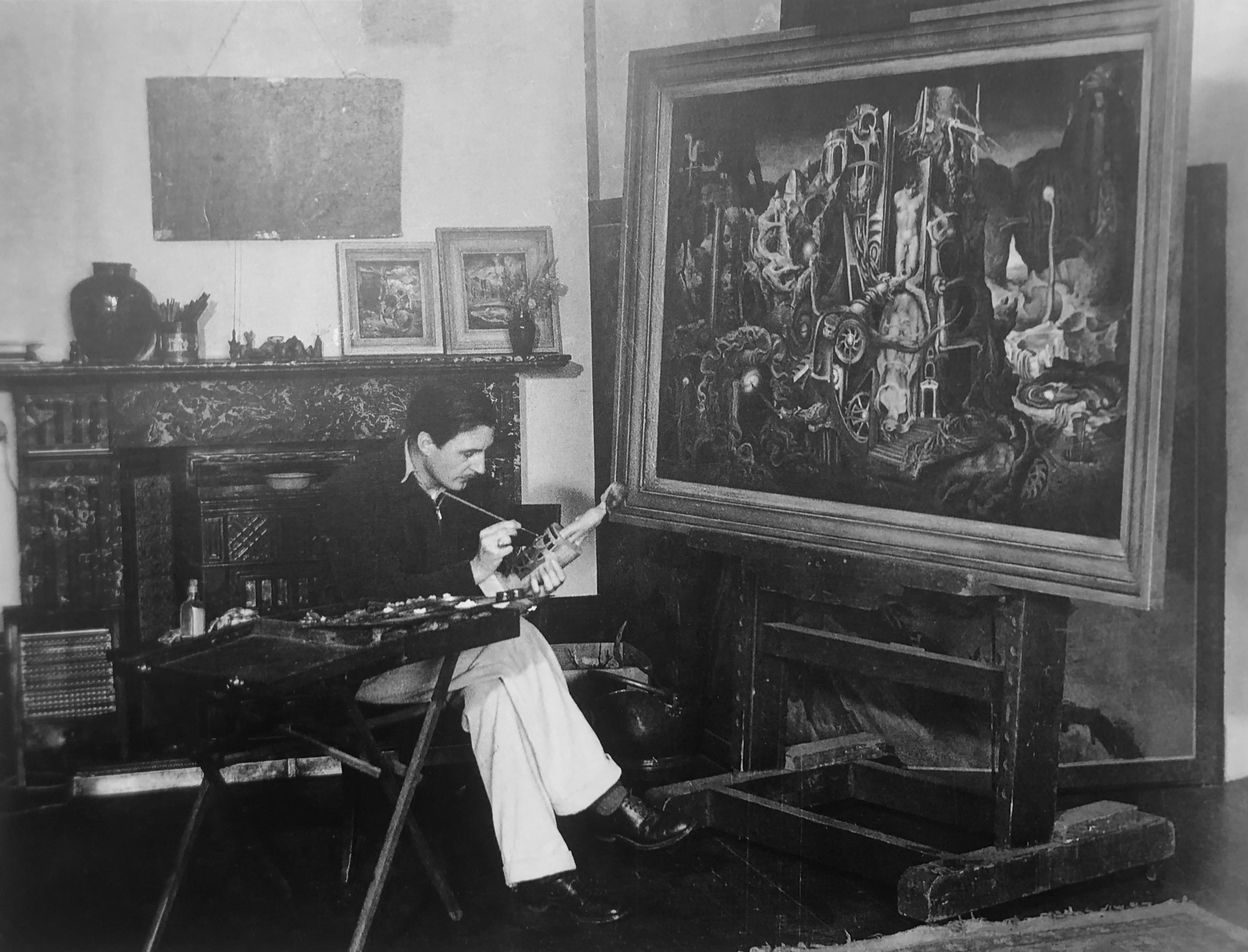
William Ohly’s astounding collection revealed how the migration of symbols and objects also revived and legitimated anachronism. As migratory waves of people carried their scattered traditions with them, as did the Austrian and German Jewish refugees at the Abbey, their past was critical to rehabilitating their present in what might be called a “productive anachrony.”22 It echoes George Didi-Huberman’s statement that “the ideas of tradition and transmission” and survival “anachronises” both history and the present.23 Many of the artists at the Abbey used this anthropology of art as a method to look back, and by using ancient and foreign artefacts they reformulated a cross-cultural ethos that allowed them to create anew and move forward. This was precisely what Roland Penrose and Herbert Read achieved in their 1948–1949 exhibition 40,000 Years of Modern Art: A Comparison of the Modern and the Primitive, held at the Institute of Contemporary Art (ICA) in London, which the Abbey artists saw. It specifically highlighted the issue of creative anachrony and revealed how the anthropological had spectacularly renewed modernism.
In his important 1912 lecture in Rome, Aby Warburg (1866–1929) pleaded “for an extension of the methodological borders of our study of art, in both material and spatial terms.”24 He claimed that:
… a lack of adequate general evolutionary categories has impeded art history in placing its materials at the disposal of the—still unwritten—historical psychology of human expression … By adopting either an unduly materialistic or an unduly mystical stance, our young discipline blocks its own panoramic view of history. It gropes toward an evolutionary theory of its own, somewhere between the schematisms of political history and the dogmatic faith in genius.25
While Aby Warburg “looked at artifacts with the eyes of an ethnographer,” he was able to step beyond established frameworks of historiography as he sought to treat the “ancient, medieval, and modern worlds as a coherent historical unity.”26 This historical unity was something that William Ohly understood and used as a criterion for establishing the Abbey Art Centre and his Berkeley Galleries. Materially, Ohly brought together a world that provided a panoramic view of humankind, a vital sense of the deep past, and a teleological view of the universal and evolutionary movements in the visual and spiritual fields of the arts. Moreover, his antiquities and ethnographic collections acted like a memory map of “anachronistic object[s] par excellence,” objects that were capable of “plung[ing] into time immemorial … and later jump[ing] forward to the future.”27 This temporal elasticity inspired artists and is what made this twentieth-century artist colony so unique.
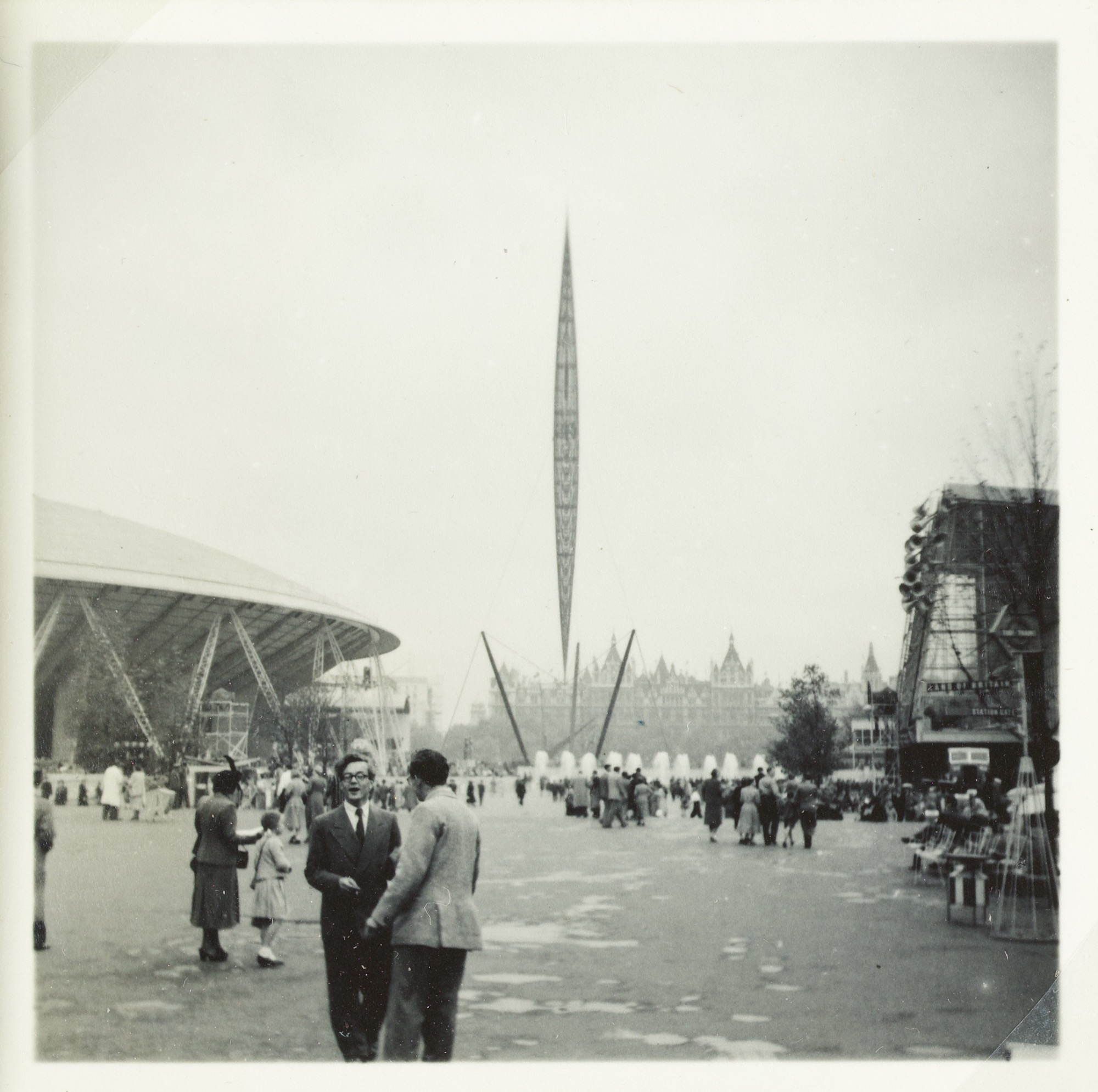
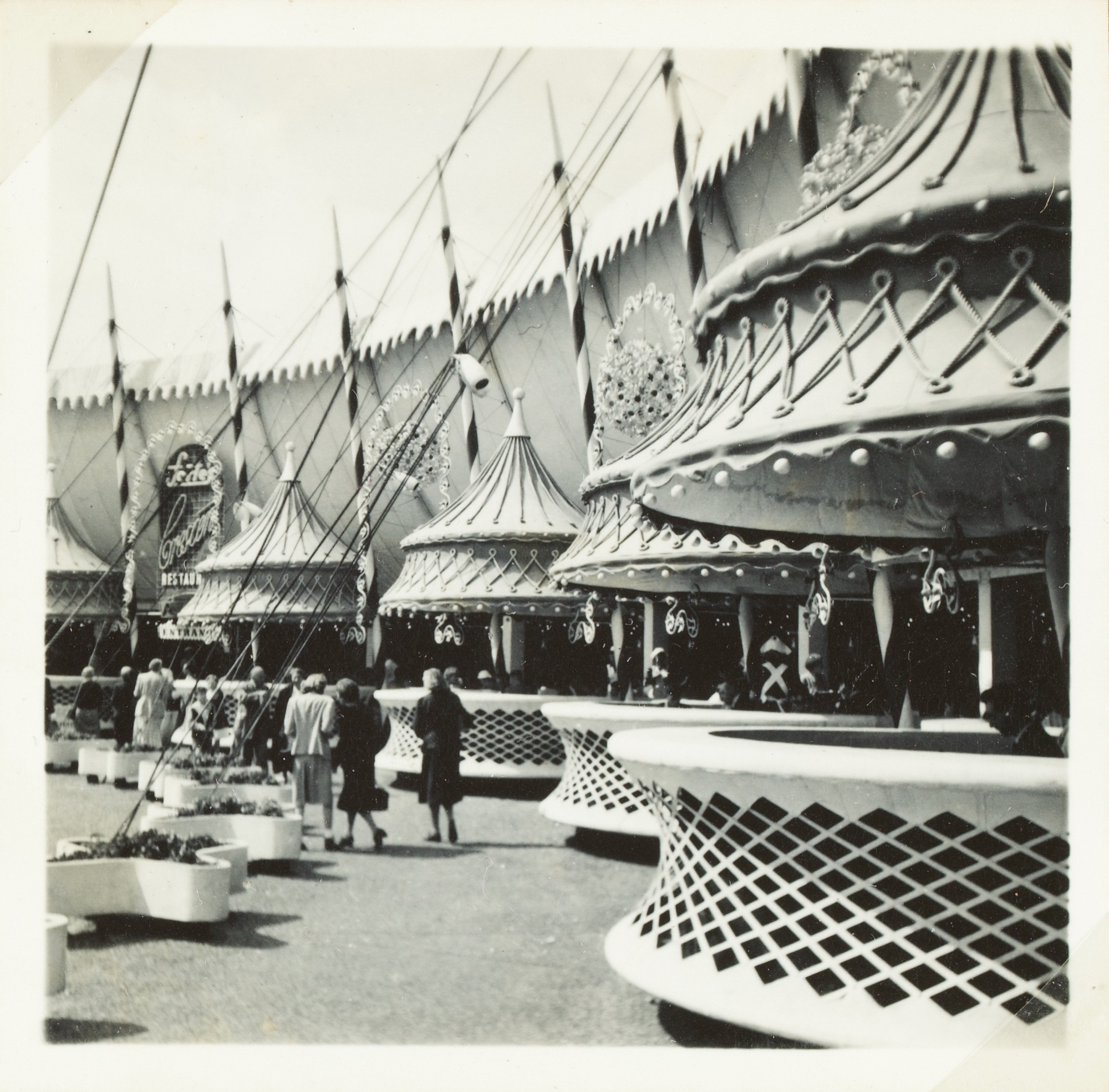
Around 1950 many artists left the Abbey Art Centre, with most of the Australians returning to their homeland, though Mary Webb, Stanislaw Halpern, and—briefly—Robert Klippel relocated to Paris. Their departure coincided with the acceleration of postwar modernism, international avant-gardism, and globalism, in which art and culture migrated freely across borders and nations. Moreover, as the Western world’s faith in creative individualism gathered momentum, no longer was the present woven from multiple pasts, but rather the present looked to the global future.28 The 1951 Festival of Britain, built on the ruins of London’s South Bank, was a socialist example of utopian modernity—a brief spectacle organised as a postwar tonic for a depleted nation (figs. 10, 11). Yet the Abbey Art Centre, with its own socialist utopianism, has been largely ignored, perceived as too “out of time,” and too marginal. While Ohly preferred to keep his artist colony free from bureaucratic interference and retain its utopic identity—admittedly he applied to the British Council for funding for his Abbey Museum in 1950 though was unsuccessful—the “utopian impulse” nevertheless tended to marginalise individuals, or, put another way, utopianists tend to play on their own marginality.29
Warburg’s point about a lack of evolutionary categories concerning the “unwritten” can also be applied to the Abbey Art Centre. As a creative site it extended visual and cultural notions of “traditional categories” through multiple aesthetic and ideological corridors and, with the present focus on recovering the hidden veins of artistic postwar activity, unfolding the Abbey Art Centre’s complexity offers a timely contribution to a reassessment of post-nationalism’s cross-cultural convergences.
-
Katarzyna Chrudzimska-Uhera, “Artists’ Colonies as a Response to the Experience of Modernity: The Case of Zakopane,” in “Community and Utopia: Artists’ Colonies in Eastern Europe, from the Fin-de-Siècle to Socialist Period,” ed. Marina Dmitrieva and Laima Laučkaitė, special issue, Meno Istorijos Studijos 8 (2017): 15, https://www.arthistorystudies.lt/wp-content/uploads/2022/12/DIS-8_2017_p.14-40_compressed.pdf. ↩
-
I am referring to a term used by Terry Smith in his article, “Nations in Transit: Postnational Approaches to Contemporary Art History,” in Postnational Art Histories: What Is Postnational Art History, ed. Charles Green and Ian McLean (Centre of Visual Art at the University of Melbourne with Perimeter, 2023), 66. ↩
-
See Norbert Lynton, Apocalypse and Utopia: A View of Art in Germany 1910–1939 (Fischer Fine Art, 1977), 10; Fredric Jameson, Archaeologies of the Future: The Desire Called Utopia and Other Science Fictions (Verso, 2005), xi. ↩
-
Édouard Glissant, Poetics of Relation (University of Michigan Press, 2010), 13. ↩
-
Jameson, Archaeologies of the Future, 10. ↩
-
Georges Didi-Huberman, Confronting Images: Questioning the Ends of a Certain History of Art (Pennsylvania State University Press, 2005), xxii. Certain affinities exist between Didi-Huberman’s Warburgian study and the origins of the Abbey Art Centre in that the Abbey, as a unique colony and habitat, extended the visual and cultural notions of “traditional categories” (39). See also James Clifford, The Predicament of Culture: Twentieth-Century Ethnography, Literature and Art (Harvard University Press, 1988), 13. ↩
-
Hal Foster, “The Artist as Ethnographer,” in The Return of the Real: The Avant-Garde at the End of the Century (MIT Press, 1996), 177. ↩
-
Bienchen Ohly, interviewed by Sheridan Palmer, New Barnet, UK, 17 September 2013. See “The Abbey Art Centre and Museum Founded by William F. C. Ohly … P.S. Lindsay, A.T.D. (Lond.), Hon. Curator, c. 1957,” The Abbey Art Centre Digital Repository, last modified 1 June 2022, https://omeka.cloud.unimelb.edu.au/abbey-art-centre/items/show/1092. ↩
-
Christoph Balzar, “Artists and Ethnographers,” in The Importance of Being Anachronistic: Contemporary Aboriginal Art and Museum Repatriations, ed. Khadija von Zinnenburg Carroll (Discipline in association with Third Text Publications, 2016), 167; Didi-Huberman, Confronting Images, 39. ↩
-
Clayton Crockett and Creston Davis, “Introduction. Risking Hegel: A New Reading for the Twenty-First Century,” in Hegel & the Infinite: Religion, Politics, and Dialectic, ed. Slavoj Žižek, Clayton Crockett, and Creston Davis (Columbia University Press, 2011), 11. ↩
-
Sheridan Palmer and Jane Eckett, “William Ferdinand Charles Ohly (1883–1955),” The Abbey Art Centre Digital Repository, last modified 3 January 2026, https://omeka.cloud.unimelb.edu.au/abbey-art-centre/items/show/485. ↩
-
Edward Craig, Gordon Craig: The Story of His Life (Gollancz, 1968), 183–84. At Siegmunds Hof 11, Craig took studio no. 33. This building was destroyed during WW2; see Francis Steegmuller, ed., Your Isadora: The Love Story of Isadora Duncan & Gordon Craig (Macmillan, 1974), 25. ↩
-
William Ohly quoted in “The Museum of the Abbey Art Centre [Invitation to Opening], 27 March 1952,” The Abbey Art Centre Digital Repository, last modified 6 January 2022, https://omeka.cloud.unimelb.edu.au/abbey-art-centre/items/show/1093. ↩
-
Hermione Waterfield, “William Ohly 31 August 1883 – 22 July 1955,” in Hermione Waterfield and J.C.H. King, Provenance: Twelve Collectors of Ethnographic Art in England, 1760–1990 (Paul Holberton Publishing, 2009), 105–9. ↩
-
Clifford, 134. ↩
-
Clifford, 190. ↩
-
Cora Gordon, “London Commentary,” The Studio 131, no. 636 (March 1946): 94. ↩
-
Father Ward’s collection showed a propensity towards tribal spiritualism, and remnants of his religious order continued to occupy part of the premises after Ohly acquired the property in 1946. For an extensive history and biography of Father Ward and his Abbey Folk Park see Geoffrey Ginn, Archangels & Archaeology: J.S.M. Ward’s Kingdom of the Wise (Sussex Academic Press, 2012). ↩
-
Luckhurst, Corridors, 44. ↩
-
Alan Davie cited in Michael Tucker, ed., Alan Davie: The Quest for the Miraculous (Lund Humphries for University of Brighton Gallery and the Barbican Art Gallery, 1993), 11. ↩
-
Robert Klippel, “Sculpture as a Language of Forms,” February 1947, reprinted in James Gleeson, Robert Klippel (Bay Books, 1983), 32. ↩
-
Khadija von Zinnenburg Carroll cites Jacques Rancière, who considered anachrony as necessary for individuals to protest or “act against their time” in order to create change. See The Importance of Being Anachronistic: Contemporary Aboriginal Art and Museum Repatriations, ed. Khadija von Zinnenburg Carroll (Discipline in association with Third Text Publications, 2016), 22. ↩
-
Georges Didi-Huberman, The Surviving Image: Phantoms of Time and Time of Phantoms: Aby Warburg’s History of Art, trans. Harvey L. Mendelsohn (Pennsylvania State University Press, 2017), 48–49. ↩
-
Aby Warburg, “Italian Art and International Astrology in the Palazzo Schifanoia (1912),” in Warburg, The Renewal of Pagan Antiquity: Contributions to the Cultural History of the European Renaissance, trans. David Britt (Getty Research Institute for the History of Art and the Humanities, 1999), 585. ↩
-
Warburg, “Italian Art and International Astrology,” 585. ↩
-
Warburg, “Italian Art and International Astrology,” 585. ↩
-
Didi-Huberman, The Surviving Image, 318. ↩
-
See Didi-Huberman, The Surviving Image, 30. ↩
-
Increasing anti-communism may also have culturally tainted the Abbey’s reputation, resulting in the unsuccessful application. ↩
Dr Sheridan Palmer is an art historian, curator and was a senior research associate at the University of Melbourne working on the ARC project: The Abbey Art Centre and the Reassessment of Postwar Australian Modernism. Her major publications include: Hegels Owl: The Life of Bernard Smith, Power Publications, Sydney, 2016; Centre of the Periphery: Three European Art Historians in Melbourne, ASP, 2008; Editor, 3rd edition of Bernard Smith’s European Vision and the South Pacific, Miegunyah Press, Melbourne, 2022; Antipodean Perspective: Selected Writings of Bernard Smith, co-edited with Rex Butler, Monash University Publishing, 2018.
Bibliography
- Abbey Art Centre and Museum. “The Abbey Art Centre and Museum Founded by William F. C. Ohly … P.S. Lindsay, A.T.D. (Lond.), Hon. Curator, c. 1957.” The Abbey Art Centre Digital Repository. Last modified 1 June 2022. https://omeka.cloud.unimelb.edu.au/abbey-art-centre/items/show/1092.
- Abbey Art Centre and Museum. “The Museum of the Abbey Art Centre [Invitation to Opening], 27 March 1952.” The Abbey Art Centre Digital Repository. Last modified 6 January 2022. https://omeka.cloud.unimelb.edu.au/abbey-art-centre/items/show/1093.
- Balzar, Christoph. “Artists and Ethnographers.” In The Importance of Being Anachronistic: Contemporary Aboriginal Art and Museum Repatriations, edited by Khadija von Zinnenburg Carroll. Discipline in association with Third Text Publications, 2016.
- Chrudzimska-Uhera, Katarzyna. “Artists’ Colonies as a Response to the Experience of Modernity: The Case of Zakopane.” In “Community and Utopia: Artists’ Colonies in Eastern Europe, from the Fin-de-Siècle to Socialist Period,” edited by Marina Dmitrieva and Laima Laučkaitė, special issue, Meno Istorijos Studijos 8 (2017): 14–40. https://www.arthistorystudies.lt/wp-content/uploads/2022/12/DIS-8_2017_p.14-40_compressed.pdf.
- Clifford, James. The Predicament of Culture: Twentieth-Century Ethnography, Literature and Art. Harvard University Press, 1988.
- Craig, Edward. Gordon Craig: The Story of His Life. Gollancz, 1968.
- Crockett, Clayton, and Creston Davis. “Introduction. Risking Hegel: A New Reading for the Twenty-First Century.” In Hegel & the Infinite: Religion, Politics, and Dialectic, edited by Slavoj Žižek, Clayton Crockett, and Creston Davis. Columbia University Press, 2011.
- Didi-Huberman, Georges. Confronting Images: Questioning the Ends of a Certain History of Art. Pennsylvania State University Press, 2005.
- Didi-Huberman, Georges. The Surviving Image: Phantoms of Time and Time of Phantoms: Aby Warburg’s History of Art. Translated by Harvey L. Mendelsohn. Pennsylvania State University Press, 2017.
- Enwezor, Okwui. Postwar: Art Between the Pacific and the Atlantic, 1945–1965. Haus der Kunst, 2016.
- Foster, Hal. The Return of the Real: The Avant-Garde at the End of the Century. MIT Press, 1996.
- Ginn, Geoffrey. Archangels & Archaeology: J.S.M. Ward’s Kingdom of the Wise. Sussex Academic Press, 2012.
- Gleeson, James. Robert Klippel. Bay Books, 1983.
- Glissant, Édouard. Poetics of Relation. University of Michigan Press, 2010.
- Gordon, Cora. “London Commentary.” The Studio 131, no. 636 (March 1946): 94.
- Jameson, Fredric. Archaeologies of the Future: The Desire Called Utopia and Other Science Fictions. Verso, 2005.
- Luckhurst, Roger. Corridors: Passages of Modernity. Reaktion Books, 2019.
- Lynton, Norbert. Apocalypse and Utopia: A View of Art in Germany 1910–1939. Fischer Fine Art, 1977.
- Ohly, Bienchen. Interview by Sheridan Palmer, New Barnet, UK, 17 September 2013.
- Palmer, Sheridan, and Jane Eckett. “William Ferdinand Charles Ohly (1883–1955).” The Abbey Art Centre Digital Repository. Last modified 3 January 2026. https://omeka.cloud.unimelb.edu.au/abbey-art-centre/items/show/485.
- Smith, Terry. “Nations in Transit: Postnational Approaches to Contemporary Art History.” In Postnational Art Histories: What Is Postnational Art History, edited by Charles Green and Ian McLean. Centre of Visual Art at the University of Melbourne with Perimeter, 2023.
- Steegmuller, Francis, ed. Your Isadora: The Love Story of Isadora Duncan & Gordon Craig. Macmillan, 1974.
- Tucker, Michael, ed. Alan Davie: The Quest for the Miraculous. Lund Humphries for University of Brighton Gallery and the Barbican Art Gallery, 1993.
- Warburg, Aby. The Renewal of Pagan Antiquity: Contributions to the Cultural History of the European Renaissance. Translated by David Britt. Getty Research Institute for the History of Art and the Humanities, 1999.
- Waterfield, Hermione. “William Ohly 31 August 1883 – 22 July 1955.” In Hermione Waterfield and J.C.H. King, Provenance: Twelve Collectors of Ethnographic Art in England, 1760–1990. Paul Holberton Publishing, 2009.