Lina Bryans and the Darebin Bridge Artists' Colony
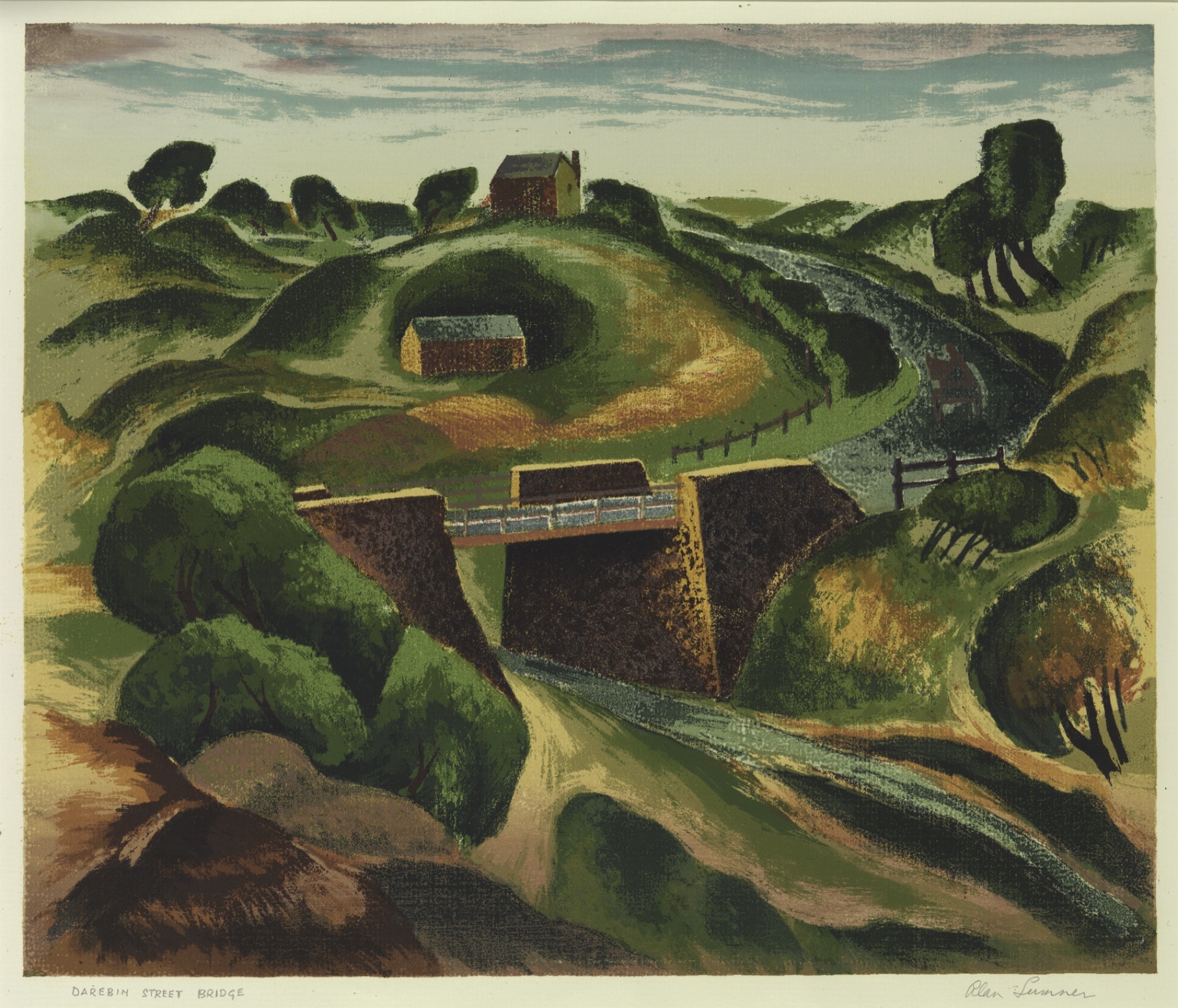
Darebin Bridge House, home of modernist artist Lina Bryans in the 1940s, presents a model for an artists’ colony where the artist created her own circle of friends who were contributing to the artistic and intellectual life of mid-century Melbourne (fig. 1). Bryans lived at Darebin for over a decade from 1937 to 1948. Her Darebin artists’ colony was distinctive in its liberal character and was a favourite meeting place not only for artists but also for writers, editors, critics and theatrical producers. Several artists took up residence in studios there during the 1940s while others visited regularly to share Bryans’ world of conviviality, generous hospitality and friendship. Nurturing the talent of little-known artists she admired, Bryans stood in a unique relationship to the Melbourne art world of her time, being an intuitive artist who refused academic training and remained apart from art politics.
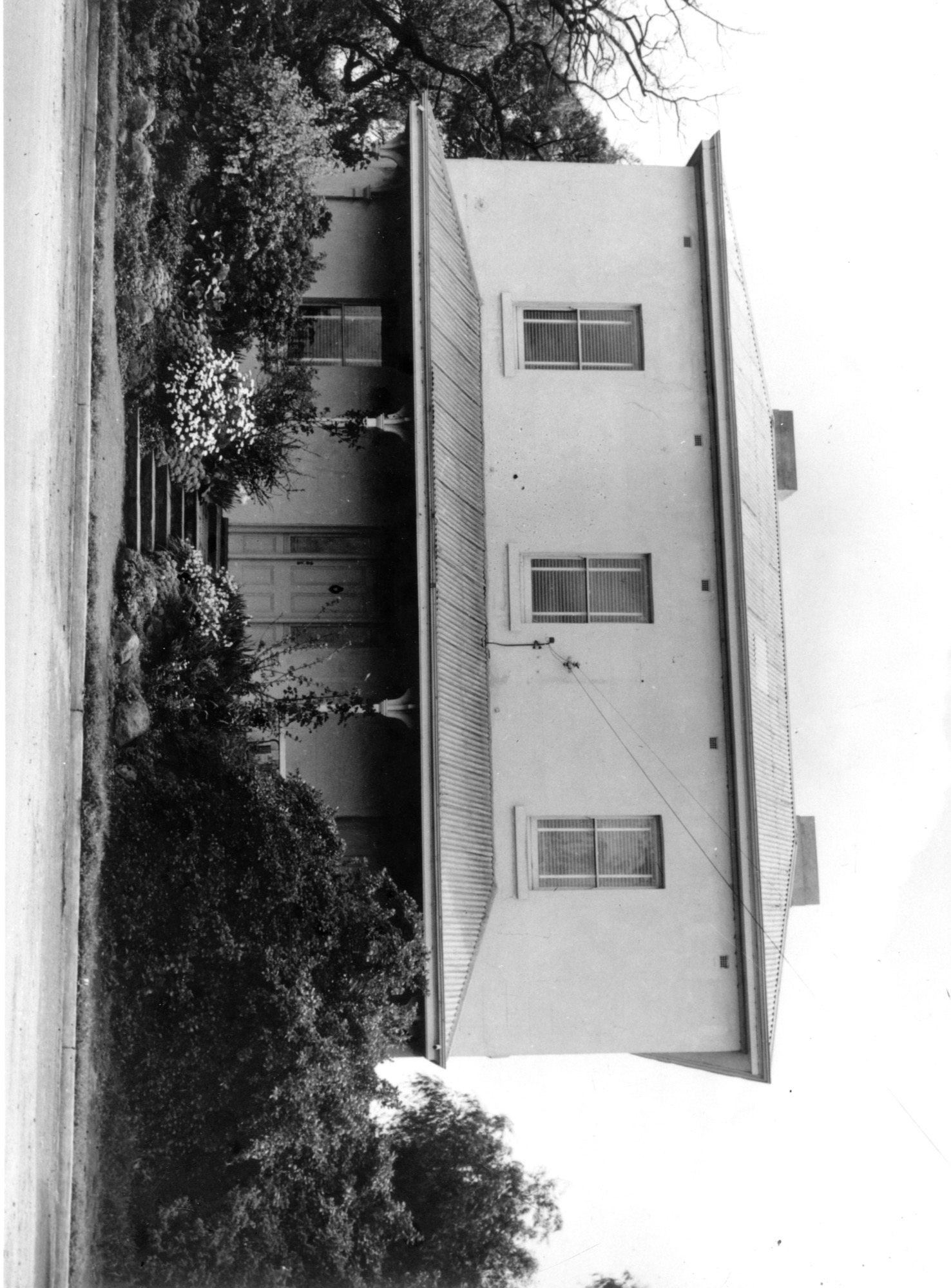
There had been a tradition of artists painting and living away from the inner city of Melbourne since the days of the Australian Impressionists. From the late nineteenth century, the undulating Darebin landscape was a popular destination for artists painting en plein air. In 1885 Tom Roberts painted A quiet day on Darebin Creek,1 showing a line of fence posts that suggested the land had already been cleared for cattle grazing, and in 1886 Frederick McCubbin’s landscape Darebin Creek was mentioned in an Argus notice.2 In the twentieth century regional proximity continued to attract artists’ communities to the outer eastern suburban fringe.3 At Bulleen, John and Sunday Reed gathered radical young artists to Heide, while Justus Jorgensen and his extended family moved to Eltham to construct Montsalvat in medieval style. Fairy Hills, Ivanhoe, across the river from Darebin, at the junction of the Darebin Creek and the river Yarra, was also a meeting place for artists. Norman Macgeorge and his wife May lived there from 1912, later joined by artist neighbours Napier Waller and Christian Waller.
The Scottish artist William Frater, an early modernist and a follower of Cézanne, discovered the old Darebin public house in the 1920s while on weekend painting excursions from his home in nearby Alphington. Classically trained at the Glasgow School of Art, Frater became a follower of the modern movement at a time when, according to The Studio magazine, “nowhere has the modern movement in art been entered into more seriously than in Glasgow.”4 Large art exhibitions in the city included works by the Glasgow Scottish Colourists, Samuel Peploe, Francis Cadell and Leslie Hunter. Frater came to live permanently in Melbourne in 1914, following a brief sojourn in 1910–1911, bringing with him his enthusiasm for Cézanne. In 1932 he joined George Bell in forming the Contemporary Art Group. His charismatic personality attracted a small group of moderate modernists who banded together on the margins of the conservative Melbourne art scene.5 The group included Ada May Plante, a highly regarded artist and devotee of Cézanne. Plante likened Darebin Bridge House to Cézanne’s home, Le Jas de Buffon in Aix-en-Provence, and in 1935 Frater found permanent accommodation for her there.6
In 1937, Bryans met the reclusive “Miss Plante” at Darebin Bridge House while painting in the area. Plante offered Bryans a room to rent and provided a significant role model for the younger artist, a model of female independence, of a woman artist who followed Cézanne both in her style and her manner of regional living at Darebin. Bryans accepted Plante’s invitation, while maintaining a city studio, travelling between Darebin and the city until she was able to buy the property in 1943.7
Bryans’ early formation is the key to understanding the character of the artists’ colony which she created at Darebin. Throughout her life, Bryans moved between the cosmopolitan centre and the regional periphery. Born in 1909 into an Edwardian family of wealth and privilege, she was brought up to observe a rigid code of social propriety. Her maternal great- grandfather, Sir Benjamin Benjamin—merchant, philanthropist, politician, and Jewish community leader—had been lord mayor of Melbourne in 1887–89.8 Her father, Edward Hallenstein, was head of the prominent Melbourne industrial firm of Michaelis Hallenstein, co-founded by Bryans’ grandfather, Isaac Hallenstein, who emigrated to Australia in 1856.9 In her teens, she had lived in England and France, attended exclusive schools, and visited the famous galleries of Europe. A figure of great style, she was married briefly in the early 1930s. However, following the birth of her son Edward she took the step, radical at that time, of choosing to live as a single mother. She decided to devote herself seriously to art when she met William Frater. who encouraged her to paint.10
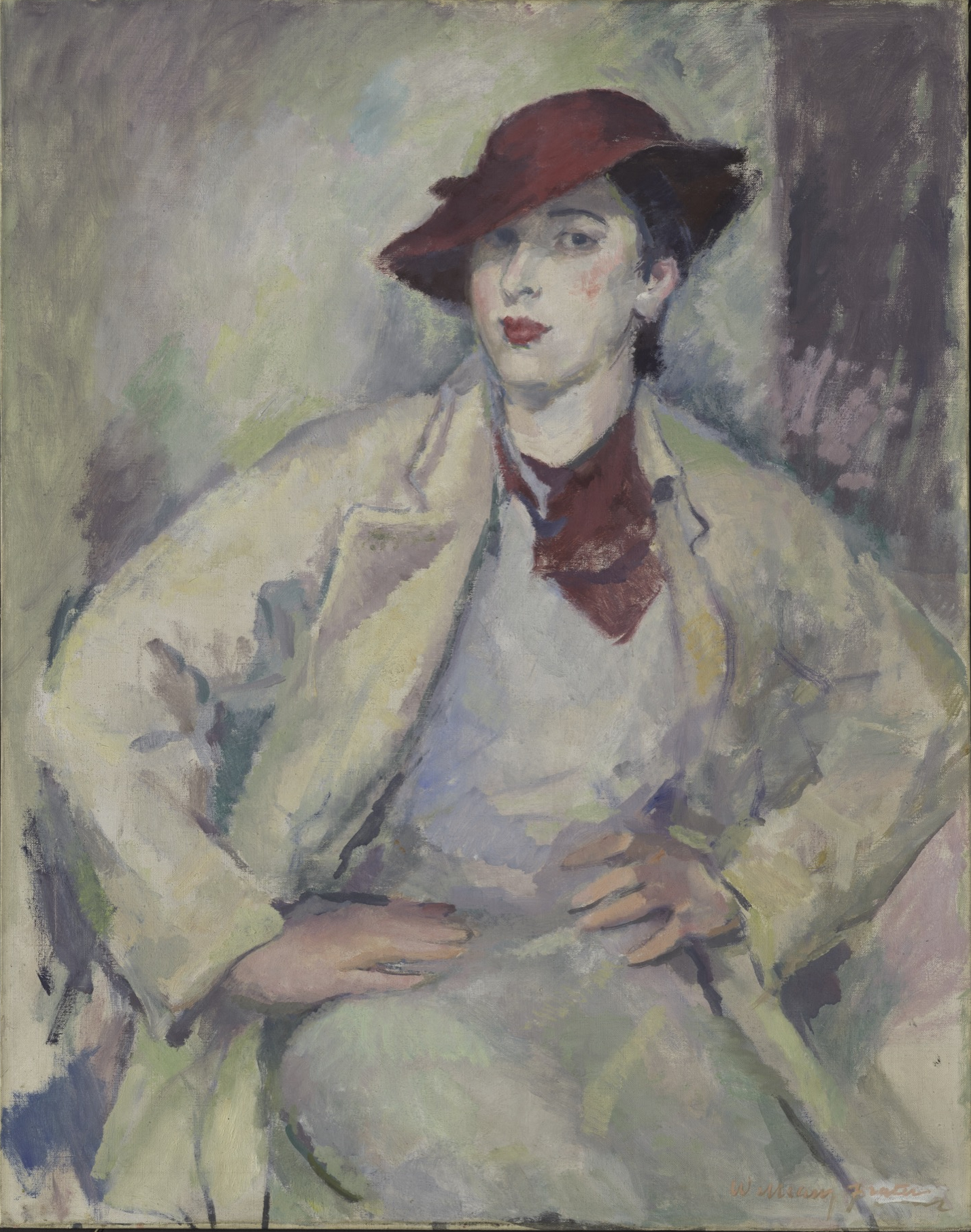
Frater’s early portrait of Bryans, The red hat (1937, fig. 2), interprets her edgy dual role as society matron and artist. The red hat places her in polite society and the smock, Frater’s Glasgow Art School smock, defines her as an artist. Always a free spirit, she agreed to work with Frater and take advice from him, although she refused to receive formal lessons, believing in complete freedom of expression. As an untrained artist, Bryans belonged to the ‘haptic’ or intuitive style in art. She stated in a 1940s radio broadcast: “Art is instinctive … The materials…methods… the technical facility is ultimately of no avail if the instinctive emotion for fusing colour and form with life is lacking”.11
Bryans and Frater, who was married with a family, formed a close relationship, overstepping the boundaries of polite society. However, during the 1940s establishment figures visited her artists’ colony, including Daryl (later Sir Daryl) Lindsay, the incoming Director of the National Gallery in Melbourne, and Lady (later Dame) Elisabeth Murdoch with Sir Keith Murdoch, Chairman of the Board of the National Gallery of Victoria and influential editor of the Herald and Weekly Times newspaper. They respected her for standing apart and trusting her own experience.12
Bryans remained outside art politics, apolitical and unaligned, when the Melbourne art scene was divided between conservatives and modernists.13 Her circle at Darebin Bridge House was distinctive in drawing in both moderate modernists and members of the broad art establishment of Melbourne, centred around the recently liberalised National Gallery of Victoria.14 In the 1940s, moderates in the Contemporary Art Society gathered there. In addition to Frater and Plante, artists Ambrose Hallen and later Ian Fairweather had studios there. Others who visited included émigré artists and members of the liberal, intellectual circle involved with the new journal Meanjin, including Clem and Nina Christesen and Dolia and Rosa Ribush.
Her Darebin Bridge House artists’ colony exemplified the philosophy of “the artist in society,” as popularised by the English art critic Herbert Read. Bryans had read widely in the State Library Victoria and was influenced by Read’s ideas concerning integrating the life of the individual with the creative life of the community. In the 1930s Read had welcomed members of the Bauhaus who fled to England, seeking sanctuary from persecution. His house in Hampstead was known as “a nest of gentle artists.”15 Read used the phrase “the artist in society” to describe his ideal of an artist who engages actively with the creative spirit in all the arts, having the ability to bring people together, sharing values and offering new perspectives on life.16
Like Read’s Hampstead group, Bryans’ artists’ colony in the 1940s was distinctive in its transnational character. Bryans invited friends who were, as she succinctly said, “doing things.”17 Examining the subjects of the portraits Bryans spontaneously painted of her friends at the Darebin colony between 1937 and 1947 provides evidence of the spirit of creative exchange Bryans established between many Australian artists and writers and those who came from overseas.
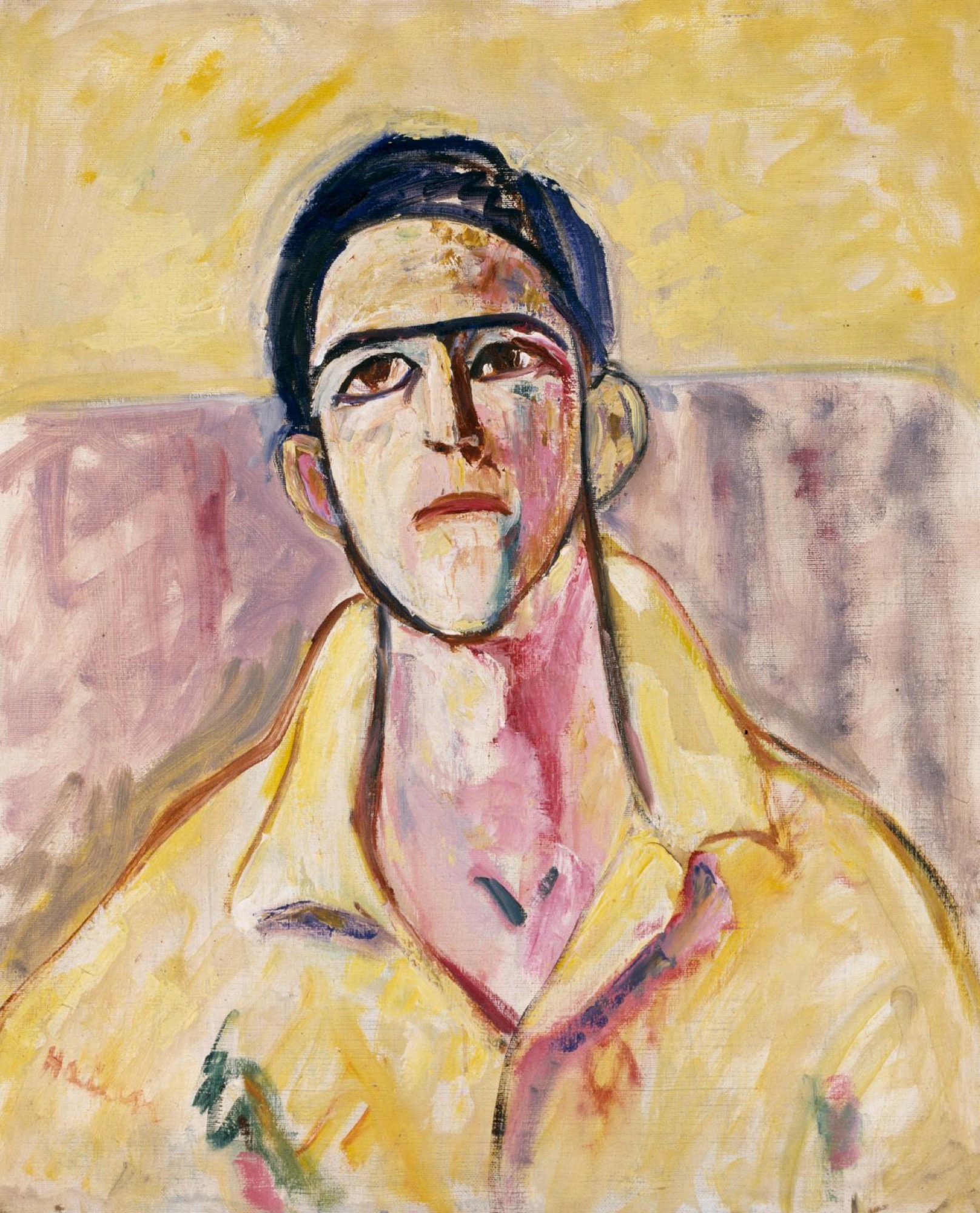
Ambrose Hallen, an almost unknown artist, was among Bryans’ earliest friends to live at Darebin, and the subject of her first portrait (fig. 3).18 Hallen, an Australian artist who left home early in his career to live at the artistic centre in Paris, remained in France for thirty years, and was acquainted with School of Paris artists Modigliani, Kisling, Soutine and Matisse. He returned to Sydney in 1936, holding his first Australian exhibition at Anthony Horden’s gallery, where his paintings were described as “poems in colour.”19 While in Paris he had met Vladimir Polunin, a former scene painter for Diaghilev’s Ballets Russes, who later became head of design at the Slade School of Fine Art in London. His friendship with Polunin brought him in contact with the Russian artist Danila Vassilieff, who, like Hallen, came to Melbourne in 1937. Hallen had admired Bryans’ work, Boats at Fishermen’s Bend, seen in a window in the city, and described it as “the most French looking” he had “seen since arriving back in Australia.”20 He sought Bryans out and later asked her to decorate two rooms and a studio for him at Darebin, where he lived until his death in 1943.
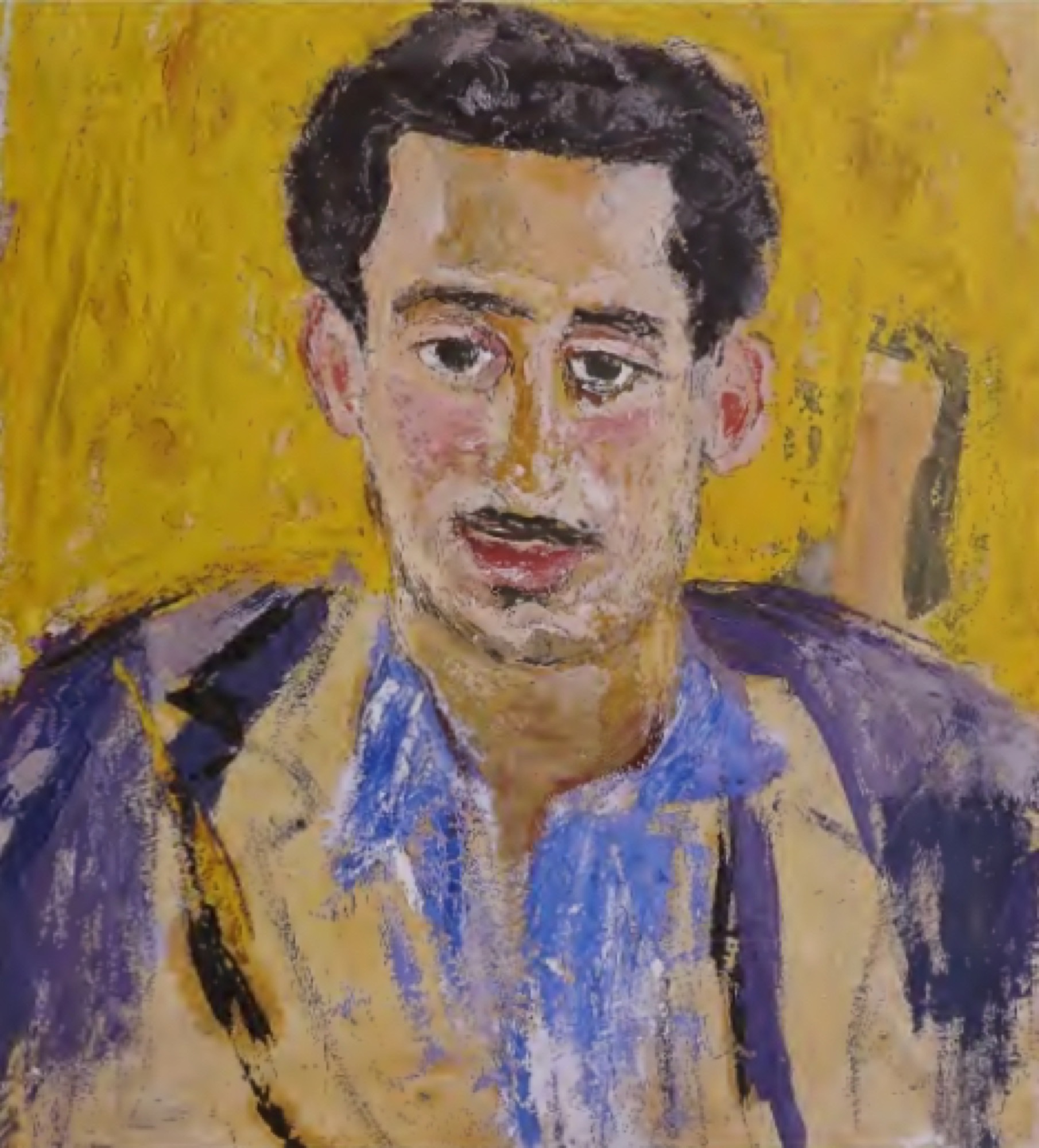
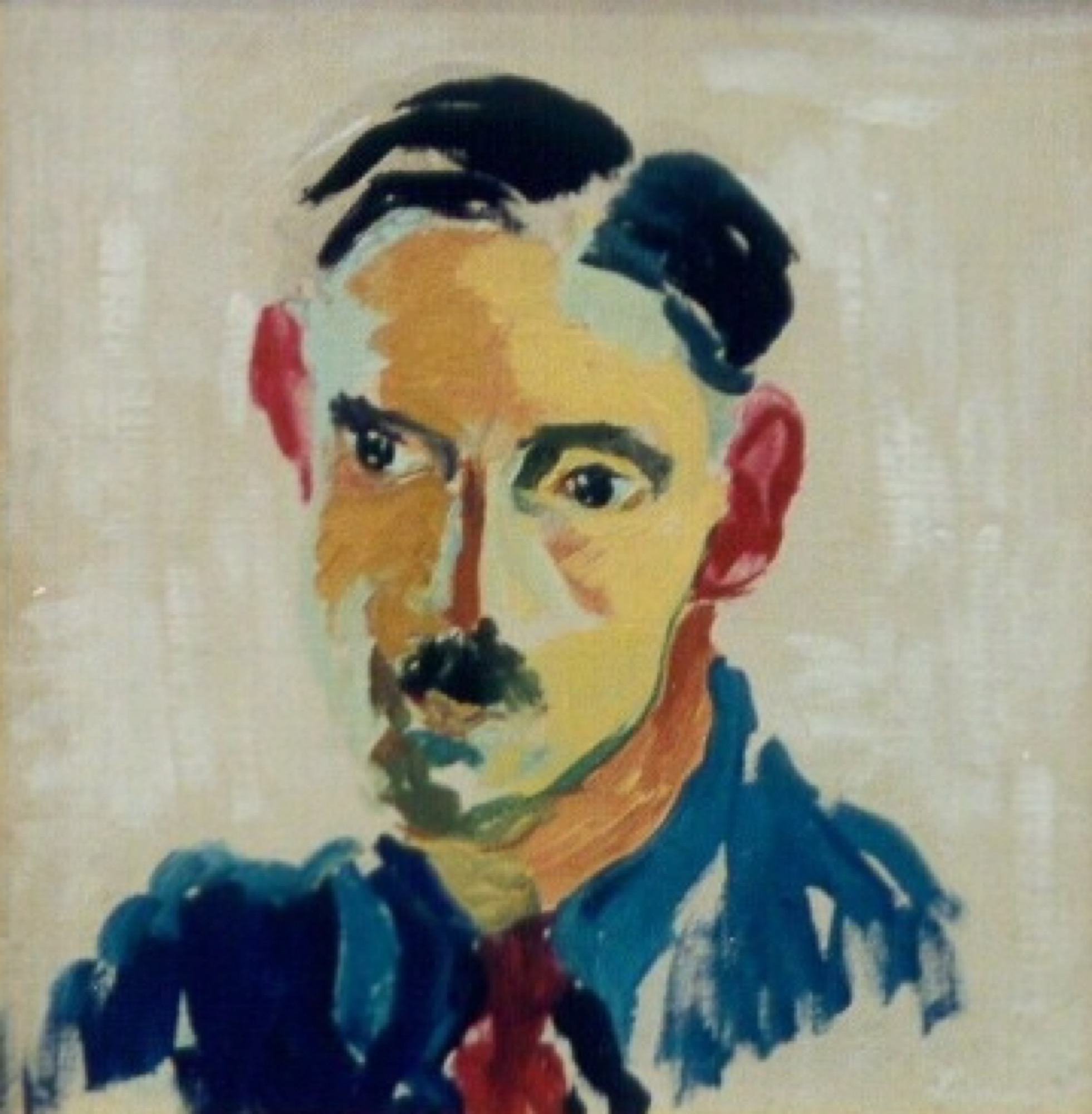
Hallen’s Matissean style, characterised by pure colour and dark graphic outlines, far in advance of conservative Melbourne art at the time, is revealed in his striking portrait of the art critic Laurie Thomas (fig. 3), who was also a member of the Darebin Bridge House group in the late 1930s. Hallen’s colouristic style provided an early example to Bryans, who was influenced by it in her portrait of Phil Freedman (fig. 4), a visitor to Darebin in the late 1930s. Freedman was a script writer for Australian radio serials, later contributing to the first popular television shows including Matlock Police and The Sullivans. The chrome yellow and azure, accentuated by a solid black line, reflect the influence of Hallen as well as the revolutionary Herald Exhibition of French and British Contemporary Art shown in Melbourne in 1939. Known throughout her career as a colourist, Bryans was later considered “the most dazzling colorist [sic] of them all” by the art critic Patrick McCaughey.21
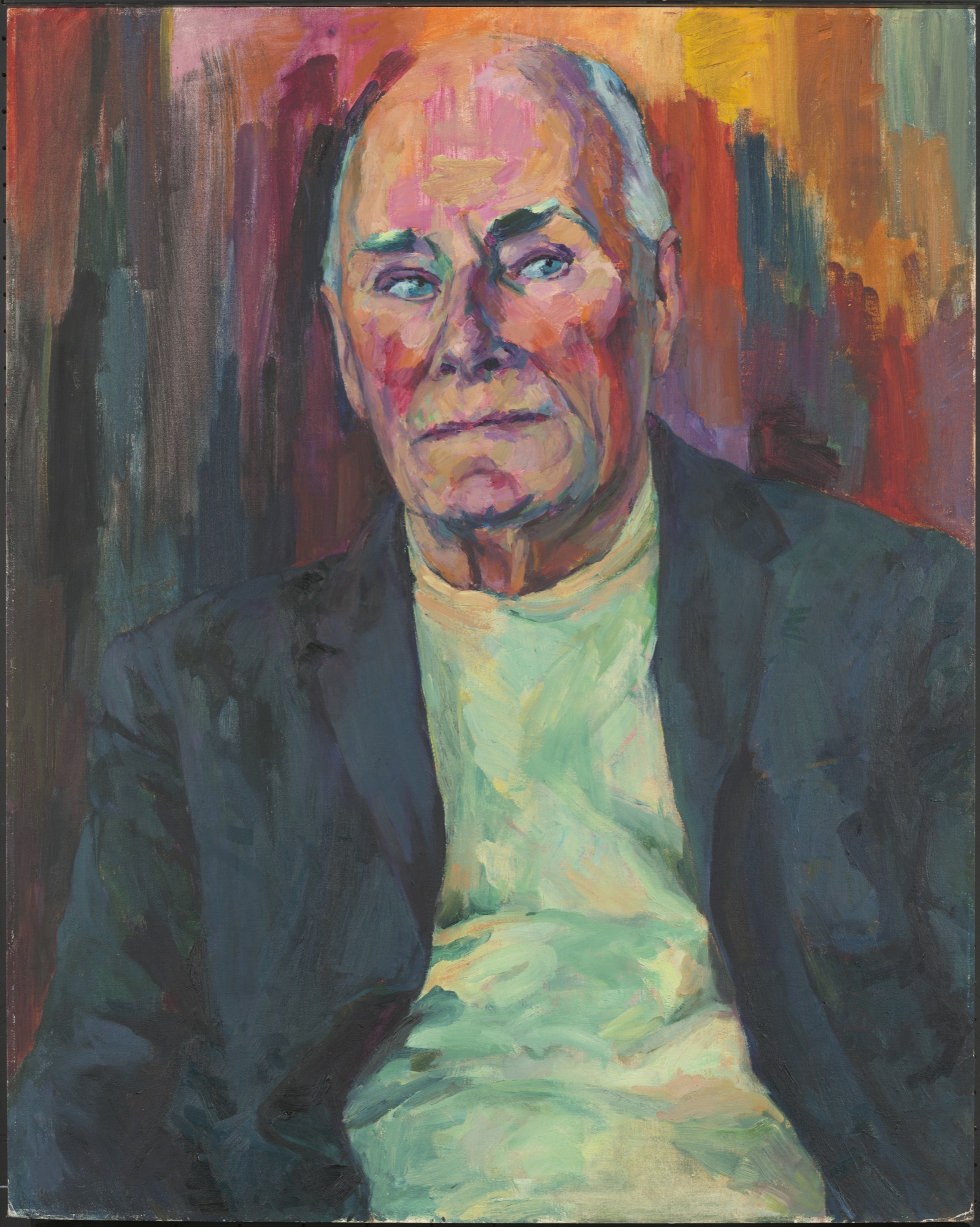
Adrian Lawlor was one of the oldest of Bryans’ artist friends, whom she had visited at Warrandyte with Frater and the young Alan Sumner in the mid-1930s. Lawlor, a high-profile polemicist and writer who came to prominence in Melbourne in the 1930s, believed—like Bryans—in Read’s philosophy. Lawlor’s interests lay in philosophy, art and literature, and the ideas of Herbert Read, T. S. Eliot and D. H. Lawrence. He gave up painting for writing in the 1940s, after adverse critical reviews, but continued to pursue his writing and broadcasting.22 During these years he frequented Darebin Bridge house, remaining Bryans’ friend for thirty years. Bryans’ late portraits of the elderly Lawlor (such as fig. 5) capture in high-keyed colour his impassioned involvement in the arts.
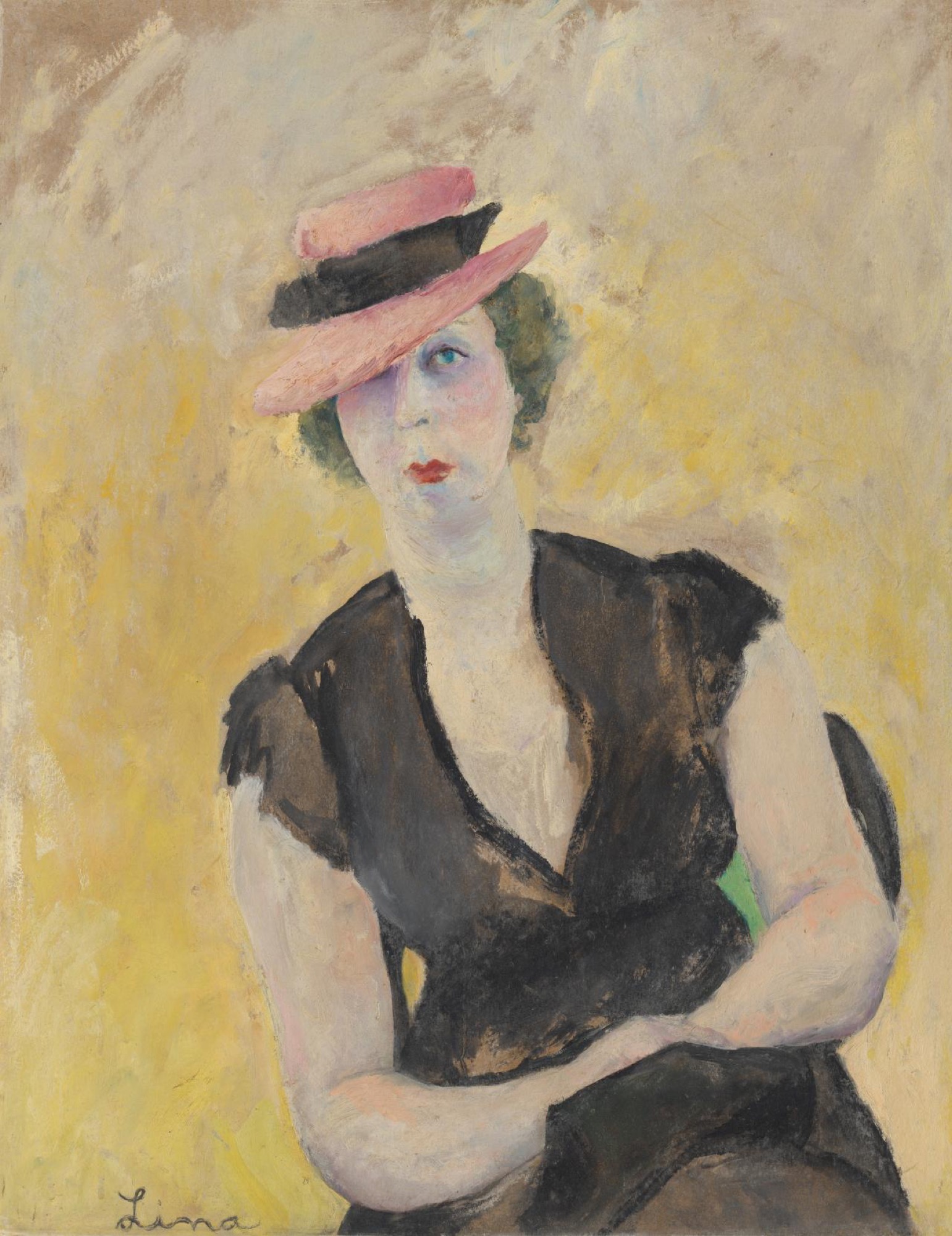
Bryans was well-read in Australian and European literature and welcomed writers and literary figures to Darebin Bridge House. Jean Campbell, a modernist writer of novels and short stories, was among the best-known literary personalities of the time and a close friend of Bryans’. She wrote over thirty novels that explored the European-Australian migrant experience, the best-known being The babe is wise (1939), concerning a Russian émigré family whose children abandoned their parents’ traditional lifestyle. Bryans’ portrait, The babe is wise (1940, fig. 6), promoted both artist and writer within the small circle of literary modernists in Melbourne. Its wit and insouciance, although shocking conservative critics, affirmed Campbell’s place at the heart of Melbourne’s literary establishment.23 A guest at Bryans’ famous dinner parties, Campbell later told the artist “I needed no reward for sitting for you … I consider it an honour to be known as Lina’s model.”24
During the early 1940s, Bryans supported the war effort. She would take a bus into town each day, arranging exhibitions and concerts to raise money for the Red Cross Comforts Fund. Alan McCulloch, the art critic and later editor of the Australian Encyclopedia of Art, helped supervise the publicity for her patriotic fund-raising concerts in the Lower Melbourne Town Hall. McCulloch was a regular visitor at Darebin and a loyal friend of Bryans, whom he described as “a marvellous hostess who converted Darebin into an artists’ house.”25 Her swift sketch of McCulloch captured his thoughtful personality in its witty coloristic interpretation (fig. 7). As art editor of The Australasian Post, from 1944 to late 1946, McCulloch worked with international artists, including a group of Dunera artists. One such was the Norwegian Harald Vike, who contributed graphic art to the magazine.26 Described by McCulloch as “Van Gogh in the Australian climate,” Vike, although not a visitor to Darebin in the 1940s, was later the subject of a portrait Bryans painted in the 1950s.27
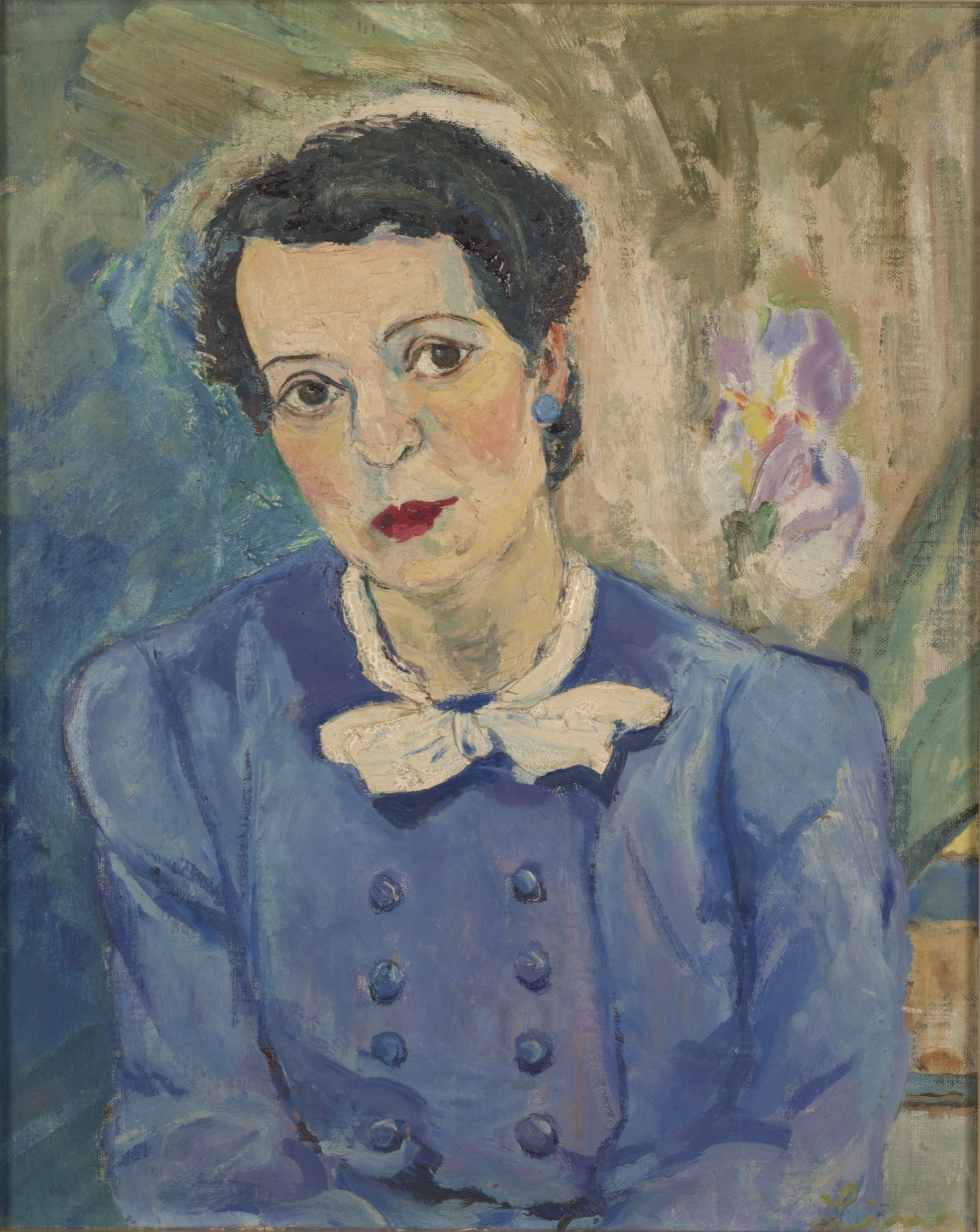
European émigrés gave the Darebin Bridge House artists’ colony its culturally diverse character when Melbourne was still relatively Anglo-centric and isolated from European thinking. Among Bryans’ émigré friends were Russian-speaking Dolia Ribush, who had emigrated from Russia in the late 1920s, and his Latvian wife Rosa Revid, both active in the theatre. Rosa’s sister had been a ballet dancer with the Imperial Russian Ballet.28 Rosa became a tutor in the Russian department at the University of Melbourne while Dolia brought Stanislavsky’s European style of theatre to Melbourne with productions of the highest standard, ranging from Chekhov’s The Cherry Orchard in 1938 to Douglas Stewart’s Ned Kelly in 1944.29 Bryans painted two portraits of Rosa, one entitled Rosa Ribush (c. 1940, fig. 8) and a second one in 1944.30
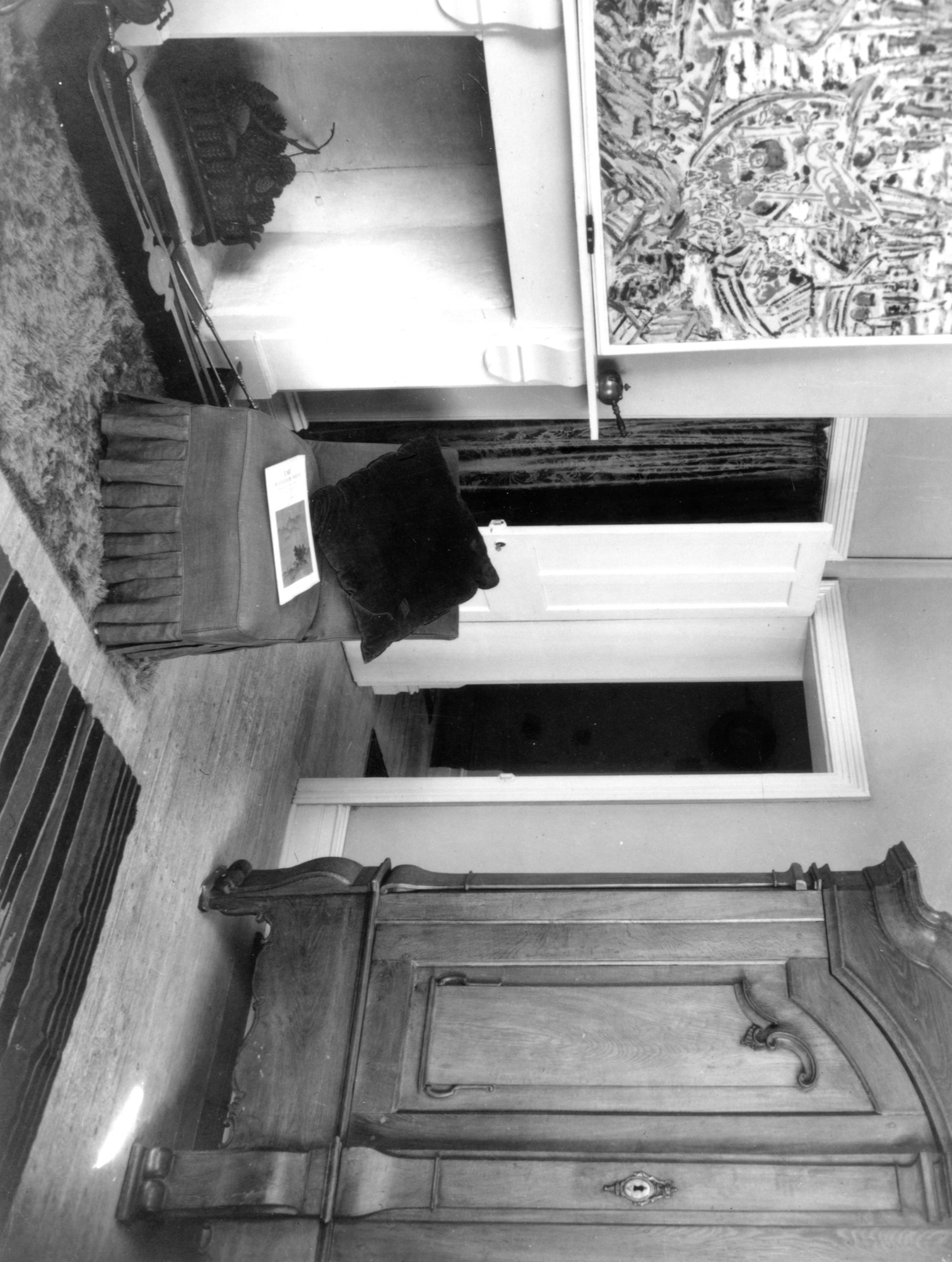
By the early 1940s Bryans was known as an “artistic dynamo” in the Melbourne art scene, and worked at her easel daily, becoming an exhibiting member of the Melbourne Society of Women Painters and Sculptors and the Independent Group of Artists and receiving favourable notices from the critics. On purchasing Darebin Bridge House, in 1943, she transformed the old building: waxing the floors in pastel colours of mauve, yellow and pink and painting the outside walls pink. It became known as the Pink Hotel or “The Painters’ Pub.”31 She brought her own style to the rooms, hanging paintings from her Ian Fairweather collection, and adding her books and furniture, including an antique French armoire that previously belonged to the artist Rupert Bunny (visible in fig. 9). She entertained with largesse, giving lavish dinner parties for her friends and creating new connections between artists, writers and curators.
After the Second World War, Bryans continued at Darebin with undiminished “courage and high enterprise,” according to the art critic Clive Turnbull.32 In 1945 Dr C. B. (Clem) Christesen, with his Russian wife Nina, came from Brisbane to live in Melbourne at the invitation of the University of Melbourne to publish his journal Meanjin as a Melbourne University Press imprint. Christesen made a major contribution to Australian cultural life, publishing Australian poetry, fiction, and essays. The Christesens appreciated the literary milieu of the Darebin colony, with its warmth, liberalism and love of the European cultural tradition. Meanjin became the foremost journal of ideas of the time, commended later by the art critic Bernard Smith as a forum where “intellectuals of different disciplines and different persuasions met on common ground.”33
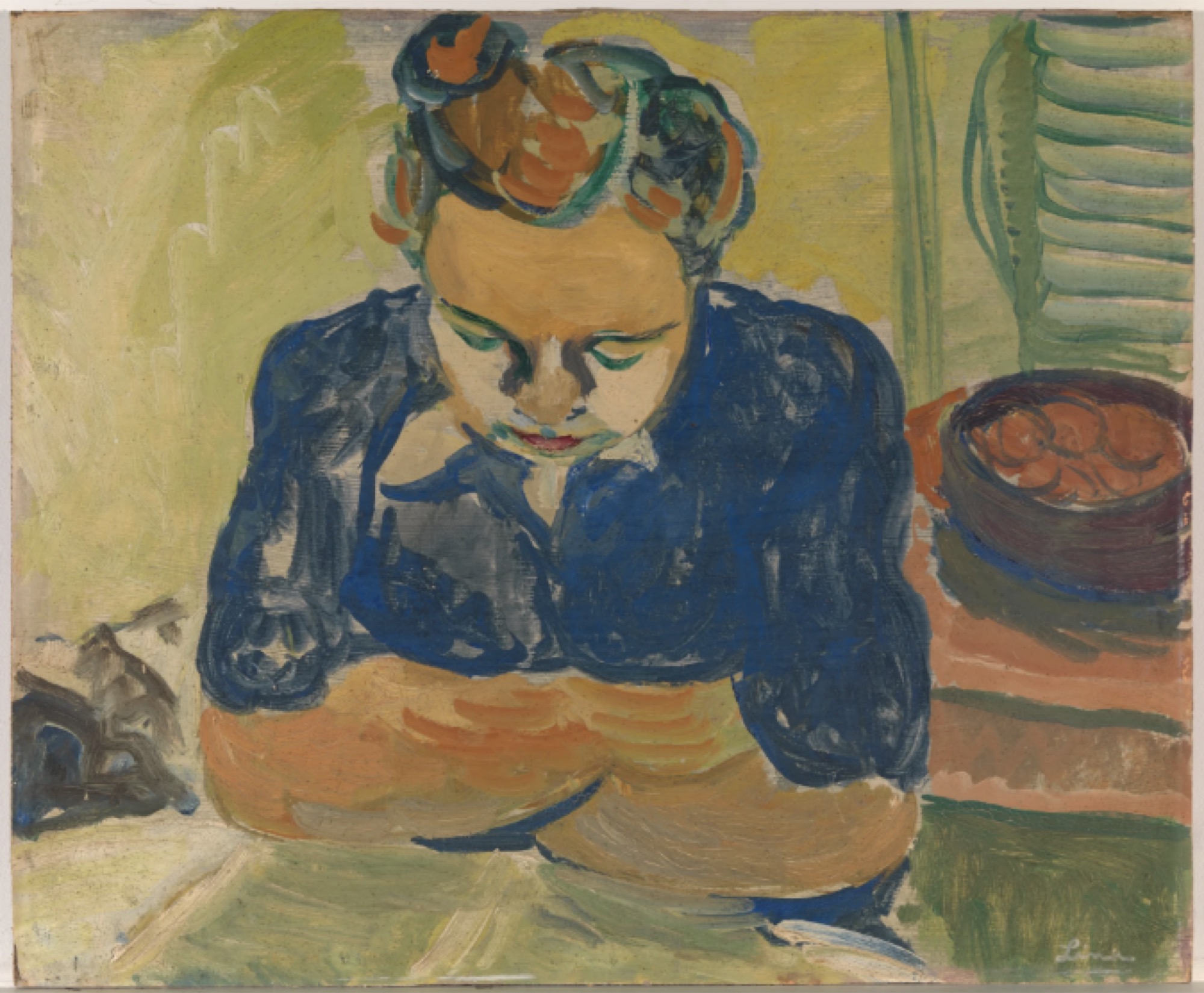
Bryans’ friendship with Nina Christesen came at a time when to be a woman and a migrant in Australia generally meant being excluded from the mainstream. Nina’s brilliant academic background led to her appointment in 1946 as foundation lecturer in Russian at the University of Melbourne, and later head of the Russian Department at the University’s Extension Board. Bryans’ portrait, The student (c. 1947, fig. 10), shows Christesen studying at the kitchen table at Darebin, while another portrait in 1947, entitled Nina Christesen, is inscribed on the reverse by the artist: “For my loved friend Nina Christesen. Happily, we meet again.”34
Vance and Nettie Palmer, significant contributors to Meanjin, were also close friends with Bryans at Darebin. Nettie—writer, historian, literary critic and linguist—worked to promote a more international outlook for Australian writing, being a keen student of comparative literature, and reading French, German, Greek and Spanish. She and Bryans were kindred spirits whose personal libraries contained many European and Australian authors. Bryans painted two portraits of Nettie Palmer, one later acquired by the National Library of Australia.35
Across the river Yarra at Fairy Hills, Ivanhoe, Norman and May Macgeorges’ house fronted onto the river, which allowed for summer punting parties.36 Although less bohemian than Bryans’ “Painters’ Pub,” the Macgeorges’ home was also a meeting place for progressive artists and for academics from the University of Melbourne. Bryans valued the couple’s personal support and sympathetic criticism of her painting. May was the daughter of Captain John Stuart Hepburn, the early pastoralist after whom Hepburn Springs, Daylesford, was named.37 May shared with Bryans a love of ballet and creating beautiful interiors.38 Norman had encouraged Bryans in her painting since the time of the art show held in 1937 to celebrate the opening of the Heidelberg Town Hall, when she entered three works in her first public exhibition.39 His support and that of Basil Burdett, the advanced art critic, meant much in the formalised art world of the time.40 Norman continued to admire her “vigour and expressiveness” and her “vitality… and directness.”41
Macgeorge was an artist, teacher, lecturer and critic; he was a contemporary of Ada May Plante and a lyrical painter of landscapes and seascapes. A first-generation modernist, his defence of modern art placed him in sympathy with Sir Keith Murdoch’s moves to liberalise the National Gallery.42 Macgeorge gave lectures on modern art through the University’s Extension Board, and in 1948 compiled and published The Arts in Australia, a celebration of developments in Australian art, architecture, literature, drama and ballet.43 Affirming Bryans’ art, three of the eight colour plates of paintings were devoted to Bryans’ work: Nude study (1945), a portrait of Nina Christesen (1947) and River scene (c. 1945). The publication also contained contributions by three writers whose portraits Bryans had painted: Jean Campbell, Keith Macartney and Rex Rienits. In 1959 she was to paint a portrait of Dr Andrew Fabinyi, publisher with Cheshire’s, the firm which published Macgeorge’s book. Bryans shared friendships with many members of the University of Melbourne, including Keith Macartney, who became an associate professor in English.
By the end of the war in 1945 the group who had first come to the Darebin artists’ colony in the late thirties no longer existed. Only Frater continued to paint with Bryans; Lawlor and Sumner remained regular visitors; Hallen had died in 1943; and Lawlor abadoned his career as an artist after his unsuccessful exhibition in 1940. Sumner remained a lifelong friend, although during the early forties he was occupied with work as a manager of the stained glass department at E.L. Yencken and Co. as well as serving as a civilian artist for the Armoured Fighting Vehicles, the RAAF, the RAN and the Army. After the war, he developed his silkscreen printing technique.44
In 1945 Bryans made a significant contribution to the continuity of Melbourne’s cultural life when she offered Ian Fairweather a room at her artists’ colony. She was first briefly introduced to Fairweather by Frater in 1934.45 In June 1943 Bryans and Frater, who was acting as his agent, met again and, knowing Fairweather’s interest in translating Chinese characters, Bryans gave him a Chinese dictionary. He wrote to her in September 1943: “I’m sending herewith the 2nd and 3^rd^ Chapters of the Shen Chou tales. They are awful tripe I fear but just to show you I have been using your dictionary.”46 In a letter dated 2 August 1945 he wrote again to Bryans: “Might I count on that small room you once offered me – till I can find some place or hit the road again.”47 Sensitive to his reclusive nature, Bryans became one of Fairweather’s few trusted friends and, as their relationship strengthened, she undertook the responsibilities of acting as his agent in the mid-forties, following in Frater’s footsteps.48
After years spent living on the periphery of Asia and the Pacific, Fairweather shunned the high-spirited company at Darebin; he remained in his studio or sitting on the front verandah, continuing his study of Chinese characters using his Chinese dictionary.49
Fairweather in many ways epitomised the Darebin colony’s ethos of haptic creativity and represented a model of the artist whose creative inspiration transcended cultural boundaries, crossing between Eastern and Western art. The haven Bryans offered him at Darebin allowed Fairweather to complete 160 paintings and one sculpture, a head of a Balinese woman. It was an image which Fairweather had interpreted on paper in gouache, watercolour, oil and pencil in 1933.50 He modelled the head on impulse in clay on a wine bottle, which later split. It was one of Bryans’ favourite pieces, which was later permanently cast in plaster for her by the sculptor Ola Cohn.51
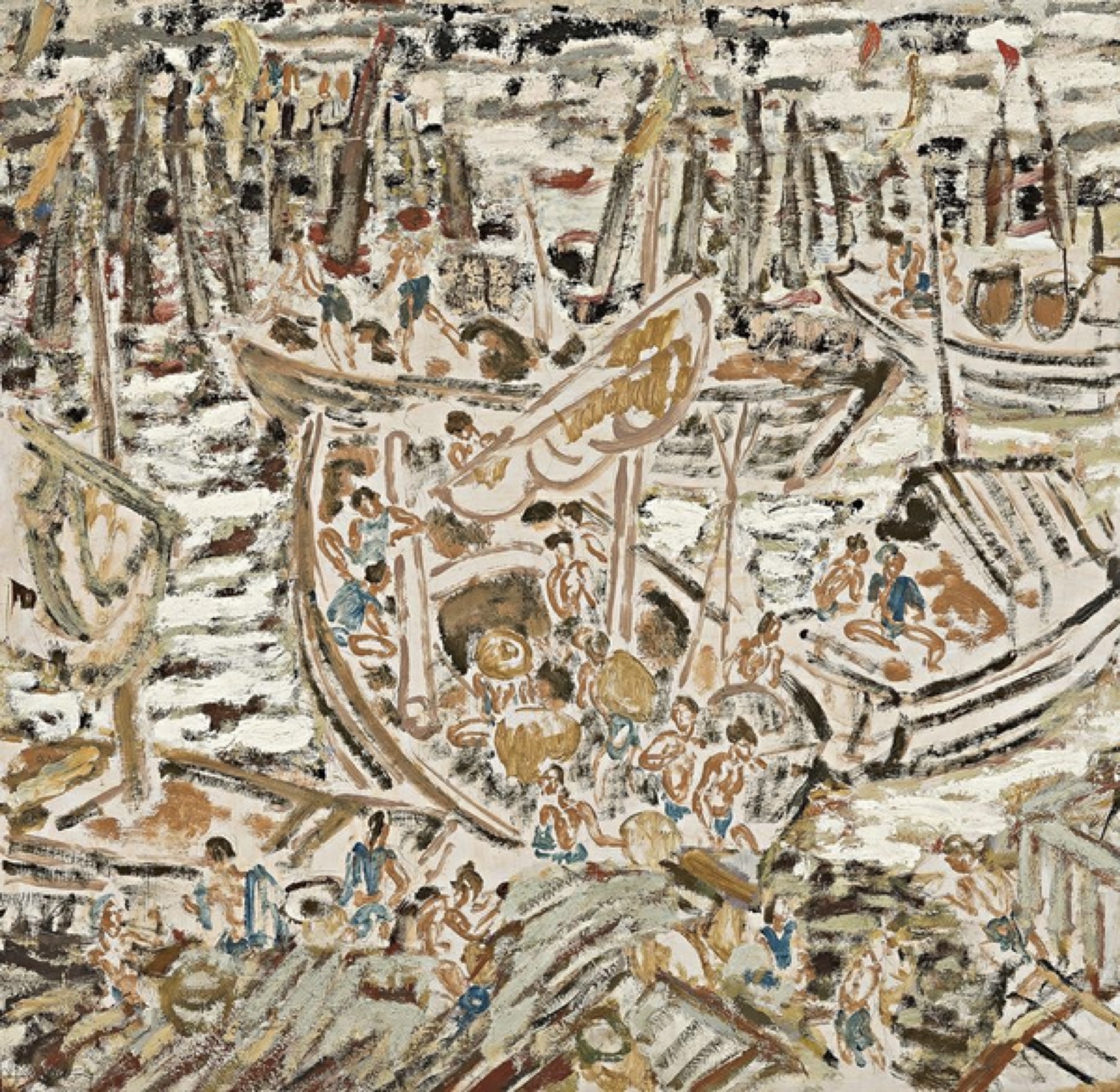
Bryans was known for her fine Fairweather collection. As early as 1938 she bought several paintings Fairweather had sent to Frater for him to sell including Boats at Soochow Creek (1938, fig. 11), which depicted from memory the view from the artist’s window in Shanghai in 1929. It was described by Murray Bail in his study of Fairweather as “a hectic pattern of sampans on straw-coloured water,” a painting of “light and life and commerce.”52 In 1965, Bryans lent her outstanding collection of Fairweather paintings to a retrospective of his work curated by the Queensland Art Gallery.53
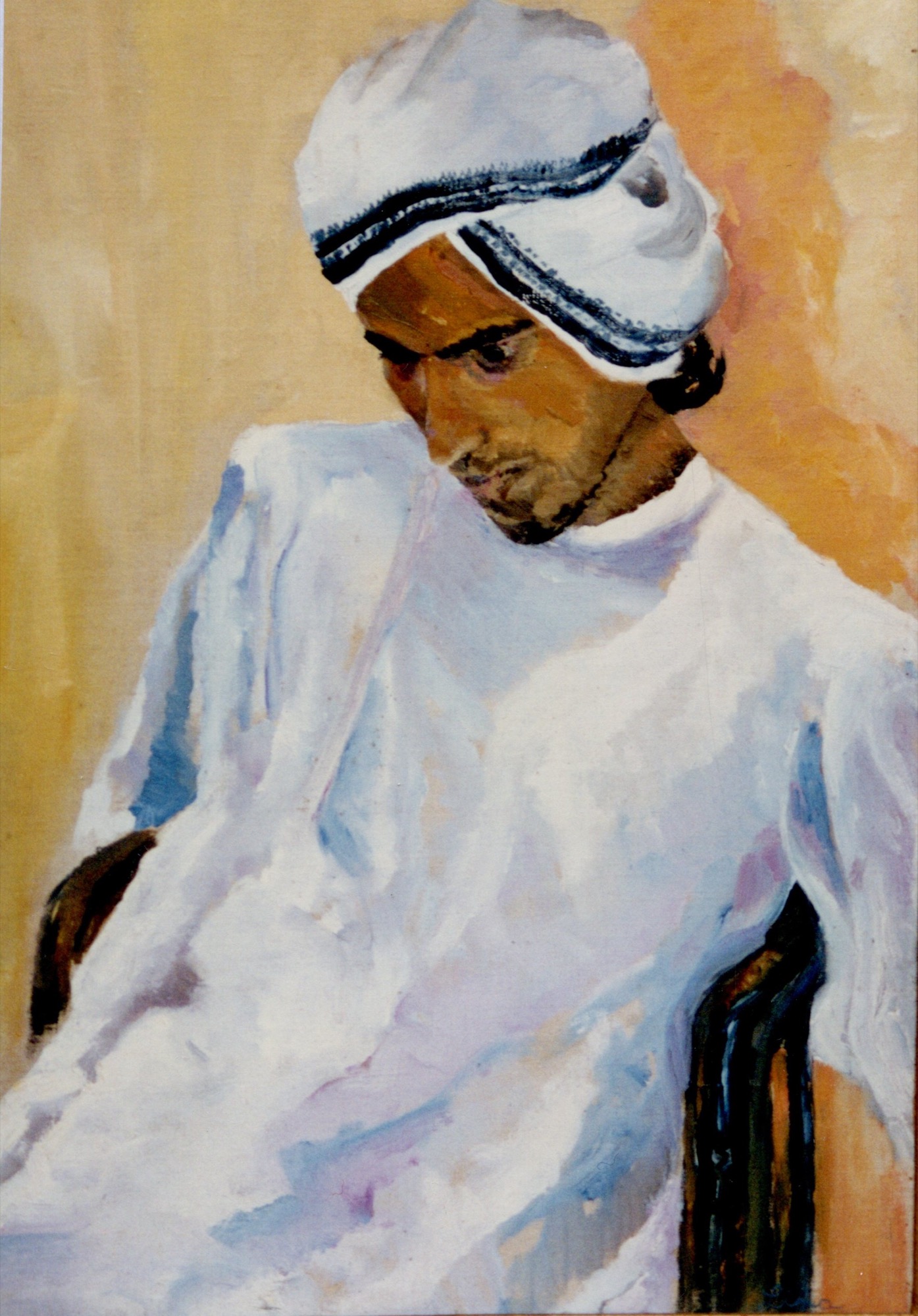
Altogether Bryans painted eighteen portraits at Darebin Bridge House between 1937 and 1948.54 None were commissioned, as all her subjects were invited to sit for her during moments of exchange between herself and her sitters. Shivaram, the Indian dancer, was her last guest at Darebin, and the subject of her last Darebin portrait, painted when he came to perform in Melbourne in 1948 (fig. 12). During his visit, on 30 January 1948 Mahatma Gandhi was assassinated.55 Bryans’ portrait of Shivaram mourning Gandhi offers a reflection on the transcultural atmosphere of her artists’ colony and is testimony to the artist Alan Sumner’s description of Bryans as “the Gertrude Stein of Melbourne, who befriended everyone, and always to their advantage” (fig. 13).56
By 1947 Bryans’ personal differences and her need to pursue a freer artistic and emotional life led to her decision to end her relationship with Frater.57 In 1948 Bryans sold Darebin Bridge House. She moved to a country property at Harkaway, before returning to Melbourne in the early fifties, living in Richmond, and continuing to paint and support the arts. Largely unacknowledged in the 1960s and 70s by the art critics and historians such as Bernard Smith, her contribution began to be re-evaluated towards the end of her long life in 2000.58 Bryans’ legacy is best found in her portraits of friends, which bear witness to her ability to nurture and reaffirm the values of artists who worked in the mainstream of cultural life. Darebin Bridge House was a model of an artists’ colony which drew together artists from different backgrounds and nationalities across the arts to liberalise the Melbourne art world of the 1940s.
-
Tom Roberts, A quiet day on Darebin Creek, 1885, oil on wood panel, 26.4 x 34.8 cm, National Gallery of Australia. ↩
-
“The Art Students’ Annual Exhibition,” The Argus, Melbourne, 10 March 1886, 4, cited in Ann Galbally, Frederick McCubbin (Hutchinson of Australia, 1981), 27. ↩
-
Susan Reidy, “The Art of Living in the Australian Suburb,” in Creativity from Suburban Nowheres: Rethinking Cultural and Creative Practices, ed. Ilja Van Damme et al. (University of Toronto Press, 2023), 103–104. ↩
-
J. Taylor, “Modern Decorative Art at Glasgow,” The Studio: An Illustrated Magazine of Fine and Applied Art 39 (1907): 31, quoted in Richard Wittman, William Frater: A Life with Colour (Miegunyah Press, 2000), 12. ↩
-
Wittman, William Frater, 7, 9. ↩
-
Jennifer Phipps, “Plante, Ada May (1875–1950),” in Australian Dictionary of Biography (National Centre of Biography, Australian National University, first published in hardcopy 1988), https://adb.anu.edu.au/biography/plante-ada-may-8062 ↩
-
D.A. Bulletin, no. 121 (June 1965), cited in Heidelberg Historical Society, “Darebin Bridge Hotel,” https://www.heidelberghistoricalsociety.com.au/history-selections07.php ↩
-
Geulah Solomon, “Benjamin, Sir Benjamin (1834–1905),” in Australian Dictionary of Biography (National Centre of Biography, Australian National University, first published in hardcopy 1969), https://adb.anu.edu.au/biography/benjamin-sir-benjamin-2972 ↩
-
“Century in leather,” The Herald, Melbourne, 17 July 1964, in Papers of Lina Bryans, 1930-2000, State Library Victoria, MS 9420, box 8. See also The Michaelis, Hallenstein story, 1864–1964: One Hundred Years in Leather. Image Australia, 1964. ↩
-
Gillian Forwood, Lina Bryans: Rare Modern 1909–2000 (Miegunyah Press, 2003), 19. ↩
-
Lina Bryans, “Spiritual Values in Art: A Lecture to the Ballarat Artists’ Society,” October 1947, typescript of a radio talk, in SLV, MS 9420, box 3. ↩
-
Graeme Kemelfield remembered “the stifling conformity of the time” and visiting Darebin Bridge House as a child with his parents, who were friends of Miss Plante. Interview with the author, 2 December 1993. ↩
-
Lina Bryans, interviewed by Barbara Blackman, 15 Bowen St, Kew, Vic., 1 August 1989. Oral History Section, National Library of Australia, TRC 2497. ↩
-
Sir Keith Murdoch, ardent supporter of modern art, had been appointed chairman of the Board of Trustees of the NGV in 1939. Daryl Lindsay, Murdoch’s chief art adviser, and his wife Joan à Beckett Lindsay, were friends of Bryans’. ↩
-
Herbert Read, “A Nest of Gentle Artists,” Apollo 77, no. 7 (September 1962): 536. ↩
-
Herbert Read, The Philosophy of Modern Art: Collected Essays (Faber and Faber, 1969, 1st ed. 1952), 116. ↩
-
Lina Bryans, interviewed by the author, 15 May 1992. ↩
-
Lina Bryans, Portrait of Ambrose Hallen, 1937, oil on board, 96.5 x 90.0 cm, National Portrait Gallery, Canberra. ↩
-
Gustave Kahn, cited in Catalogue of an Exhibition of Modern Oil Paintings and Water Colour Drawings by Mr Ambrose L. Hallen (Anthony Hordern and Sons Ltd, 6–9 August 1936), 1. Kahn’s phrase is repeated in “Exhibition of Paintings and Drawings in Anthony Hordern’s Fine Art Galleries,” The Catholic Press, Sydney, 6 August 1936, 13, http://nla.gov.au/nla.news-article106382956 ↩
-
Ambrose Hallen, cited in Mary Eagle, “Lina Bryans,” Art and Australia 21, no. 2 (Summer 1983): 235. ↩
-
Patrick McCaughey, “The Shows in Retrospect,” The Age, Melbourne, 31 December 1966, 19. ↩
-
Art critic Basil Burdett, in a review of Lawlor’s 1940 show, wrote: “This many-faceted art, as a whole, seems to me, at least, to lack the personal conviction of style which is a quality of survival.” Basil Burdett, “Traditional and Modern Idea in Two Art Shows,” The Herald, Melbourne, 29 April 1940, 9. Lawlor did not exhibit again as a practising artist. ↩
-
“The portrait of Jean Campbell… worked the crowd into a rabid discussion. Adverse comments and criticisms were as drops of water upon Donald Duck’s back to the painter, Lina Bryant [sic] and the sitter, who is one of our authors.” “Melbourne Chatter,” The Bulletin, 23 October 1940, 29. ↩
-
Jean Campbell to Lina Bryans, 1 December 1940, SLV MS 9420, box 1. ↩
-
Alan McCulloch, interviewed by the author, 8 August 1992. ↩
-
Roger Butler, ed., The Europeans: Émigré Artists in Australia, 1930– 1960 (National Gallery of Australia, 1997), 7. The Dunera was the infamous transport ship carrying émigrés to Australia, many of whom were artists, fleeing their homes in Europe in 1940 during the Second World War. ↩
-
Alan McCulloch, “Foreword,” in Julian Goddard, Harald Vike, 1906–1987: A Retrospective (Kingstream Fine Art, 1990), 9. Lina Bryans, Harald Vike, 1955, oil on canvas, 98.0 x 68.0 cm, Geelong Art Gallery, Geelong. ↩
-
Lina Bryans, interviewed by the author, 15 May 1992. ↩
-
Papers of Dolia and Rosa Ribush, State Library Victoria, MS 9298, series 6. ↩
-
Lina Bryans, Rosa Ribush (c. 1940), oil on canvas on cardboard, 63.8 x 50.6; Lina Bryans, Rosa Ribush in a cream shirt (1944, dated 1934). ↩
-
Georgiana Wilson, “Painters’ pub,” The Australian Home Beautiful: A Journal for the Home Builder 26, no. 12 (December 1947): 25–27, and Valerie Albiston, “The Pink Hotel,” This Australia 5, no. 4 (1986): 36. ↩
-
Clive Turnbull, “Paintings by Lina Bryans, Adrian Lawlor, William Frater,” Meanjin 25, no. 4 (December 1966): 477. ↩
-
Bernard Smith, “Notes based on Comments by Dr. Bernard Smith at Arts Faculty Meeting on August 4, 1960,” in The Temperament of Generations: Fifty Years of Writing in Meanjin, edited by Jenny Lee et al. (Meanjin/Melbourne University Press, 1990), 98. ↩
-
Lina Bryans, Nina Christesen, 1947, oil on canvas on plywood, 81.9 x 60.3 cm, illustrated in Gillian Forwood, The Babe is Wise: Lina Bryans and her Portraits (University of Melbourne, Museum of Art, 1995), 36. ↩
-
Forwood, The Babe is Wise, 52–3. ↩
-
Ray Marginson, “Macgeorge, Norman (1872–1952),” in Australian Dictionary of Biography (National Centre of Biography, Australian National University, 1986), https://adb.anu.edu.au/biography/macgeorge-norman-7356 ↩
-
Lina Bryans interviewed by the author, 21 July 1994. ↩
-
For details of Bryans’ and May Macgeorge’s friendship, see also Reidy, “The Art of Living in the Australian Suburb,” 111. ↩
-
Heidelberg Art Exhibition catalogue, 29 April 1937, in SLV, MS 9420, box 5. ↩
-
Basil Burdet praised Bryans’ Backyards, South Yarra, as “one of the best modern landscapes” he had seen in Australia; see “Landscapes Predominate in Three Shows,” The Herald, Melbourne, 3 May 1937, 7. ↩
-
Norman Macgeorge to Lina Bryans, “Fairy Hills 1948” [after her exhibition in Georges in 1948], and 21 December 1950 [after her Independent Groups show], SLV MS 9420, box 8. ↩
-
Norman Macgeorge, “What New Art Is,” [letter to the editor], The Argus, Melbourne, 7 May 1937, http://nla.gov.au/nla.news-article11062687. Macgeorge’s letter is cited and discussed in Adrian Lawlor, Arquebus (Ruskin Press, 1937), 52. ↩
-
Norman Macgeorge, The Arts in Australia (Cheshire, 1948). ↩
-
Jane Clark, Alan Sumner (National Gallery of Victoria, 1993), [9]. ↩
-
Claire Roberts, Fairweather and China (Miegunyah Press, 2021), 83. ↩
-
Roberts and Thompson, Ian Fairweather, 116. ↩
-
Roberts and Thompson, Ian Fairweather, 122. ↩
-
Lina Bryans interviewed by the author, 21 July 1994. ↩
-
Lina Bryans interviewed by the author, 29 May 1992. Roberts and Thompson, Ian Fairweather, 116. Fairweather’s translation of the Chinese tales The Drunken Buddha was published in 1965 (University of Queensland Press). It is possible that Fairweather used Bryans’ dictionary in the translation of this work. ↩
-
Ian Fairweather, Head of a woman, c. 1933, gouache, watercolour, oil and pencil on paper, 36.2 x 26.2 cm. National Gallery of Victoria, Gift of Dr Clive Stephen through the National Gallery Society of Victoria, 1948. ↩
-
Lina Bryans, interviewed by the author, 29 May 1992. Ian Fairweather, Head (1946), cast posthumously 1987, bronze, 25.0 x 18.0 x 16.5 cm, National Gallery of Victoria, Melbourne, gift of Lina Bryans, 1987. ↩
-
Murray Bail, Fairweather (Murdoch Books, 2nd ed., 2009), 18; see also Claire Roberts, Fairweather and China (Miegunyah Press, 2021), 119. The painting was sold through Deutscher and Hackett, Melbourne, 24 April 2013, lot 10. ↩
-
Fairweather: a Retrospective Exhibition (Queensland Art Gallery, 1965); see also Roberts and Thompson, Ian Fairweather, 116. ↩
-
The eighteen portraits Bryans painted at Darebin were: Portrait of Ambrose Hallen (1937), Reginald Wilkinson Esq. (c. 1938), Portrait of John Dutruc-Moore (c. 1938), Shorty (portrait of Amos Lee), 1939, Philip Maria (portrait of Phil Freedman) (c. 1939), The babe is wise (portrait of Jean Campbell) (1940), Rosa (c. 1940), Corporal Frater (Portrait of Arthur Frater) (c. 1940), Sketch portrait of Alan McCulloch (c. 1942), Head of a woman (Alix Sobel), 1943, The Poet A. W. (portrait of Arthur Wallach), 1943, Dr A. R. Alderman, (c. 1944), Rosa Ribush in a cream shirt, (1944 dated 1934), Portrait of Jock Marshall (1945), Portrait of Arthur Davies (1946), Nina Christesen (1947), The student (portrait of Nina Christesen) (c. 1947), Shivaram mourning Gandhi (1948). ↩
-
Forwood, The Babe is Wise, 37. ↩
-
Alan Sumner, interviewed by the author, 10 October 1992. ↩
-
R.E. Wittman, interviewed by the author, 27 January 1994; Wittman, William Frater: a Life with Colour, 55. ↩
-
Foremost art critic Bernard Smith did not mention Bryans in his definitive Australian Painting, 1788–1960 (Oxford University Press, 1962, reprinted 1978). However, following the National Gallery of Victoria’s retrospective that toured, 1982–1983, from the Banyule Gallery in Heidelberg to Geelong and Ballarat—see Lina Bryans: a retrospective exhibition (National Gallery of Victoria, 1983)—Bryans was at last mentioned in the third and fourth editions of Smith’s text (1991 and 2001 respectively) in an additional chapter written by Terry Smith (no relation to Bernard), which acknowledged the achievements of earlier women artists, including “A. M. E. Bale, Clarice Beckett, Lina Bryans, Enid Cambridge, Sybil Craig, Anne Dangar, Joy Hester, Nora Heysen, Kate O’Connor, Ada May Plante, Alison Rehfisch, Marian Ellis Rowan, Clara Southern, Ethel Spowers, Janet Cumbrae Stewart, Jane Sutherland, Jesse Traill and Christian Waller.” See Terry Smith, “A Problematic Practice 1970–80,” in Bernard Smith, with Terry Smith and Christopher R. Heathcote, Australian Painting, 1788–2000 (Oxford University Press, 2001, 4^th^ ed.), 486. ↩
Gillian Forwood holds an MFA from the University of Melbourne. Her research subjects included Lina Bryans, Roger Kemp and the Ballets Russes. As a university librarian, her experience included positions at the London School of Economics library and at the Leeper Library, Trinity College, University of Melbourne. She curated a major retrospective exhibition The Babe is Wise: Lina Bryan and her Portraits at the Ian Potter Gallery in 1995, followed by the publication of her 2002 monograph Lina Bryans: Rare Modern 1909–2000 through Miegunyah Press, an imprint of Melbourne University Publishing.
Bibliography
- Albiston, Valerie. “The Pink Hotel.” This Australia 5, no. 4, 1986.
- Bail, Murray. Ian Fairweather. Bay Books, 1981.
- Bail, Murray. Fairweather. Murdoch Books, 2nd ed., 2009.
- Bryans, Lina. Lina Bryans: A Retrospective Exhibition. National Gallery of Victoria, 1983.
- Bryans, Lina. Interviewed by Barbara Blackman, 1 August 1989.National Library of Australia. TRC 2497..
- Bryans, Lina. Papers of Lina Bryans, 1930–2000. State Library Victoria, MS 9420.
- Butler, Roger, ed. The Europeans: Émigré Artists in Australia, 1930–1960. National Gallery of Australia, 1997.
- Eagle, Mary. “Lina Bryans.” Art and Australia 21, no. 2 (Summer 1983): 231–239.
- Forwood, Gillian. The Babe is Wise: Lina Bryans and Her Portraits. University of Melbourne, Museum of Art, 1995.
- Forwood, Gillian. Lina Bryans: Rare Modern 1909–2000. Miegunyah Press, 2003.
- Fry, Gavin. Adrian Lawlor: A Portrait. Heide Park and Art Gallery, 1983.
- Haese, Richard. Rebels and Precursors: The Revolutionary Years of Australian art. Penguin, 1988 (1st ed., 1981).
- Hallen, Ambrose. Catalogue of An Exhibition of Modern Oil Paintings and Water Colour Drawings by Mr Ambrose L. Hallen. Anthony Hordern and Sons Ltd, 6–9 August 1936.
- Lee, Jenny, Philip Mead and Gerald Murnane, eds. The Temperament of Generations: Fifty Years of Writing in Meanjin. Meanjin/Melbourne University Press, 1990.
- McCaughey, Patrick. “The Shows in Retrospect.” The Age, 31 December 1966, 19.
- Macgeorge, Norman. The Arts in Australia. Cheshire, 1948.
- Marginson, Ray. “Macgeorge, Norman (1872–1952).” Australian Dictionary of Biography. National Centre of Biography, Australian National University, 1986. ,https://adb.anu.edu.au/biography/macgeorge-norman-7356.
- The Michaelis, Hallenstein Story, 1864–1964: One Hundred Years in Leather. Image Australia, 1964.
- Phipps, Jennifer. “Plante, Ada May (1875–1950).” Australian Dictionary of Biography. National Centre of Biography, Australian National University, 1988. https://adb.anu.edu.au/biography/plante-ada-may-8062
- Read, Benedict and David Thistlewood, eds. Herbert Read: A British Vision of World Art. Leeds City Art Galleries, Henry Moore Foundation and Lund Humphries, 1993.
- Read, Herbert. “A Nest of Gentle Artists.” Apollo 77, no. 7 (September 1962): 536–40.
- Read, Herbert. The Philosophy of Modern Art: Collected Essays. Faber and Faber, 1969 (1^st^ ed., 1952).
- Ribush, Dolia. Papers of Dolia and Rosa Ribush, 1904–1980. State Library Victoria, MS 9298.
- Roberts, Claire. Fairweather and China. Miegunyah Press, 2021.
- Roberts, Claire and John Thompson, eds. Ian Fairweather: A Life in Letters. Text Publishing, 2019.
- Smith, Bernard, with Terry Smith and Christopher Heathcote. Australian Painting, 1788–2000. Oxford University Press, 4^th^ ed., 2001.
- Solomon, Geulah. “Benjamin, Sir Benjamin (1834–1905).” Australian Dictionary of Biography. National Centre of Biography, Australian National University, 1969. https://adb.anu.edu.au/biography/benjamin-sir-benjamin-2972
- Turnbull, Clive. “Paintings by Lina Bryans, Adrian Lawlor, William Frater,” Meanjin 25, no. 4 (December 1966): 475–479.
- Wilson, Georgiana. “Painters’ Pub.” The Australian Home Beautiful: A Journal for the Home Builder 26, no. 12 (December 1947): 25-27.
- Wittman, Richard. William Frater: A Life with Colour. Miegunyah Press, 2000.