Colony in Conflict The Social “Underbelly” of Moly-Sabata
The idea of the artist colony—artists living and working together in a specific, often idyllic place—is among the most romantic in Western art history. Moly-Sabata, a self-proclaimed artist colony established by and centred around Cubist painter Albert Gleizes (1881–1953) in the rural town of Sablons in south-east France, justifiably attracts similar readings. With its quaint, pale-pink exterior and green shutters, rambling gardens and picturesque aspect on the banks of the Rhône River, “Moly,” as it is affectionately known, has appeared and continues to appear to the many individuals who pass through its gates as an artistic utopia.
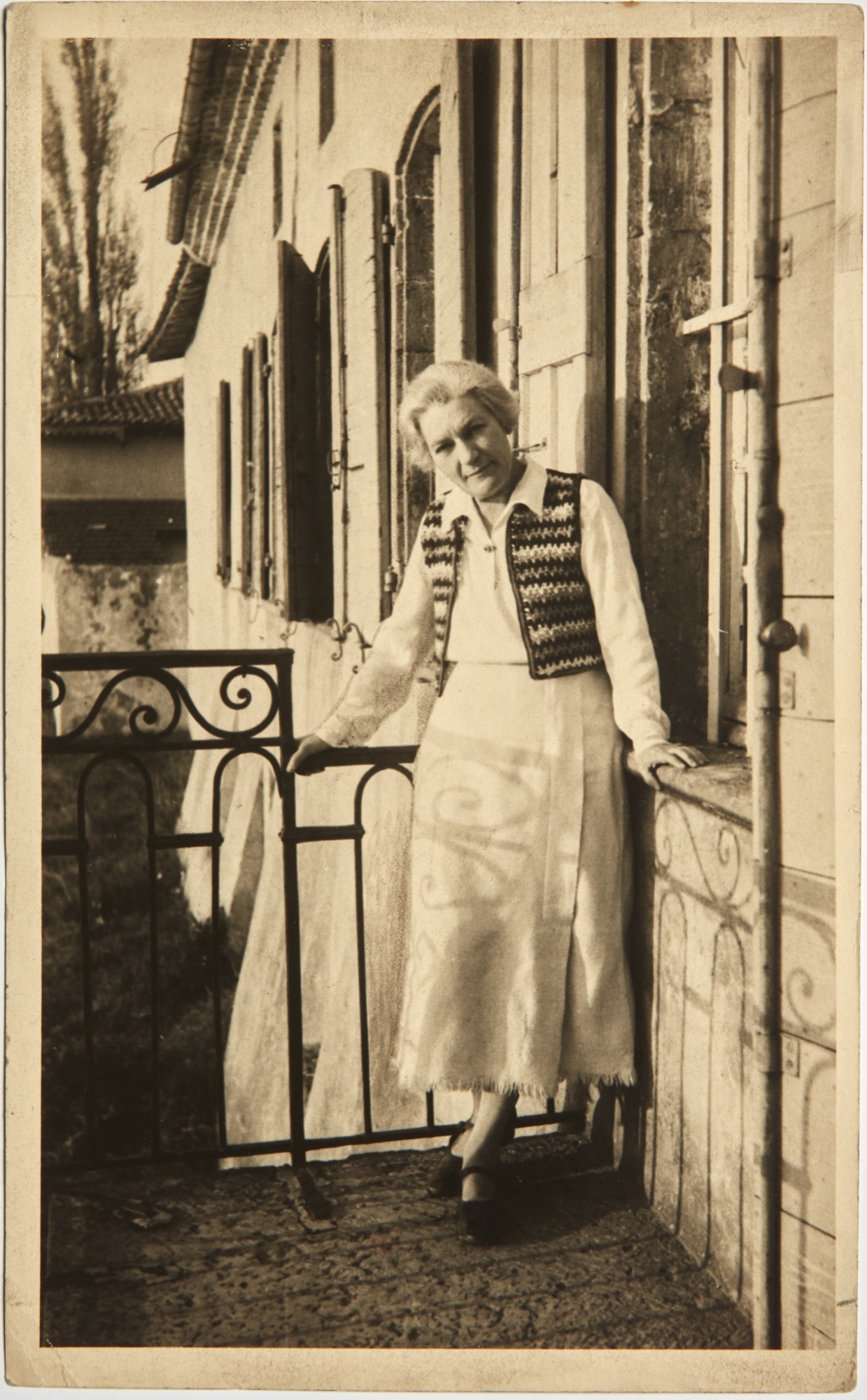
The most well-known resident of Moly-Sabata is Australian Anne Dangar (1885–1951), the Kempsey-born artist who arrived in 1930 and remained until her death in 1951 (fig. 1). Over twenty years, Dangar dedicated herself to the artistic and cultural community Moly-Sabata represented, establishing a reputation as a cubist potter within its gates and exhibiting alongside the European avant-garde. Today, the vibrant pottery created by Dangar is central to Moly-Sabata’s story and connects Australian art to an international history of Cubism.1
Importantly, however, while defined by the mutual artistic interests of participants and valued for their shared art historical contributions, artist colonies were also social constructions formed and informed by the interpersonal relationships of those involved. This essay provides insight into the social fabric of Moly-Sabata, exploring life at the colony itself. It focuses particularly on the sometimes manipulative relationship between Dangar and Gleizes, drawing upon the one-sided correspondence written between the two, now held in archival collections across Australia and France.2 In so doing, this essay offers an alternative to the false ideal of the idyllic artist colony as a nexus of shared artistic endeavour, and instead explores the “underbelly” of Moly-Sabata, a social dynamic shaped by individual motivations and personal ambitions.
Moly-Sabata was the conception of French artist Albert Gleizes, one of the earliest exponents of Cubism. In 1911, he was among several avant-garde artists to exhibit Cubist paintings for the first time at the Salon des indépendants and the following year co-authored with Jean Metzinger the first major account of the movement to provide a theoretical basis for their formal experimentation, Du cubisme.3 In the wake of the First World War, Gleizes began to develop a rhythmic art that aspired to harmony with the universe and natural world, having become dissatisfied with art devoid of spiritual meaning.4 He returned to the basic elements of painting that he identified in pre-Renaissance art and ancient Celtic and pre-Columbian cultures—shape, line, colour, and tone—and compositional arrangements centred around what he described as the horizontal and vertical “translation” and “rotation” of planar forms. While cubists had broken with the idea of perspective and the distinction between space and object, an innovation Gleizes identified in acts of translation, he sought to extend this idea further by representing the abstract concept of time. This he identified in rotary movement, which he saw as collapsing past, present, and future into one plane, and representative of the world’s relationship with a greater spiritual force.
Gleizes’s ideas attracted a small circle of adherents who followed his aesthetic principles in the 1920s, including Irish artists Mainie Jellett and Evie Hone, and Paris-based artist Robert Pouyaud. Gleizes subsequently established Moly-Sabata in 1927 when he leased an eighteenth-century farmhouse in the town of Sablons, envisaging the building as a space for these burgeoning artistic followers as well as other artists and artisans to focus on their work away from the commercial pressures of the city. This rustic arrangement also corresponded with his belief in the ideals of the retour à la terre, an agrarian movement that emerged in France following the First World War and emphasised the decentralisation of cities, repopulation of towns and regions, and overall return to the perceived simplicity of peasant culture. Residents were expected to be self-sufficient, working collectively to grow their own food, contribute to chores, and generate income through communal artistic and craft work such as the creation of pochoirs—multi-layered prints using zinc stencils—of Gleizes’s paintings that were sold as editions through publisher Jacques Povolozky. Patriarchal rules outlined the division of work between residents, with women restricted to domestic duties and men dividing their time between creative work and outdoor activities.5
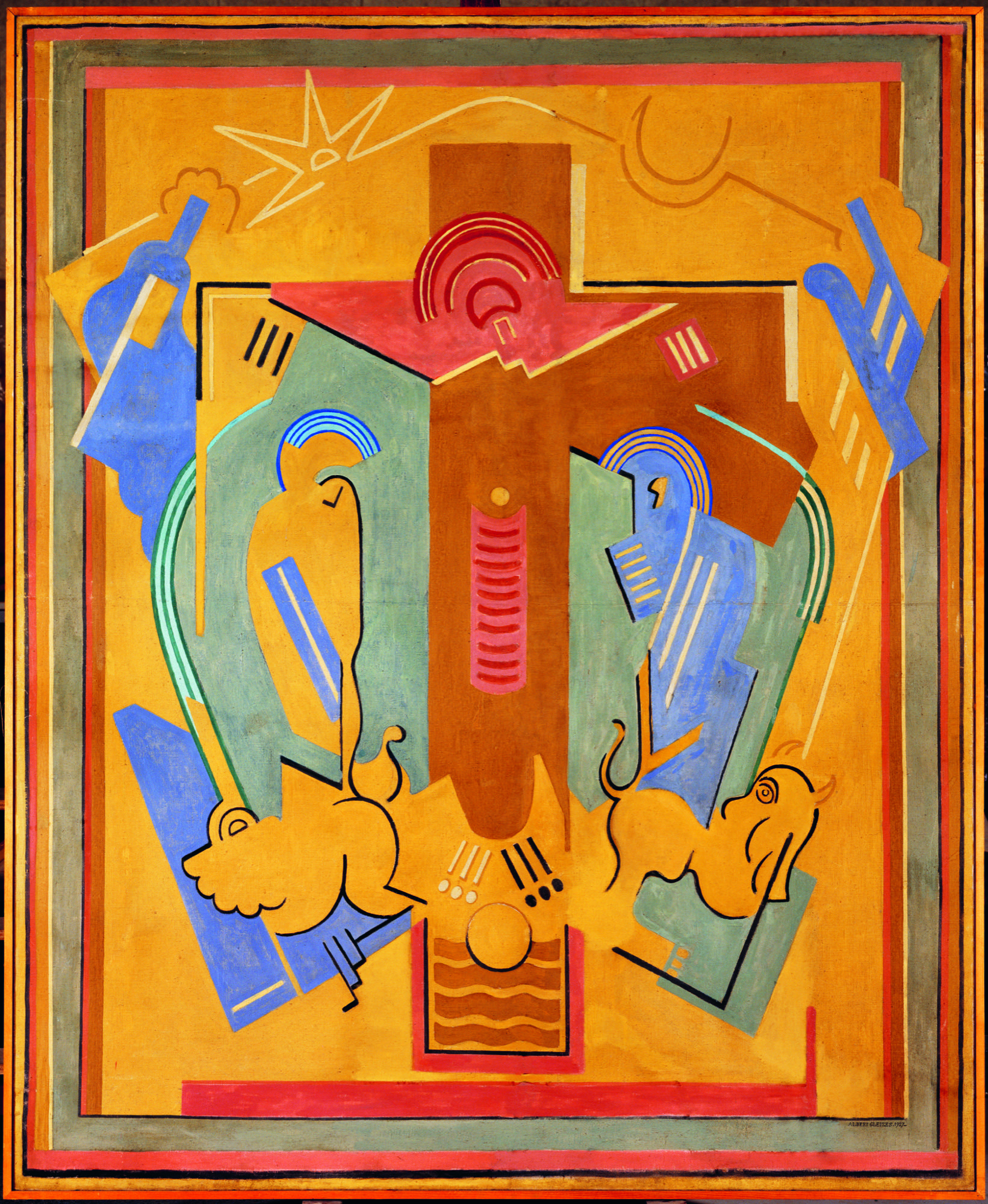
Anne Dangar arrived at Moly-Sabata in 1930 at the age of 44 having already established a relatively successful artistic career in Sydney during the 1910s and 1920s. Like many Australian artists of her cohort, especially women, she had travelled to Europe in pursuit of modern art, arriving in Paris in 1927 with her partner, fellow artist Grace Crowley, and undertaking lessons at the Academy of well-known Cubist painter André Lhote—a transformative experience for both artists. Dangar first encountered examples of Gleizes’s work during this time, seeing his work on display in Paris at the Salon de Tuileries in 1928 and was immediately drawn to their compositional rigour and philosophical underpinning. Among the works exhibited was the quasi-religious painting La Crucifixion (1927), a rigidly geometric demonstration of his principles of translation and rotation, with forms anchored around the central cruciform motif (fig. 2).6
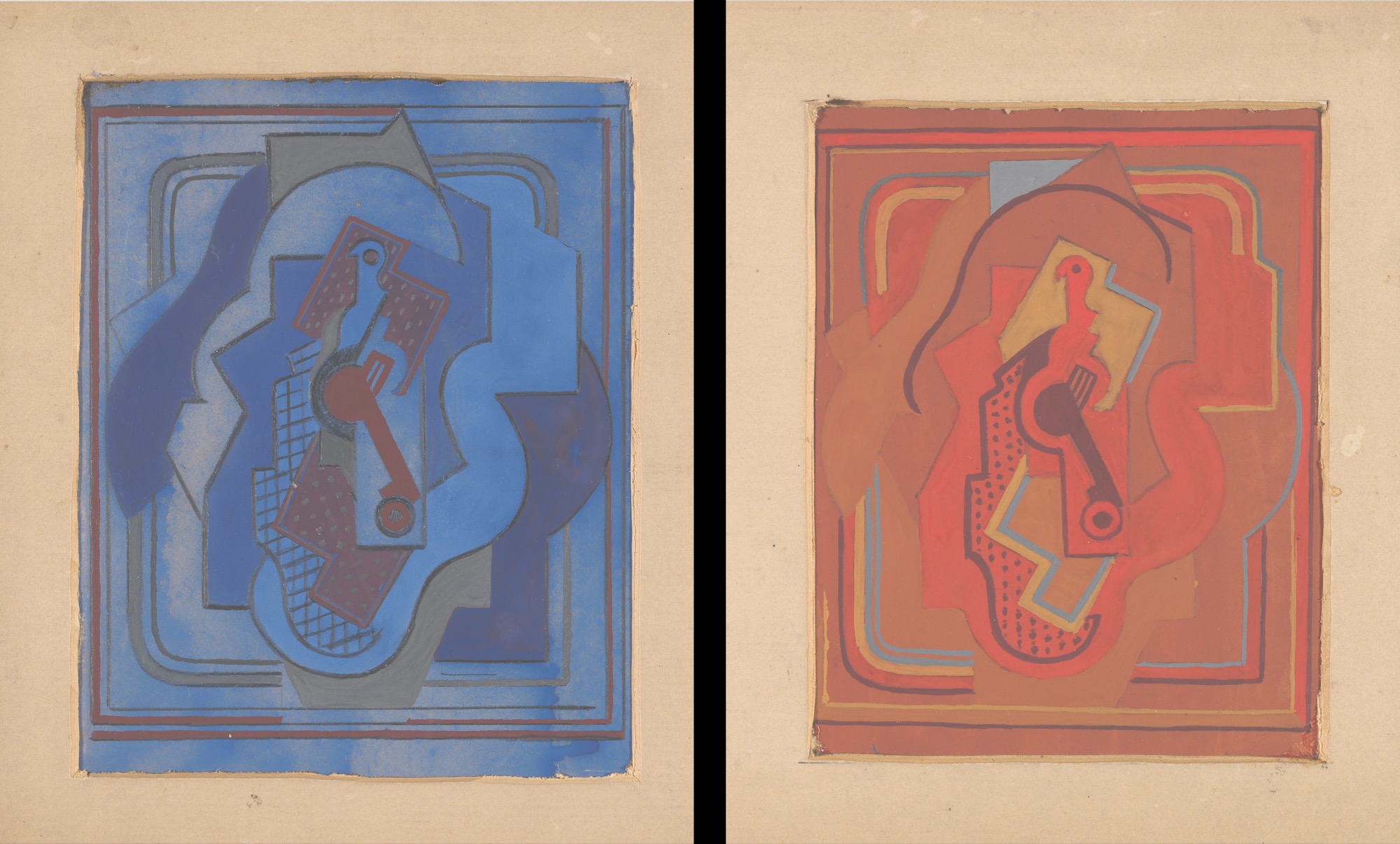
By December 1928, Dangar had returned to Sydney; however, she found the local art scene stiflingly conservative after two years in Paris. For much of 1929, she wrote regular, despondent letters about her situation to Crowley (who remained in France) requesting further information on Gleizes’s work. In an episode that has developed its own romantic notoriety in Dangar’s biography, Crowley approached Gleizes for private lessons, creating vibrant exercises in translation and rotation (fig. 3) and, through their conversations, secured Dangar an invitation from the Cubist painter to join him at Moly-Sabata. Dangar accepted immediately and, without having met or corresponded directly with Gleizes, arrived only months later in March 1930.
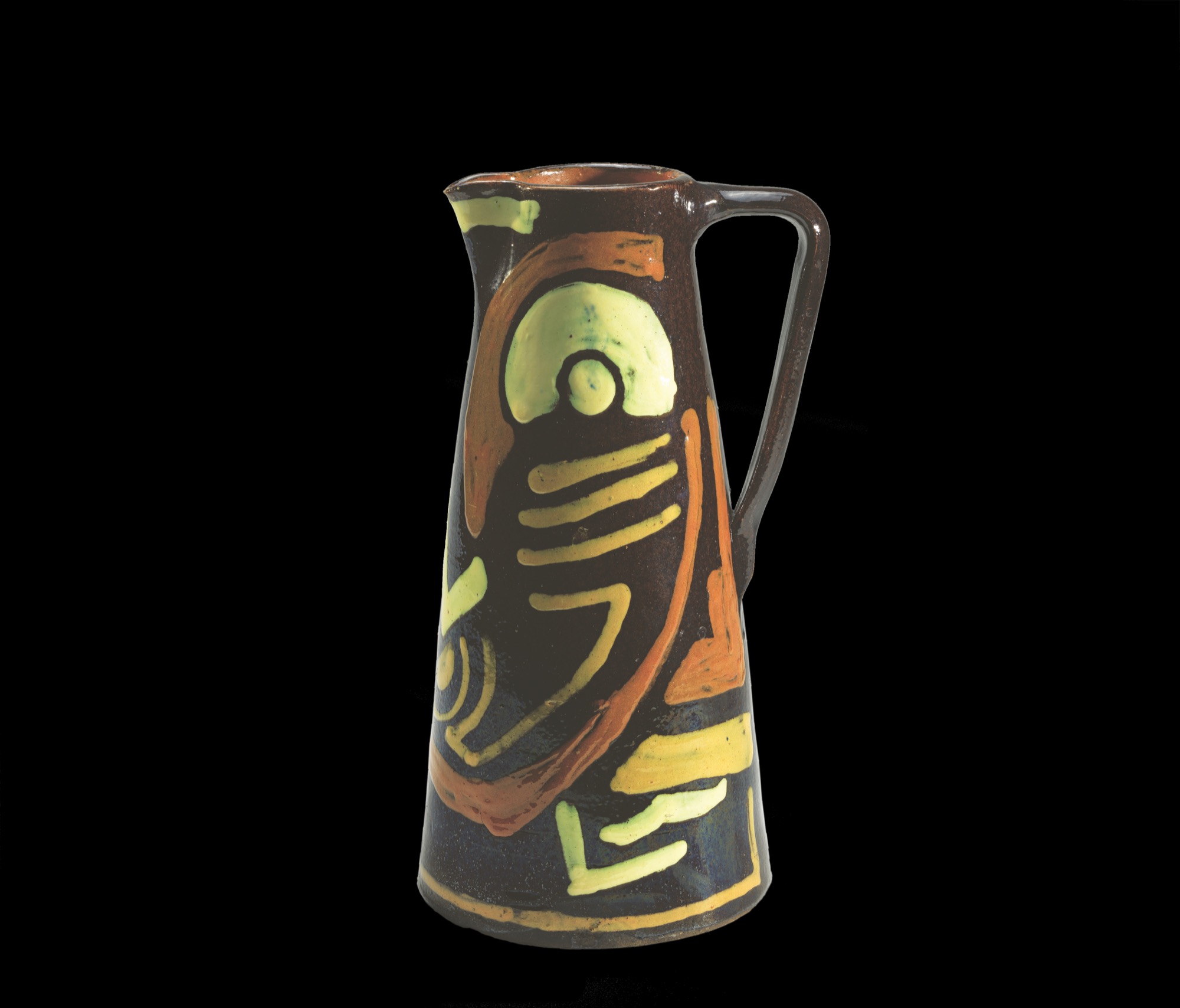
At Moly-Sabata, Dangar threw herself into the routines of daily life, making a meagre living through children’s art classes and the creation of the Cubist ceramics in rustic, local potteries for which she would become celebrated. While she incorporated an eclectic array of regional and modernist motifs, she swiftly learned that the circular forms of pottery—plates, bowls, tubular candlesticks, and wide-bellied vessels such as vases and tureens—were ideal supports for small, cubist compositions underpinned by Gleizes’s principles of translation and rotation. Rotary movement was echoed in the intrinsically spherical forms of Dangar’s ceramic pieces and their three-dimensional nature meant they were to be viewed in the round. Some of Dangar’s most effective Cubist designs feature simple circular and semicircular motifs that follow the contours of the entire pottery form, arranged in expanded movements that place the viewer in perpetual orbit with the object (fig 4).
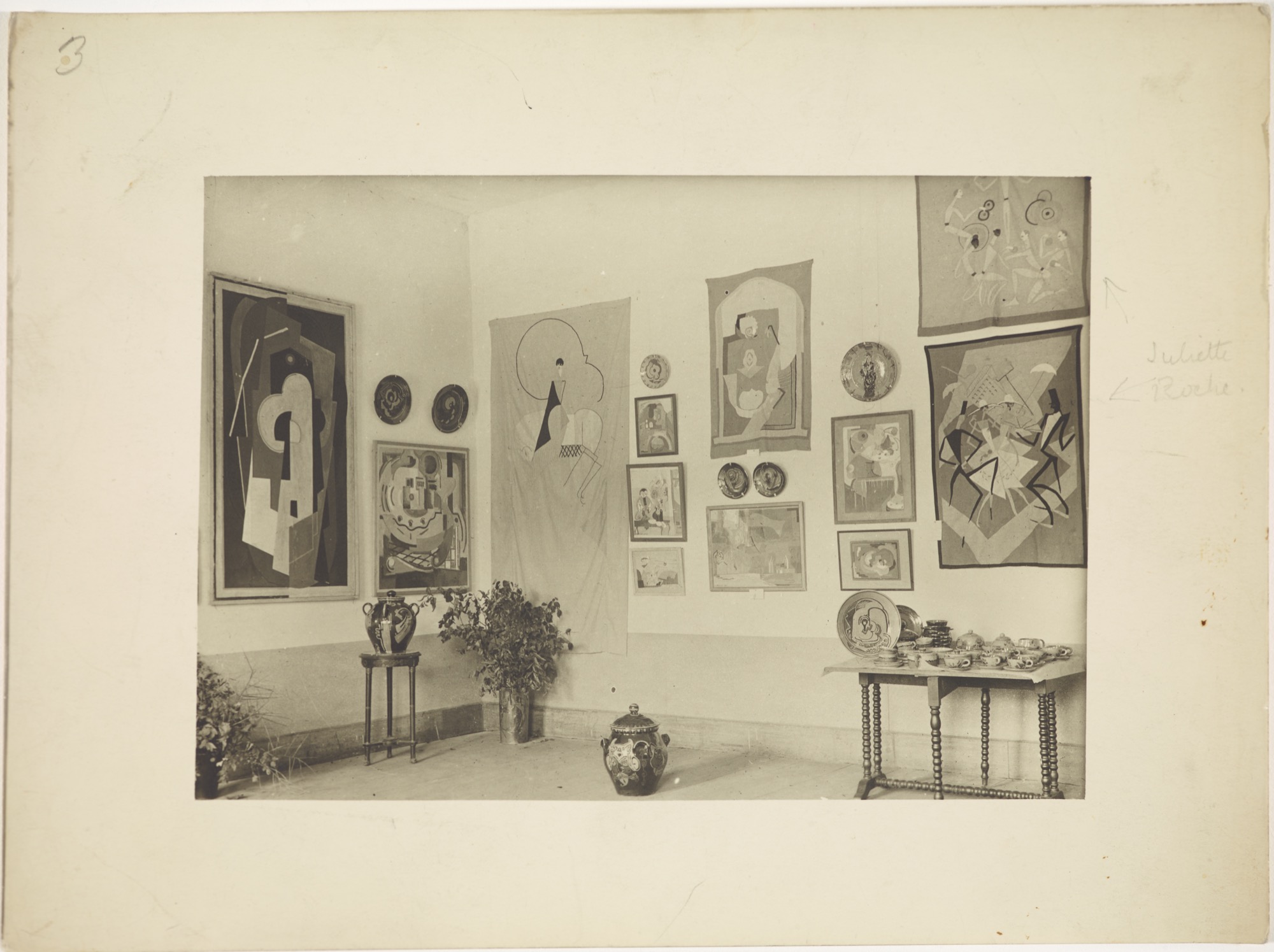
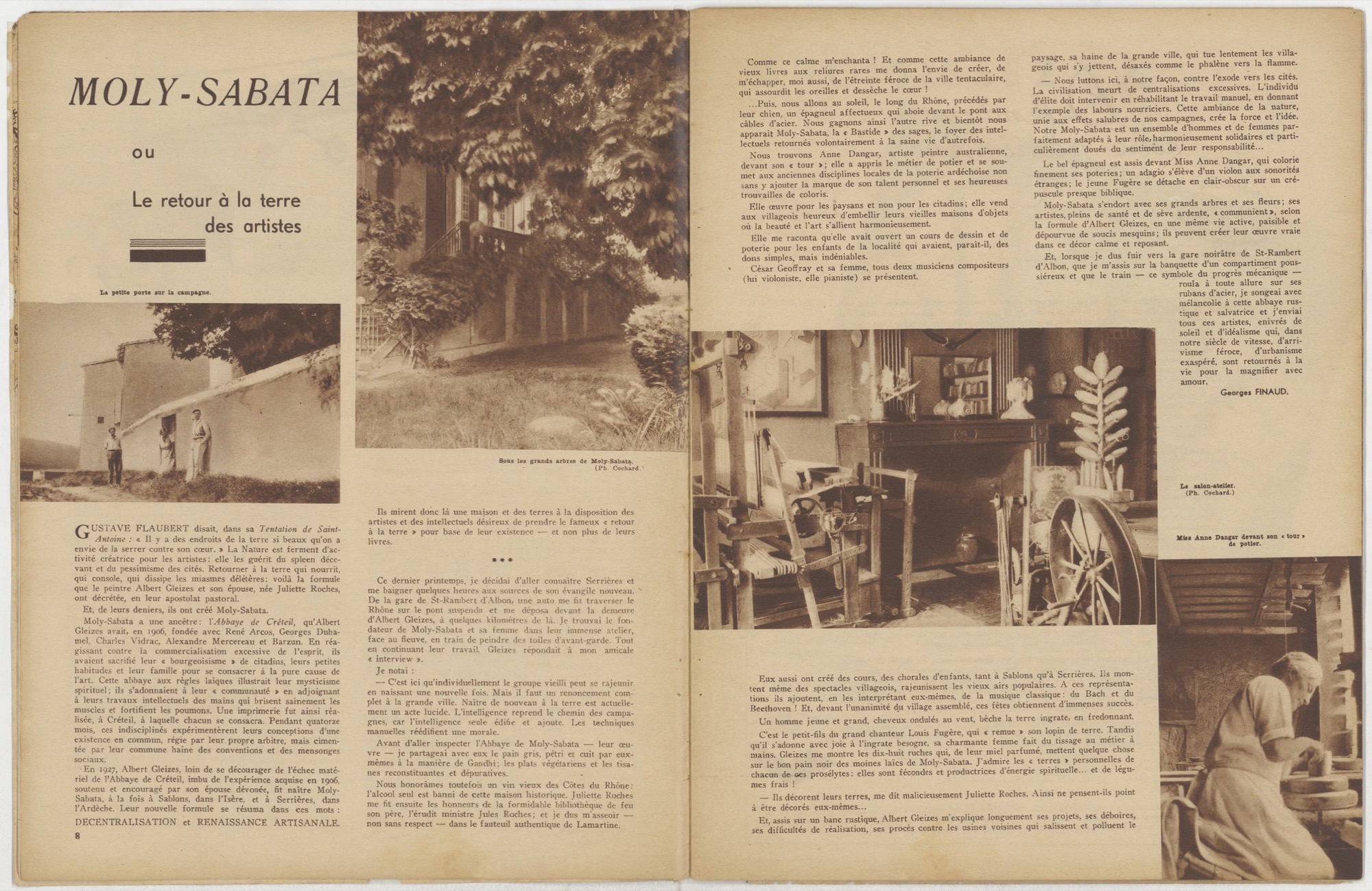
From 1932 onwards, she arranged annual exhibitions of the community’s work, which showcased the rich array of art and craft being produced, including her own utilitarian and artistic ceramics, weavings by Moly residents Jacques Plasse, Bilou Le Caisne, and Lucie Deveyle, and works by Gleizes, his wife Juliette Roche, and other artists from his circle. Dangar’s young students were also represented with paintings, drawings, and ceramic crèches (nativity scenes) (fig. 5). Through the subsequent inclusion of community members’ work in regional exhibitions, Moly-Sabata gradually began to gain renown and was profiled in several French journals, accompanied by photographs showing the house, workshops, and exhibitions (fig. 6).7
By 1937, Moly-Sabata’s art and craft wares were showcased in an international context at the International Exposition in Paris in the Regional Pavilion for the provinces of Forez-Vivarais (an ancient demarcation of the region surrounding the Ardèche), a presentation that included work by Dangar, her students, Deveyle, and other members of the wider community. As Dangar noted in a letter to Gleizes, she had originally been asked to exhibit her work only but “had no wish to exhibit unless all the work of Moly-Sabata is shown together,” her aspirations for the community outweighing any personal ambition.8 Ultimately, the shared display was very well-received with Moly-Sabata being awarded 4000 francs and Dangar herself winning a gold medal and 500 francs for her pottery as well as a diplôme d’honneur for her education program.9 By early 1939, interest in and praise for the community extended to the United States and with the Christian Science Monitor in Boston publishing a profile on “the ‘Centre Artisinale’ of Moly-Sabata” illustrated with examples of Dangar’s ceramics.10
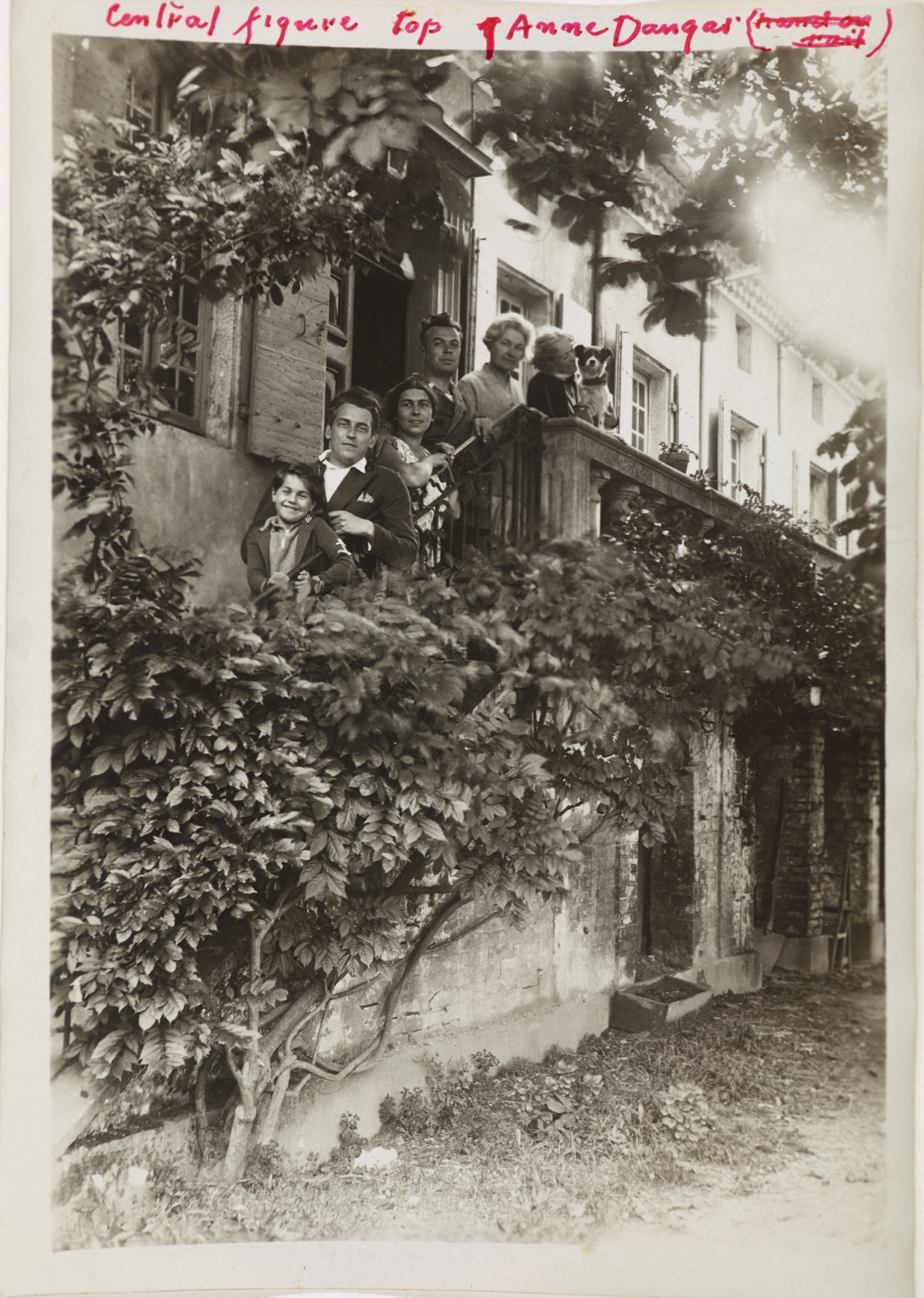
While this success reflects the idea of a vibrant and active artistic community, a perception reinforced by halcyon photographs of Dangar and the community in the archive, in reality, day-to-day life at Moly-Sabata was often exceedingly difficult.11 Initially, after leasing the property in 1927, Gleizes had enticed several of his followers to join, including Pouyaud, Jellett, and Hone. However, few remained long-term. Jellett and Hone visited only temporarily, quickly finding the physical labour associated with agrarian life too difficult; Hone in particular had ongoing health issues after contracting polio as a child.12 Although Pouyaud remained until Dangar’s arrival in early 1930, within two months he also announced his departure having grown increasingly frustrated with the harsh lifestyle and limited income gained through creating time-consuming pochoirs after Gleizes’s designs. By the end of the year, Dangar was on her own at Moly-Sabata and remained its sole resident until the arrival of composer César Geoffray, his family, and former servant Lucie Deveyle in May 1931 (fig. 7).
As Dangar’s letters to Gleizes document, life at Moly-Sabata was challenging: she lived in relative poverty and wrote regularly about the constant state of disrepair of the building (often using her own limited income for urgent repairs), harsh winters with limited supplies, annual flooding, and anxieties associated with both her income and health. The pottery practice through which she earned a living was also hard-won. In 1937 she described her long and arduous daily routine:
I plunge into the Rhône at 5am—make my coffee and start forth on my six mile walk to the pottery at 6.30. I get back at nine at night, make my bed and tumble into it. In summer I boil eggs or potatoes on a little spirit lamp, eat raw vegetable and fruit.13
By contrast, Gleizes was oblivious to these day-to-day struggles. At no point between 1927 and 1951 did he reside at Moly-Sabata, nor did he adhere to the subsistent retour à la terre lifestyle upon which it was founded. Rather, he lived in great comfort through his wife Juliette Roche’s generous inheritance, the pair dividing their year between several residences including an apartment in Paris, a farm—Les Méjades—in Saint-Rémy-de-Provence, and their home in Serrières, which Dorrit Black described after visiting in 1934 as “beautiful, and ever luxurious.”14 Black recorded Gleizes’s description of the retour à la terre movement in her diary during this time, noting his proclamation that “artists are the only people who work for the love of the work, and who will work for nothing and even spend their money on their work if they can’t get paid for it”—a somewhat insincere notion given he himself did not have to make such a compromise.15
In addition, Gleizes was neither a regular visitor to Moly-Sabata nor, as Dangar’s letters demonstrate, was he was a regular correspondent. For most of the 1930s, Dangar wrote to Gleizes and his wife at least three or four times a month, requesting news, asking him to visit, and giving meticulous updates on the activities and residents of Moly-Sabata as though they lived hours away.16 For much of the year, however, the Gleizes resided at Serrières, which was only a twenty-minute walk from Moly-Sabata, across the river, and an even quicker drive. In a particularly desperate letter, Dangar begged Gleizes to visit Moly-Sabata as soon as possible to view the Christmas decorations as “the children won’t hear of me taking them down till you have seen them”—a letter written in February 1938, almost two months after Christmas had passed.17
By this time, although Gleizes was its spiritual figurehead, Moly-Sabata functioned chiefly through the efforts of Dangar, who navigated the difficult lifestyle and coordinated all aspects of practical and cultural life. Indeed, as Australian artist Ruth Ainsworth observed during a six-week visit in 1935, “[Gleizes] was away … she [Dangar] was really the support of the place as far as the idea was concerned.”18 Despite Gleizes’s general lack of interest in its day-to-day functions, he would certainly have been cognisant that the community’s broader reputation was solely attributable to Dangar. Indeed, he outwardly respected her and spoke of her warmly. In early 1937, for instance, Dangar recounted her first encounter with Robert Delaunay who reportedly declared “Gleizes always talked about you, but I thought you were a fairy tale, but now I see that what he said is true.”19
Equally, however, Gleizes would also have been aware that the “fairy tale” of the Moly-Sabata community would cease to exist without Dangar’s stewardship and with that the demonstrated, living manifestation of his Cubist philosophies and retour à la terre ideals. This reality ultimately underpinned their relationship, limiting Gleizes’s support for her when it was most needed. Although Gleizes’s establishment of Moly-Sabata can be seen, to an extent, as a generous act (he leased the building and allowed residents to live rent free after all), it is important to observe that he also benefited greatly from the venture. Throughout the 1930s, Moly-Sabata became a highly effective tool for his own self-promotion and the circulation of his artistic and philosophical ideas. In 1932, for example, he embarked on a lecture tour focused on the community, speaking on Moly-Sabata at the Bauhaus and during the same year published an essay in Sud Magazine that described the merits of his retour à la terre community.20 The production of pochoirs and circulation of his artistic principles through residents’ work and Dangar’s teaching also served to enhance his reputation, establishing a wide circle of his apparent followers. This was further demonstrated through the community’s successful representation at the Exposition Internationale in 1937 and other exhibitions.21
The extent of the limits of Gleizes’s support for Dangar became starkly apparent during the Second World War, when his personal and political ambitions and desire to ensure the continuation of Moly-Sabata were directly at odds with her well-being and safety. Since arriving at Moly-Sabata in 1930, Dangar had always debated when to return to Australia and the idea of conflict in Europe made these ideas more urgent. She was working with potters in Fez, Morocco, when news of Hitler’s invasion of Poland broke in September 1939. Once again she contemplated an Australian homecoming, but by the end of year had instead returned to Sablons.22 There, the situation deteriorated rapidly: the Nazi occupation of Paris resulted in the transfer of power to the Vichy government, who in turn fast adopted a position of collaboration with Germany. By mid-1940, the war arrived at Moly-Sabata; violent battles occurred in the Rhône Valley, and Sablons and Serrières were seized by German troops.
Gleizes avoided this situation, having moved permanently to Les Méjades in early 1940. By contrast, Dangar was a British citizen in a Vichy-controlled region rife with anti-British sentiment and soon found herself in a vulnerable position. She was ostracised by locals, and for periods labelled by the Vichy administration as une étrangère, not granted a work or travel permit allowing her to make an income.23 After almost two years of poverty and hardship, Dangar resolved to return to Australia, writing to Gleizes in December 1941 to inform him of her decision: “I need my friends … but I shall carry on my work and if you would like me to call my pottery or school or whatever I shall be able to build up ’Moly-Sabata’ I shall be happy to do so.”24 While the idea of an antipodean “Moly” or the dissemination of his ideas in Australia might have been an appealing prospect to Gleizes, and Dangar’s well-being was clearly in jeopardy, Gleizes instead made a rare and uncharacteristic trip to Sablons, during wartime, to remind Dangar of her obligation to the community, undoubtedly motivated by his own knowledge that Moly-Sabata would cease to exist without her efforts. Indeed, barely a fortnight later, Dangar’s plans to repatriate had vanished and she wrote to him: “It was lovely to see you again, to find you were still interested in Moly. I feel buoyed up to go on making a bigger effort than ever.”25 Dangar continued to debate the idea of repatriation until the scale of the war made it physically impossible, forcing her to remain at Moly-Sabata for its duration.
Gleizes occupies an ambiguous position in histories of wartime France. It is apparent he had much to gain during this time. The ideals of the retour à la terre and regionalism that he promoted through Moly-Sabata and his artistic and spiritual theories gained particular popularity in the lead-up to 1939. As Romy Golan has outlined, the opposition to industry, mechanisation and urbanisation associated with the retour à la terre movement also underpinned the values of France’s Vichy regime as well as the rhetoric of Nazi Germany.26 During the war, Gleizes actively presented himself and the community in these terms, actions that have been interpreted variously as strategic self-preservation, deliberate collaboration, and evidence of his Nazi sympathies.27 In 1940, for instance, he sought direct assistance from the Vichy government to establish his own youth program at Les Méjades, citing Moly-Sabata as proof of his success.28 Certainly, Dangar’s efforts at Moly-Sabata were central to his claims and he arranged to have Dangar’s art classes photographed around this time as propaganda to promote the community and garner Vichy support.29 In 1943 he was invited to participate in a Congrès de folklore in Nice, delivering a lecture where he promoted Moly-Sabata as a model of Vichy’s new youth camps, chantiers, and called for the retour à la terre, quoting directly from Vichy leader Phillipe Petain.30
Although Gleizes’s political allegiance cannot be known definitively, Dangar’s letters to him reveal he was open in his hatred of Britain, and this eventually became a source of great friction between the two. As an Australian and British citizen, Dangar’s own loyalties were initially complicated by her own investment in the retour à la terre, but as the realities of the war became tangible her position shifted. Gleizes’s ideological stance wounded her personally and she attempted to reason with him, writing in late August 1940 that “not one soldier in a thousand is fighting to save industry, capitalism & money, & yet he is fighting of his own free will … to save the inexplicable something they love more than life … the British Empire … please try to believe we are not only bad.”31
Dangar did not broach this topic with Gleizes again until the final months of war in 1944, when she penned a revealing letter that describes his abandonment of her during this period in clear terms. By this time, she had not seen Gleizes in person for three years and due to her foreign national status had been interred the year before in a camp in Grenoble—an experience that impacted her greatly. Responding to a query as to why she had not written to him in three months (an unusual occurrence given the frequency of her correspondence), she offered an emotional reply:
You ask me Monsieur why I do not write? It is because I do not like writing letters which vex you and yet I cannot pretend to you that your indifference to this ‘stranger within your gate’ has not hurt me. You tell me not to be ‘piquée’. Tell me Monsieur Gleizes what would you feel if you were in a foreign country during war time and asked by friends to remain, even when offered a free passage home and every help by your country. Would you not feel hurt if you had to suffer hunger and necessary nourishing food during four years? 32
More importantly, she described Gleizes’s particular role in influencing her to remain at Moly-Sabata during this period, writing:
You alone are responsible for this mouth which is one too many for France to nourish. It was not Madame Gleizes who persuaded me against my reason & my conscience to refuse to obey my consul … When you say Moly is often in your thoughts and in your heart I wonder what you think of us. You despise the stupidity and sentimentality of your fellowmen. None are as stupid and sentimental as Anne Dangar …33
Given her enthusiasm for the community, it is likely Dangar took little convincing; however, this admission makes uncomfortably apparent how readily Gleizes pursued his own agenda during a time when she was especially vulnerable to external political forces. While Gleizes’s manipulation of Dangar can be traced and inferred through her correspondence to him, there are few instances, on the record, in which this behaviour is so overtly outlined.
The liberation of France the following year came as a great relief to Dangar, as she was again able to travel freely and correspond with her friends and family in Australia. Despite their tensions during the war, her relationship with Gleizes also improved and they re-established the intellectual connection they shared prior to 1939. It is notable, however, that among the few works Dangar created during the war and its immediate aftermath were several that departed from Gleizes’s Cubist aesthetics. Key examples include gouache and enamelled tile depictions of Moroccan figures. These compositions are seemingly modelled after André Lhote’s principles, depicted as merging, angular forms rather than as a collection of independent planes arranged according to Gleizes’s principles of translation and rotation (figs. 8–9).
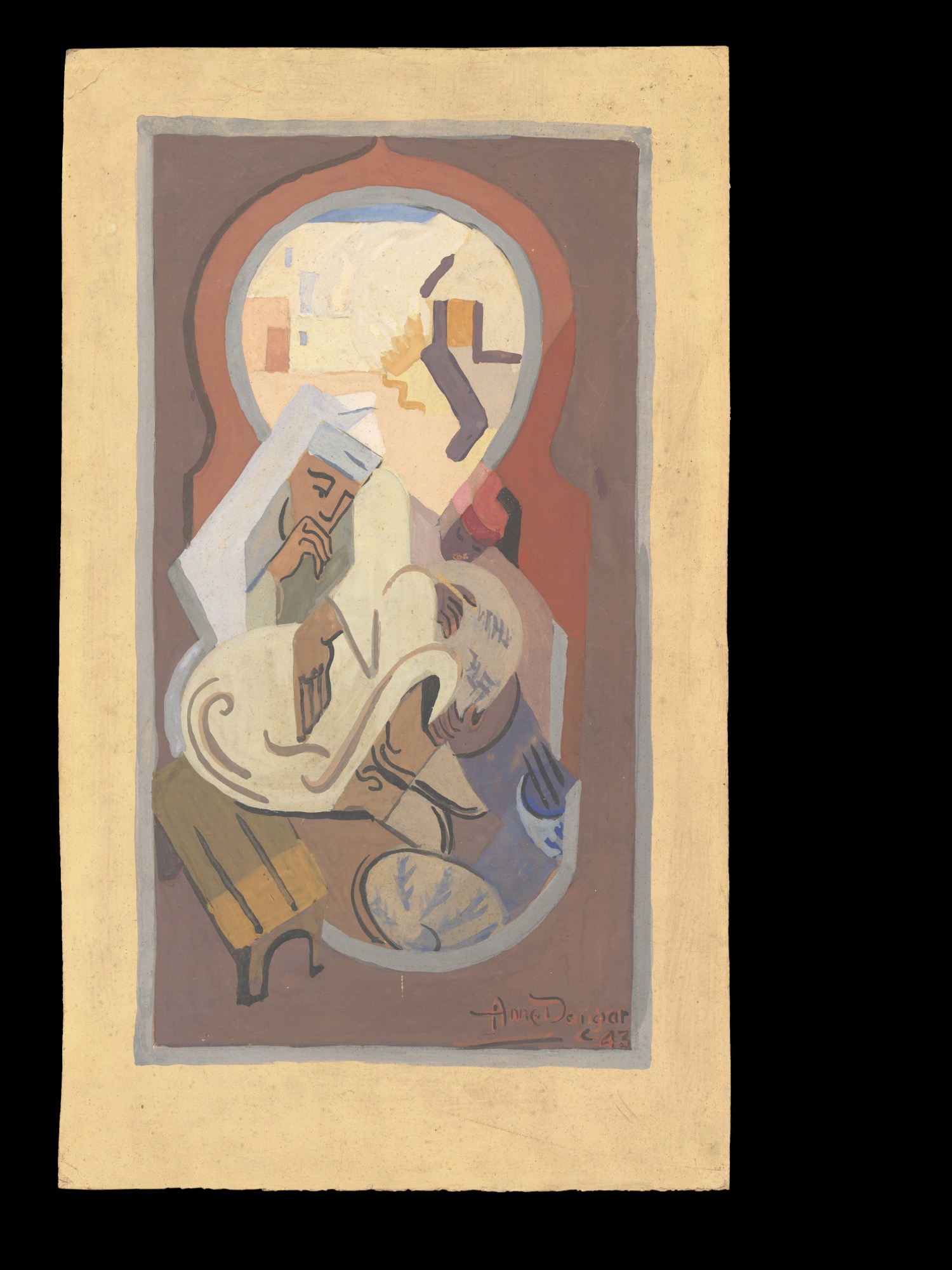
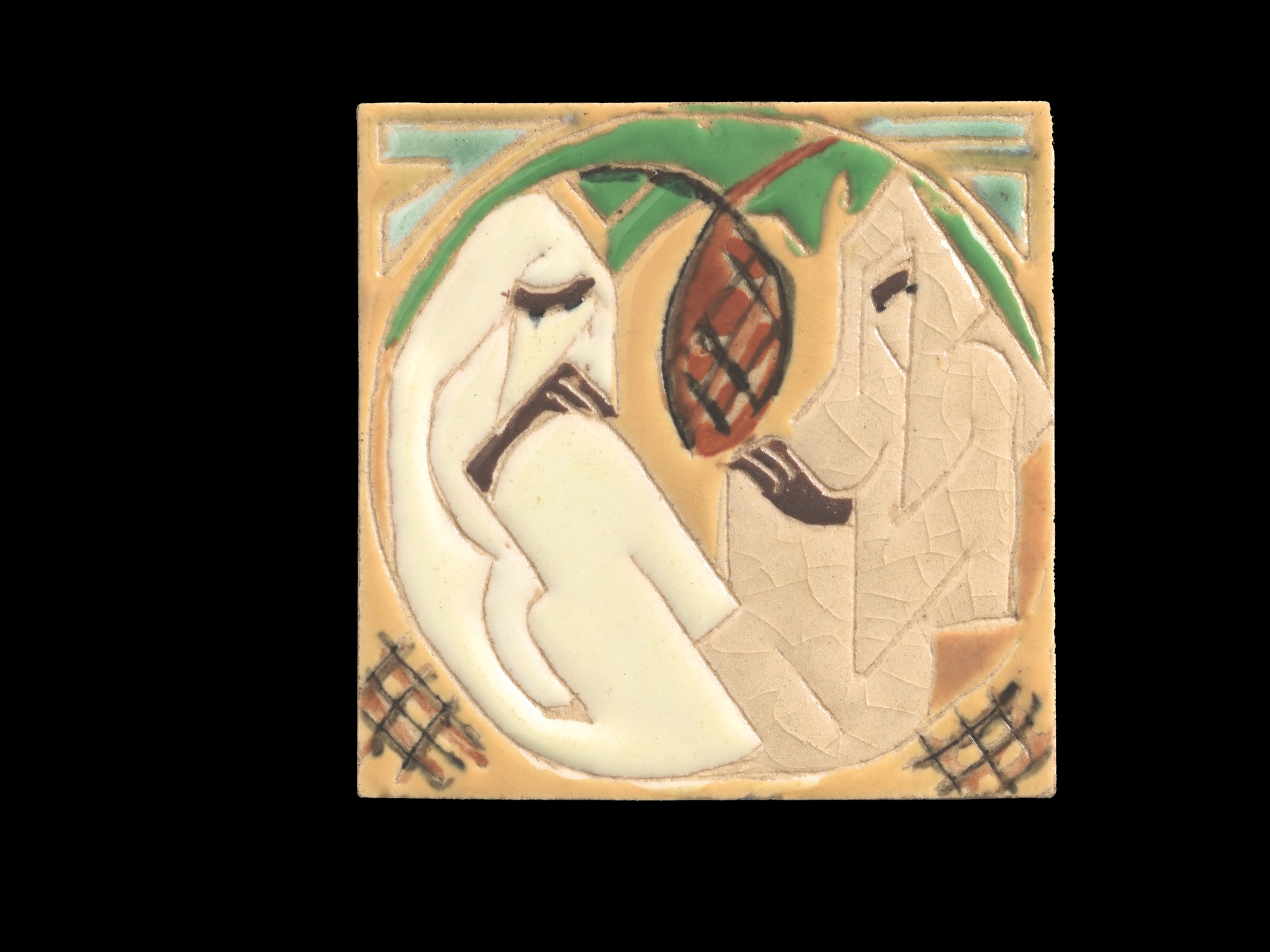
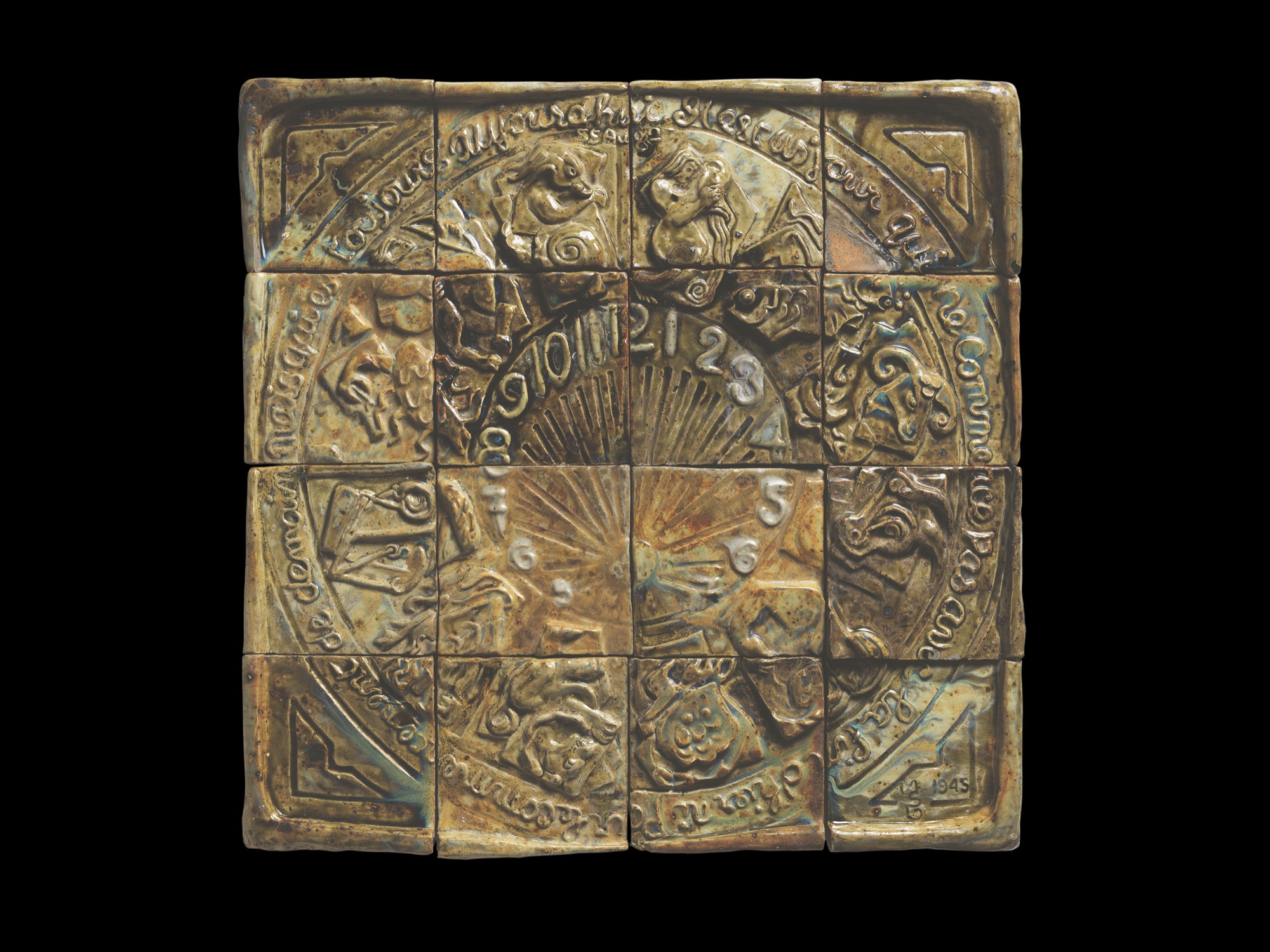
Created during the period following Dangar’s release from the Grenoble internment camp in 1943, these works have also been identified as covert demonstrations of Dangar’s support of the Allies, French North Africa having been invaded by and pledged their allegiance to British and American military forces in late 1942.34 Other works include a multi-panelled monochrome sundial created soon after Germany’s surrender in 1945 incorporating the signs of the zodiac and executed in an uncharacteristically figurative manner (fig. 10). Lesser known in her oeuvre, these works perhaps subtly reflect Dangar’s discontent with Gleizes during this tumultuous period revealing how the social fabric of Moly-Sabata in turn also informed the artistic contributions of its members.
Upon Dangar’s death in 1951, Gleizes confessed to Crowley that she was “the soul of Moly-Sabata.”35 Although Gleizes’s theoretical and financial support were essential to its establishment, Moly-Sabata had succeeded largely through the efforts of Dangar who galvanised the community despite the difficult and often harsh living conditions. Certainly, as Gleizes had anticipated and attempted to circumvent, the community continued for only a few years without her energy. As Dangar’s experience demonstrates, Moly-Sabata’s outward success was shaped by both artistic and social aspects—the collective ideals of the community and the personal dynamics and power imbalances that underpinned them. In drawing attention to the difficulties of life at Moly-Sabata and the problematic aspects of Dangar’s and Gleizes’s relationship in particular, this essay has not sought to vilify or heroise either artist nor diminish the community’s substantial and significant artistic legacy. Instead, it challenges the mythology of the artist colony as a solely harmonious creative space and provides a more nuanced understanding of the interpersonal dynamics that underpin such a community.
-
For a comprehensive account of the foundation, history, philosophies, and politics of Moly-Sabata, see Bruce Adams, Rustic Cubism: Anne Dangar and the Art Colony at Moly-Sabata (University of Chicago Press, 2004). See also Rebecca Edwards, ed., Anne Dangar (National Gallery of Australia, 2024). ↩
-
The correspondence is held in the Fonds Albert Gleizes, MV 698–699, Kandinsky Library, Musée national d’art moderne, Centre Georges Pompidou, Paris (hereafter Fonds Albert Gleizes) and the Papers of Anne Dangar, MS 158, National Gallery of Australia Research Library and Archives, Kamberri/Canberra (hereafter Papers of Anne Dangar). ↩
-
Albert Gleizes and Jean Metzinger, Du cubisme (Eugène Figuière Éditeurs, 1912). ↩
-
Peter Brooke, Albert Gleizes: For and Against the Twentieth Century (Yale University Press, 2001), 63. ↩
-
Adams, Rustic Cubism, 47–48. ↩
-
For Dangar and Crowley’s period studying in Paris, see Elena Taylor, “Together and apart: Anne Dangar and Grace Crowley in modern Paris,” in Anne Dangar, ed. Rebecca Edwards (National Gallery of Australia, 2024), 46–57. ↩
-
Georges Finaud, “Moly-Sabata ou le retour à la terre des artistes,” Hebdo, 8 June 1934, 8–9; Humphery d’Honfroi, “Les artistes au village,” Le Magasin Pittoresque, 1 July 1937, 30–31. ↩
-
Anne Dangar to Albert Gleizes, 13 November 1936, Fonds Albert Gleizes. Ultimately, through Gleizes, examples of Dangar’s work were also exhibited in the Pavilion of the Union des artistes modernes and in the ancillary exhibition Les maîtres de l’art indépendant, 1895–1937 held as part of the Exposition Internationale at the Petit Palais, Paris from June to October 1937. ↩
-
Adams, Rustic Cubism, 122. ↩
-
See Bernard Champigneulle, “An Arts Revival Experiment,” Christian Science Monitor, Boston, 7 March 1939, 6. ↩
-
Photographs of Moly-Sabata and the community are held in the Grace Crowley archive, MS1980.1, National Art Archive, Art Gallery of New South Wales, Gadigal Nura/Sydney and the Fonds Albert Gleizes. ↩
-
See Bruce Arnold, Mainie Jellett and the Modern Movement in Ireland (Yale University Press, 1991), 106–07. ↩
-
Anne Dangar to Albert Gleizes and Juliette Roche, 11 July 1937, Fonds Albert Gleizes. ↩
-
Dorrit Black, “England and Mother France 1934–’35,” travel diary, 9, Dorrit Black Papers, Art Gallery of South Australia Research Library, Adelaide (hereafter Dorrit Black Papers, AGSA). ↩
-
Dorrit Black, “England and Mother France 1934–’35,” travel diary, 9, Dorrit Black Papers, AGSA. ↩
-
To date, 380 letters written over a 21-year period have been identified, held across the Kandinsky Library, Centre George Pompidou, and the National Gallery of Australia Research Library and Archive. ↩
-
Anne Dangar to Albert Gleizes, 17 February 1938, Fonds Albert Gleizes. ↩
-
Ruth Ainsworth, interviewed by Ian North, Sydney, April 1974, Dorrit Black Papers, MS 74, National Gallery Research Library and Archives. ↩
-
Anne Dangar to Grace Crowley, 6 February 1937, Grace Crowley papers, 1927–1974, MLMSS 3252/vols 2–7, MLMSS 3252/vol 1X, State Library of New South Wales, Gadigal Nura/Sydney (hereafter Grace Crowley papers, SLNSW). ↩
-
See Adams, Rustic Cubism, 48; Albert Gleizes, Untitled lecture on Moly-Sabata delivered to Warsaw and Dessau, April 1932, quoted by Adams, Rustic Cubism, 113; Albert Gleizes, “Moly-Sabata ou le retour des artistes au village,” Sud Magazine (Marseille) 6, no. 102 (1932): 40–41. ↩
-
See also 32e groupe des artistes de ce temps, Petit Palais, Paris, June 1938; Moly-Sabata, Galerie Sambon, Paris, June 1938. ↩
-
Anne Dangar to Alber Gleizes, 20 June 1939, Fonds Albert Gleizes. ↩
-
Adams, Rustic Cubism, 157. ↩
-
Anne Dangar to Albert Gleizes, 22 December 1941, Fonds Albert Gleizes. ↩
-
Anne Dangar to Albert Gleizes and Juliette Roche, 9 January 1942, Fonds Albert Gleizes. ↩
-
Romy Golan, Modernity and nostalgia: art and politics in France between the wars (Yale University Press, 1995), 87. ↩
-
See Adams, Rustic Cubism, 149–50; Brooke, Albert Gleizes, 195, 211. During the occupation of Serrières, it is known that several Nazi officers took up residence in Gleizes’s house. According to artist, writer, and critic Michel Seuphor who stayed at Moly-Sabata in 1931, this was upon Gleizes’s direct invitation, and his letter to the Mayor of Annonay in which he offered his home for their use was allegedly pinned to his door after liberation. Letters from Dangar to Gleizes do not provide any further insight into how the Nazis were given access to Gleizes’s house, but indicate that it was left filthy, ransacked, and greatly damaged following their departure. See Michel Seuphor’s autobiography compiled by Christiane Germain and Paul Haim, Michel Seuphor, une vie à angle droit (Éditions de la Différence, 1988), 72; Anne Dangar to Albert Gleizes and Juliette Roche, 7 September 1944, Fonds Albert Gleizes. This episode, and the Second World War more generally, is not discussed by Daniel Robbins in his text published a decade or so after Gleizes’s death. See Daniel Robbins, Albert Gleizes 1881–1953: a retrospective exhibition (The Solomon R. Guggenheim Museum, New York, in collaboration with Musée national d’art moderne, Paris, & Museum am Ostwall, Dortmund), 1964. ↩
-
Golan, Modernity and Nostalgia, 103; Adams, Rustic Cubism, 152. ↩
-
Adams, Rustic Cubism, 153. These photographs are held in the Fonds Albert Gleizes. ↩
-
Golan, Modernity and Nostalgia, 209, n. 21. ↩
-
Anne Dangar to Albert Gleizes, 31 August 1940, Fonds Albert Gleizes. ↩
-
Anne Dangar to Albert Gleizes, 9 April 1944, Fonds Albert Gleizes. ↩
-
Anne Dangar to Albert Gleizes, 9 April 1944, Fonds Albert Gleizes. ↩
-
Adams, Rustic Cubism, 165. ↩
-
Albert Gleizes, letter to Grace Crowley, 18 September 1951, Grace Crowley papers, SLNSW. ↩
Dr Rebecca Edwards is Curator, Australian Art at the National Gallery of Australia, Canberra. Over the last decade, she has held curatorial roles across the National Gallery and the National Gallery of Victoria, where she has curated and contributed to numerous exhibitions and publications on Australian Art, including Jeffrey Smart (2021), Know my Name: Australian Women Artists 1900 to Now (2020–2022), and Colony: Australia 1770–1861 (2015). In 2024, she curated the exhibition Anne Dangar. The associated publication was awarded best large exhibition catalogue at the AAANZ Art Writing and Publishing Awards in 2025. She holds a PhD in Art History from the University of Melbourne.
Bibliography
- Adams, Bruce. “The Promise of the Rainbow: Anne Dangar at Moly-Sabata 1930–1951.” PhD diss., University of Sydney, 1998.
- Adams, Bruce. Rustic Cubism: Anne Dangar and the Art Colony at Moly-Sabata. University of Chicago Press, 2004.
- Arnold, Bruce. Mainie Jellett and the Modern Movement in Ireland. Yale University Press, 1991.
- Brooke, Peter. Albert Gleizes: For and Against the Twentieth Century. Yale University Press, 2001.
- Champigneulle, Bernard. “An Arts Revival Experiment.” Christian Science Monitor, 7 March 1939.
- Dangar, Anne. Lettres à la Pierre-qui-Vire. Zodiaque, Saint-Léger-Vauban, 1972.
- Dorrit Black Papers. Art Gallery of South Australia Research Library, Adelaide.
- Dorrit Black Papers, MS 74. National Gallery Research Library and Archives, Kamberri/Canberra.
- Edwards, Rebecca, ed. Anne Dangar. National Gallery of Australia, Kamberri/Canberra, 2024.
- Finaud, Georges. “Moly-Sabata ou le retour à la terre des artistes.” Hebdo, 8 June 1934.
- Fonds Albert Gleizes, MV 698–699. Kandinsky Library, Musée national d’art moderne, Centre Georges Pompidou, Paris.
- Germain, Christiane and Haim, Paul. Michel Seuphor, une vie à angle droit. Éditions de la Différence, 1988.
- Gleizes, Albert and Metzinger, Jean. Du cubism. Eugène Figuière Éditeurs, 1912.
- Gleizes, Albert. “Moly-Sabata ou le retour des artistes au village.” Sud Magazine (Marseille) 6, no. 102 (1932): 40–41.
- Golan, Romy. Modernity and Nostalgia: Art and Politics in France between the Wars. Yale University Press, 1995.
- Grace Crowley archive, MS1980.1. National Art Archive, Art Gallery of New South Wales, Gadigal Nura/Sydney.
- d’Honfroi, Albert. “Les artistes au village.” Le Magasin Pittoresque, 1 July 1937.
- Papers of Anne Dangar, MS 158. National Gallery of Australia Research Library and Archives, Kamberri/Canberra.
- Robbins, Daniel. Albert Gleizes 1881–1953: A Retrospective Exhibition. The Solomon R. Guggenheim Museum, New York, in collaboration with Musée national d’art moderne, Paris, & Museum am Ostwall, Dortmund, 1964.
- Taylor, Elena. “Together and Apart: Anne Dangar and Grace Crowley in Modern Paris.” In Anne Dangar, edited by Rebecca Edwards. National Gallery of Australia, Kamberri/Canberra, 2024.