Charterisville Camps, Colonies, and Schools
Camping, art colonies, and schools played a large part in the emergence of Melbourne’s artworld identity in the later nineteenth century and in the subsequent writing of Australia’s art history. In 1934 William Moore devoted a whole chapter to “The camps round Melbourne” in his pioneering survey, The Story of Australian Art, although based largely on participants’ memories well after the fact. Published in the year of the much-celebrated centenary of Melbourne’s foundation, with Moore’s narrative flavoured by a post-Federation nationalism strengthened by the First World War, that recounting was coloured by nostalgia for what seemed simpler, happier times.
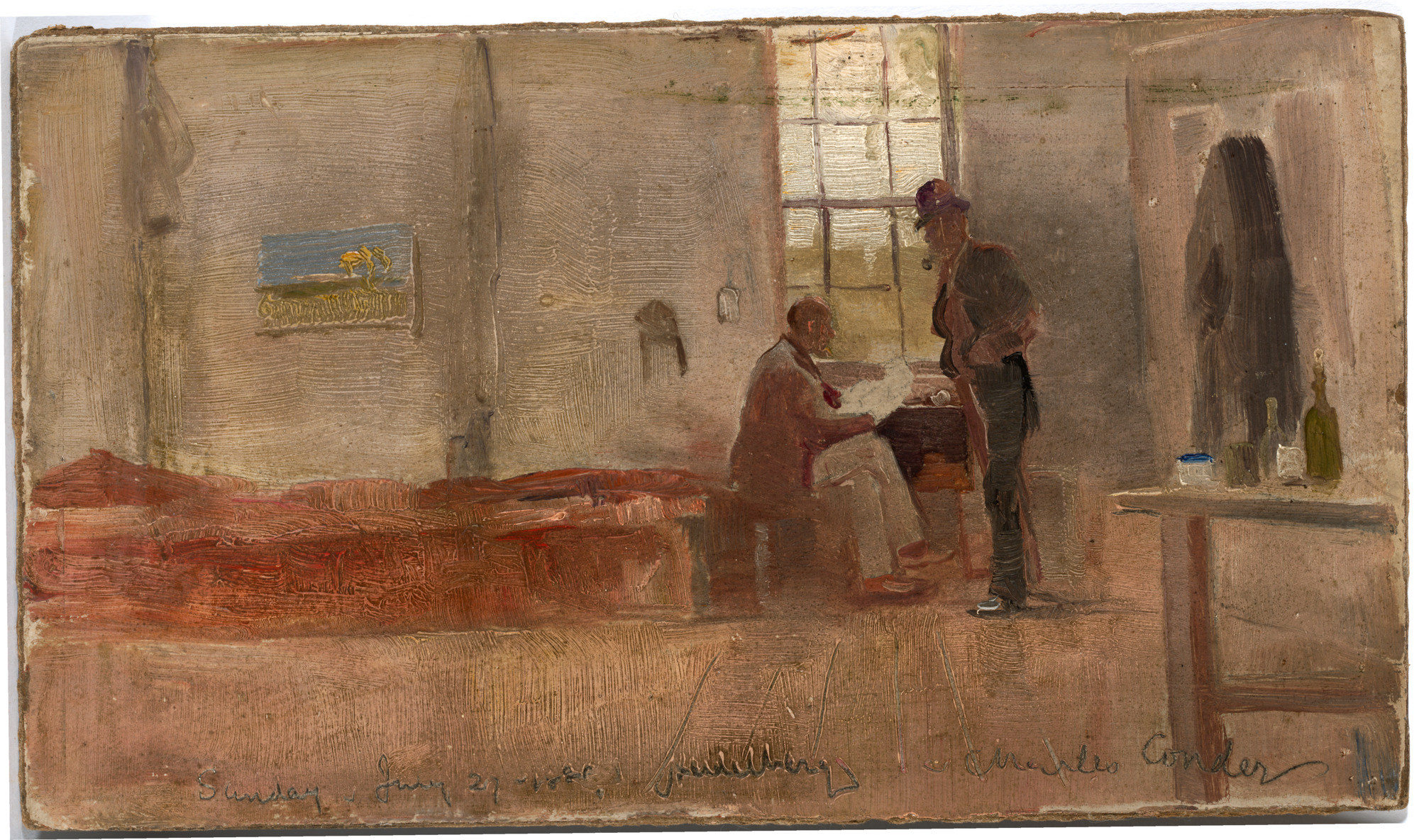
As “Marvellous Melbourne” grew in the 1880s, younger artists sought painting spots outside the city where they revelled in creative camaraderie, following European plein-air practices while immersed in their “native” landscape. They camped in tents at Box Hill in the summer of 1885–86 and in a rented seaside cottage at Mentone during 1886–87, both easy to get to by train. Then followed two “golden summers” in the empty Mount Eagle homestead near Heidelberg village, about ten kilometres northeast of central Melbourne, where the protagonists were joined at weekends by large parties of students from the National Gallery School and members of the Victorian Artists’ Society. This Eaglemont artists’ camp is now especially well documented as a key site in the development of Australian Impressionism. Arthur Streeton, who lived longer than most of his contemporaries, made sure of that via Moore and in his own memoirs; historians and exhibition curators, including me, have tended to follow suit.1 Charles Conder provides a glimpse inside the old house in his pochade Impressionists’ Camp of 1889 (fig. 1). Streeton titled his most celebrated painting Golden Summer, Eaglemont that same year. However, for the first painting he sold to a public gallery, ‘Still glides the stream, and shall for ever glide’ (1890), he found his vantage point about fifteen minutes’ walk downhill from the Mount Eagle homestead on the Charterisville estate, closer to the Yarra River.2 Exploring that quiet winding watercourse and its leafy, green surrounds in the Heidelberg district is still rewarding today in the twenty-first century.
When, in July 1891, the visiting American art critic Sidney Dickinson coined his taxonomic label, “the Heidelberg School,” he meant it to encompass the whole “coterie of Melbourne artists [whose] work has been done chiefly in this attractive suburb, where, with others of like inclination, they have established a summer congregation for out-of-door painting.”3 He noted works by Streeton and Walter Withers in particular, admiring Streeton’s as “boldly and vigorously painted, broad in effect, and with striking contrasts and robust harmonies of colour.” Conder was already in Paris, writing wistfully to Tom Roberts, “What’s gone is over.”4 Roberts had set off alone by then, to paint what he felt was “the national life of Australia” in rural New South Wales.5 Streeton himself spent some months in Sydney that year and moved there in 1892. Nevertheless, right through the 1890s depression, Charterisville’s sandstone mansion, its servants’ cottages and its outbuildings were cheap to rent. Withers was living in one end of the main house when Dickinson singled him out with Streeton in 1891 and, in fact, a Heidelberg “coterie”—or, rather, coteries of Melbourne artists—went on making art outdoors at Charterisville until the turn of the century.
The Melbourne School of Art’s plein-air painting classes, conducted by Emanuel Phillips Fox and Tudor St George Tucker fresh from France, co-existed at Charterisville with the Lindsay brothers’ unbridled Bohemia. This confluence of variant personnel is something I hadn’t sufficiently visualised until recently, despite all the research on Fox and Tucker by Helen Topliss, Ruth Zubans, Mary Eagle, and Elena Taylor, to which I am indebted.6 I also acknowledge Juliet Peers and Victoria Hammond for their important early work on women artists at Charterisville.7 Exactly who was there, and when, was muddied by memory post hoc and by chauvinistic twentieth-century debates as to who should make it into the history books: whether Australian artists who trained and worked overseas were really Australian; whether what Australian painters called “impressionism” was really Impressionism; and whether female artists were “serious”—even though Charterisville was clearly the first Australian locale where women painted together over a period of years with professional ambition and a distinctive style.
William Moore suggests that Streeton and Conder ran what he called a “Heidelberg School” at Eaglemont during 1889, where “a dozen or so girl students used to come out and receive lessons in landscape and still life painting.”8 While there is no other evidence for this putative unchaperoned art school at Eaglemont, young women certainly visited the Mount Eagle house and possibly painted there: we know they joined picnicking daytrips. We know that Conder and Streeton did offer casual lessons on occasion in their city studios. However, I suspect that Moore, forty years after the event, incorrectly muddled the idea of a teaching establishment with Sidney Dickinson’s collective “Heidelberg School” of like-minded open-air painters. Nevertheless, Moore also states, correctly I believe, that Fox’s and Tucker’s was the first formal art summer school in Australia.
Art history is, of course, always enmeshed with geography and economics, and events at Charterisville followed the dramatic cycles of boom and bust in nineteenth-century Melbourne. The first land sales of this fertile and well-watered stretch of unceded Wurundjeri Country took place in 1838, in Sydney. Within a year, David Charteris McArthur, Melbourne’s first bank manager, bought an 84-acre subdivision and named it for his English forebears. His substantial house, built from stone quarried on-site and with views to the Dandenong ranges, was eventually surrounded by 168 acres or 68 hectares of farmland, vineyards, orchards and gardens, with a long frontage on the Yarra—the Birrarung or “river of mists.”9 For his groom and gardeners, there were two brick cottages. There were also at least two timber cottages, a coach house, stables, barn and other outbuildings. Sadly, there appear to be no visual records of the estate from McArthur’s lifetime, even though he was president of trustees of the Public Library, Museums and National Gallery of Victoria in the 1880s.10 McArthur died there in 1887, leaving a widow but no children, and Charterisville was sold the following year to land speculators—who were hoping that the new but very circuitous railway line would soon be re-routed. It was not, and in 1889 they mortgaged the property to the wealthy de Castella pastoralist and winemaking family who leased it to two dairy farmers. The problem for developers was that working-class, smelly, heavily industrialised Collingwood had become a barrier to Heidelberg’s modernisation. The area remained semi-rural, a backwater too far out for commuters but popular with picnic parties—an hour each way from the city by coach or an hour and a half by train and then a walk.
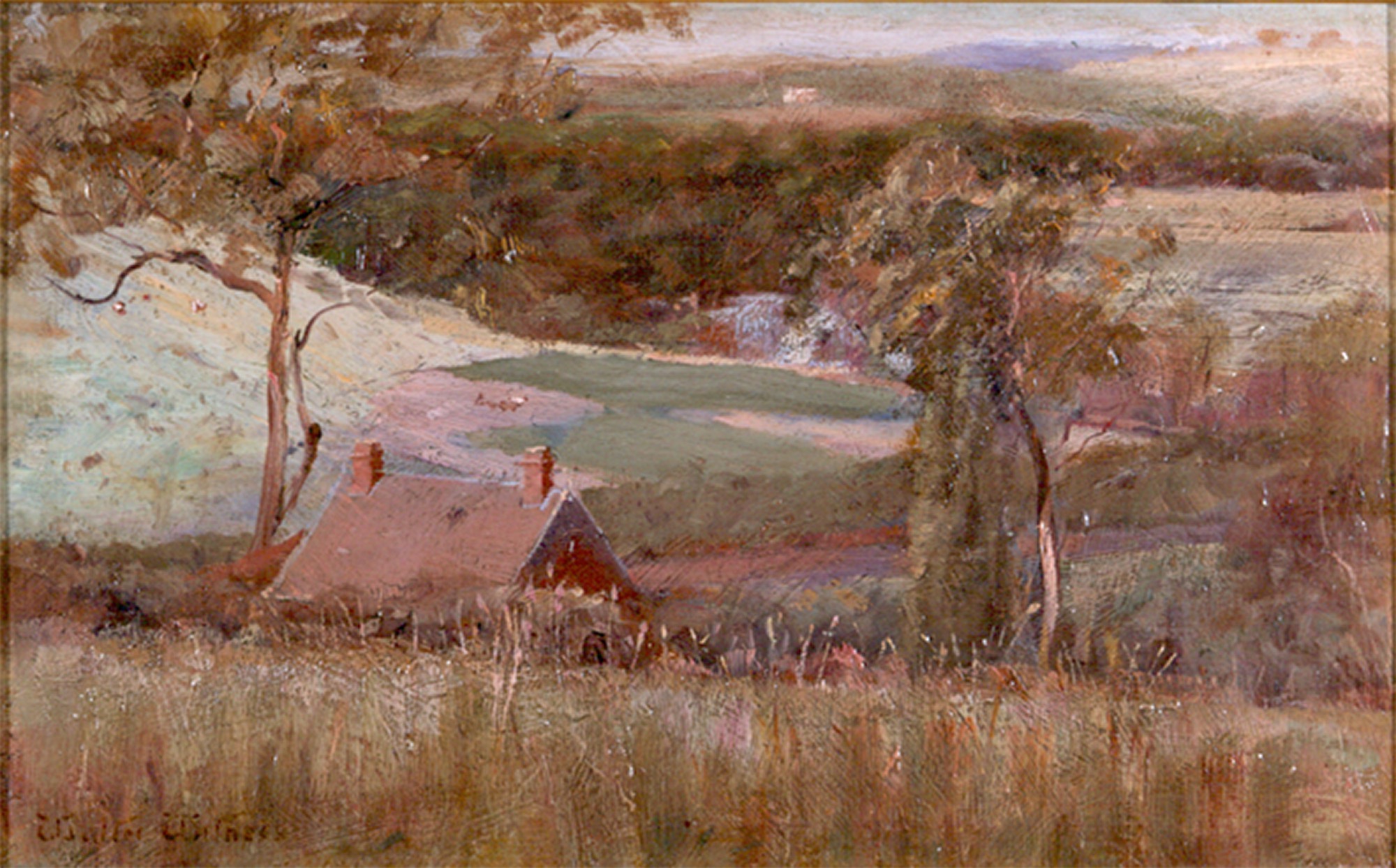
Withers spent much of the summer of 1889–90 at Eaglemont with Streeton, Conder, and Roberts while his wife Fanny was visiting England but then, in September, he moved to Charterisville (fig. 2). One of the tenant dairy farmers, William Peet, occupied the north wing of the long U-shaped homestead with a wife and children. Withers and his young family lived in the south wing for almost three years and here he produced most of the paintings that Dickinson so admired for their colour and sincerity in 1891. Fanny Withers later remembered this interlude, until the financial crisis really hit, as a “hey-day of youth and happiness,” with other artists sub-letting the brick cottages and plenty of visitors at weekends.11 There was tennis, rowing and swimming as well as artmaking, and singing and dancing at night.
Most of what is known about who lived in the Charterisville cottages during Withers’s time, in the early 1890s, comes from flurries of much later reminiscence and somewhat contradictory counter-reminiscence. William Moore and artists Hal Waugh and John Shirlow all wrote from memory in 1906 and 1908.12 Shirlow wrote again in 1919: a sometimes inaccurate piece in the Melbourne Herald, brought on by a modest local post-war art boom, that was followed by letter-to-the-editor responses from Fanny Withers, the photographer Robert Harvie, and someone with the initials MFC.13 Artist occupants recorded for the period 1891–93 include Waugh, Arthur Bassett, Fred Williams, plus their dog, in a cottage they called “the Old Bandicoot,” and Tom Humphrey (at least until he opened his photography studio in town), Fred Monteath, and Leon Pole, known to friends as Sonny.
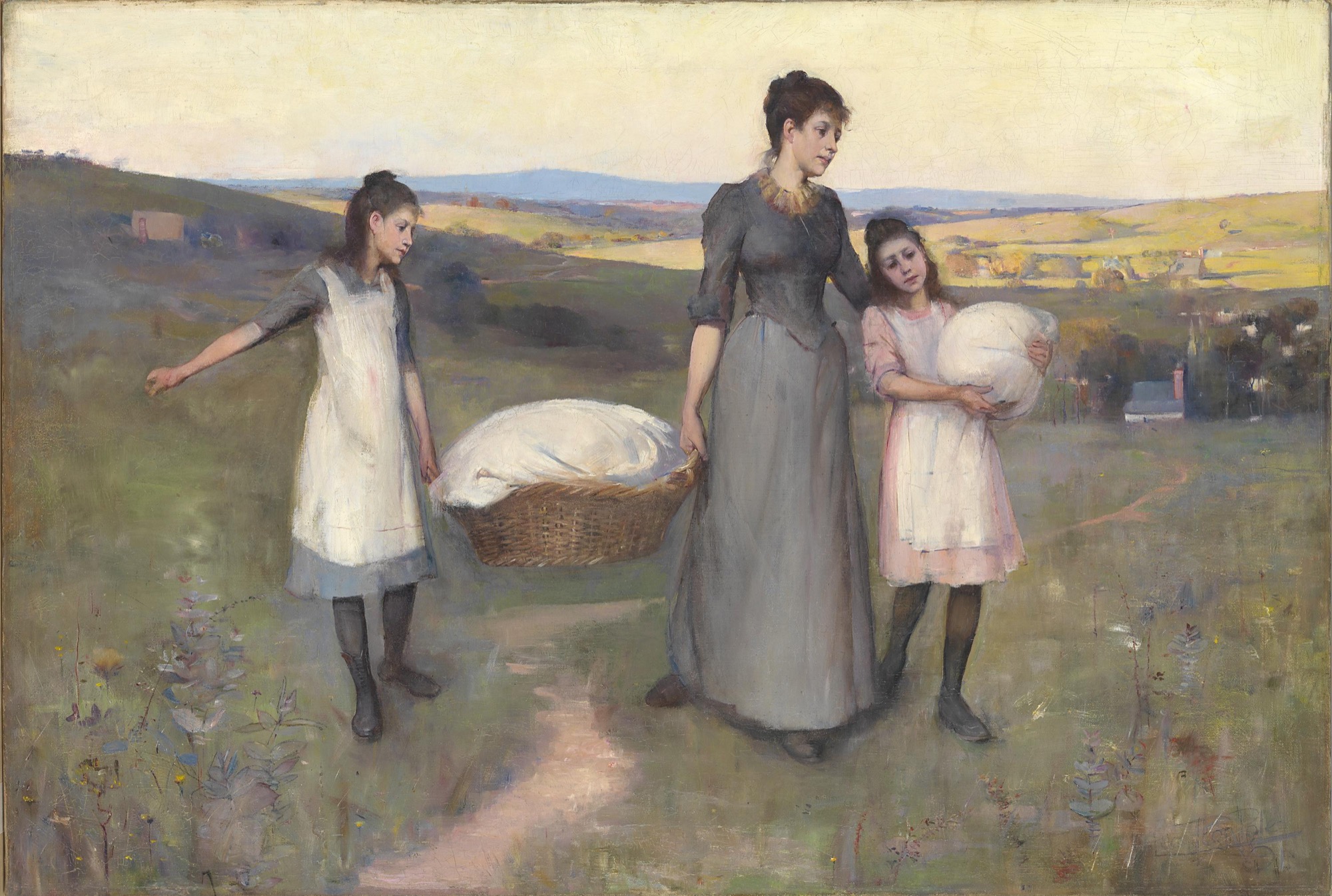
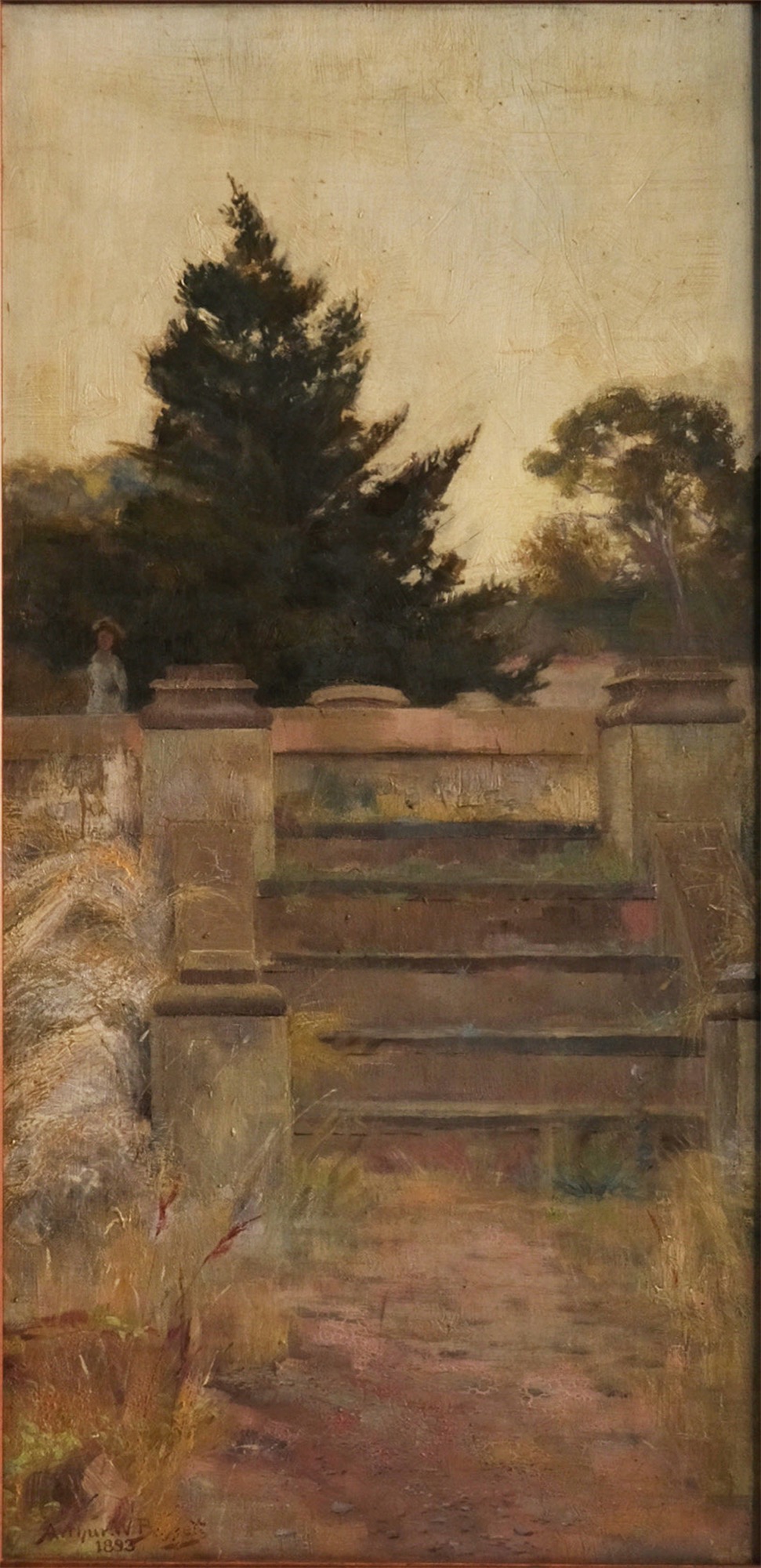
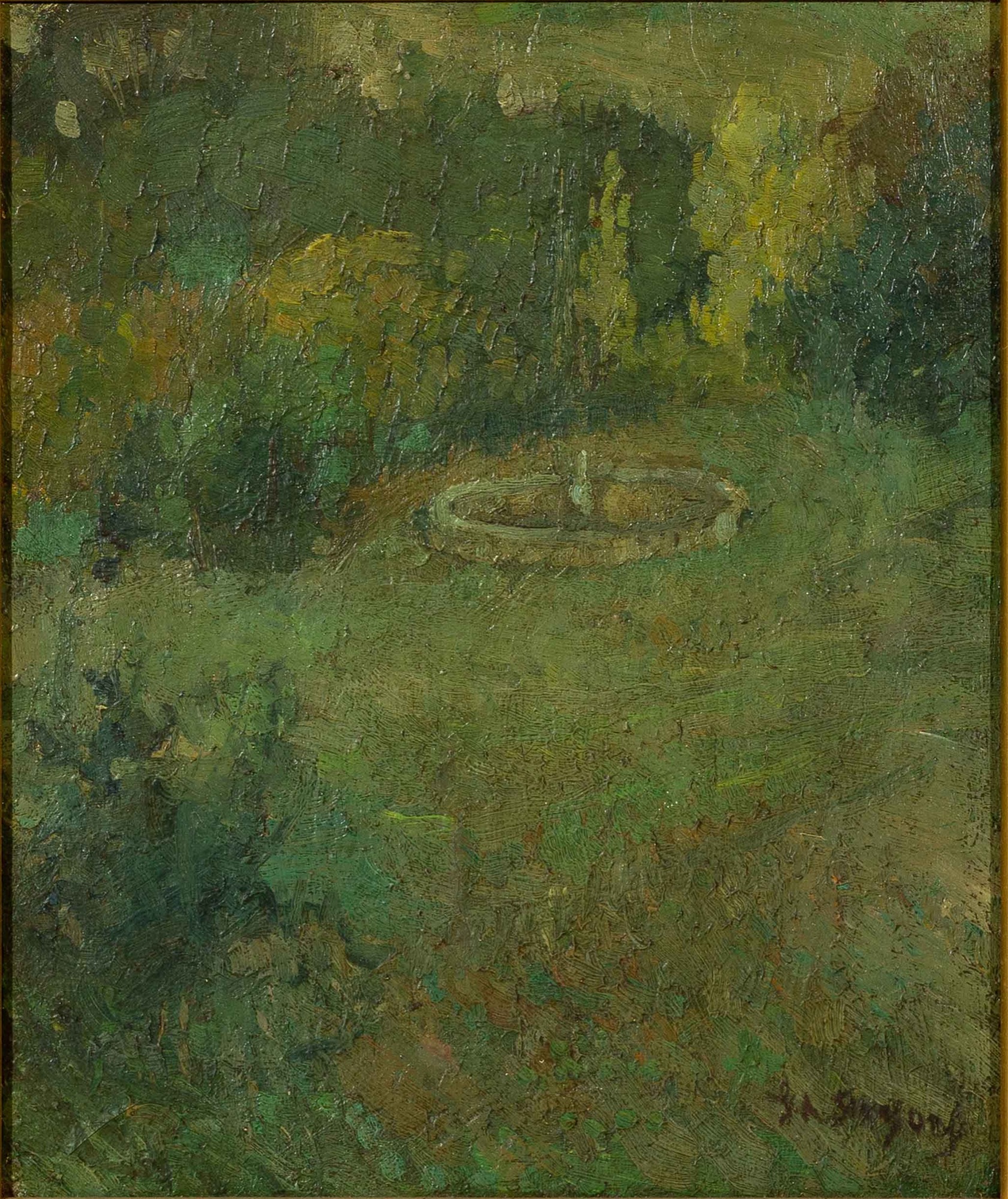
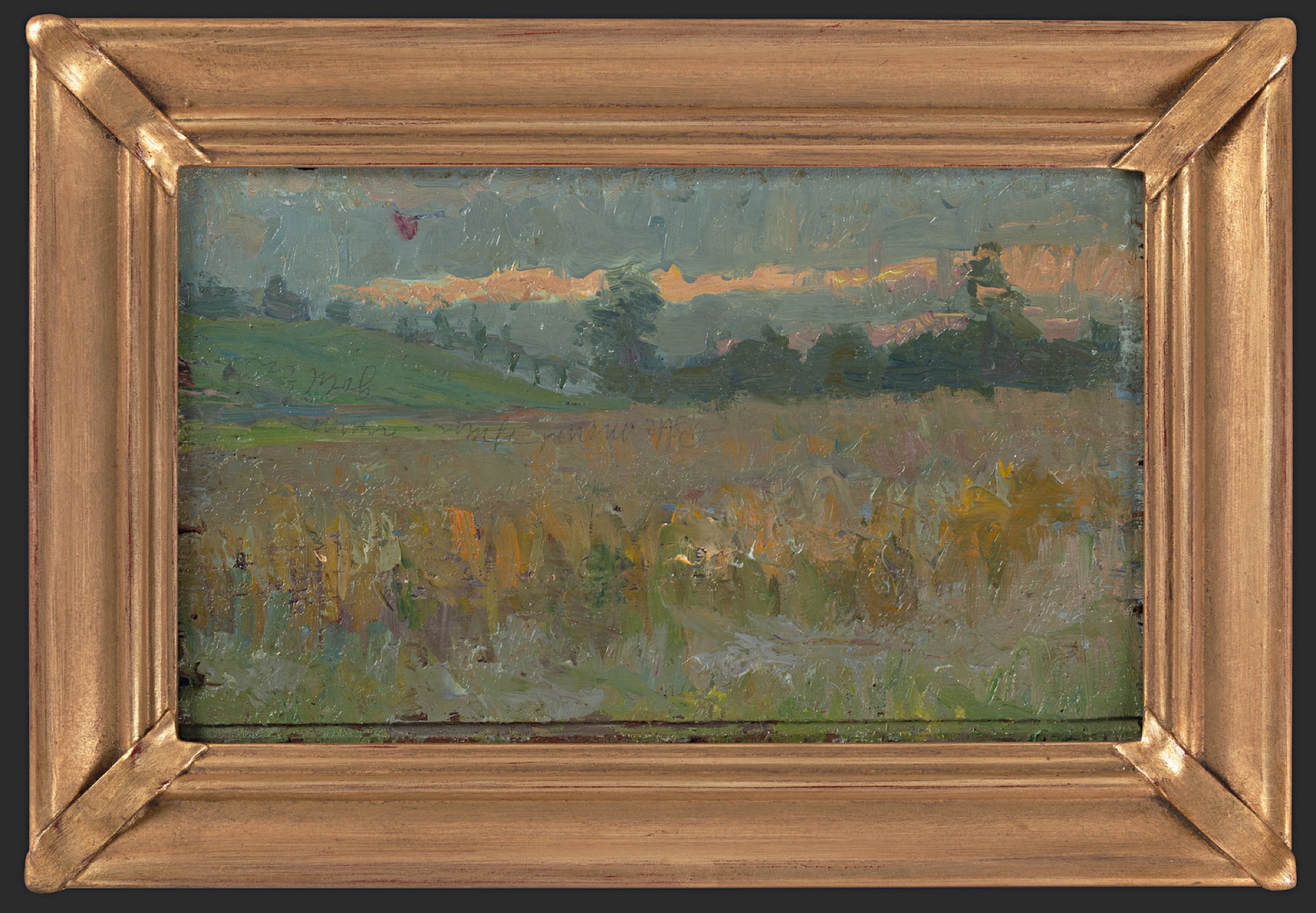
Pole had previously spent time at Eaglemont where Conder remembered him playing the tin whistle and drinking “a little too much ‘Golden Summer,’ as he called wine.”14 The Village Laundress, painted while he was at Charterisville in 1891, won him the National Gallery students’ £10 second prize that year: a tidy sum when the almost nominal weekly cottage rent was two shillings and sixpence (fig. 3). Harvie, who thought Charterisville “by far the most interesting and beautiful spot so close to Melbourne,” was the first owner of Arthur Bassett’s Old Fountain at Charterisville (1893), a painting of the twilit remains of McArthur’s handsome water feature.15 He also owned Charterisville paintings by Withers and Fox (figs. 4, 5).16
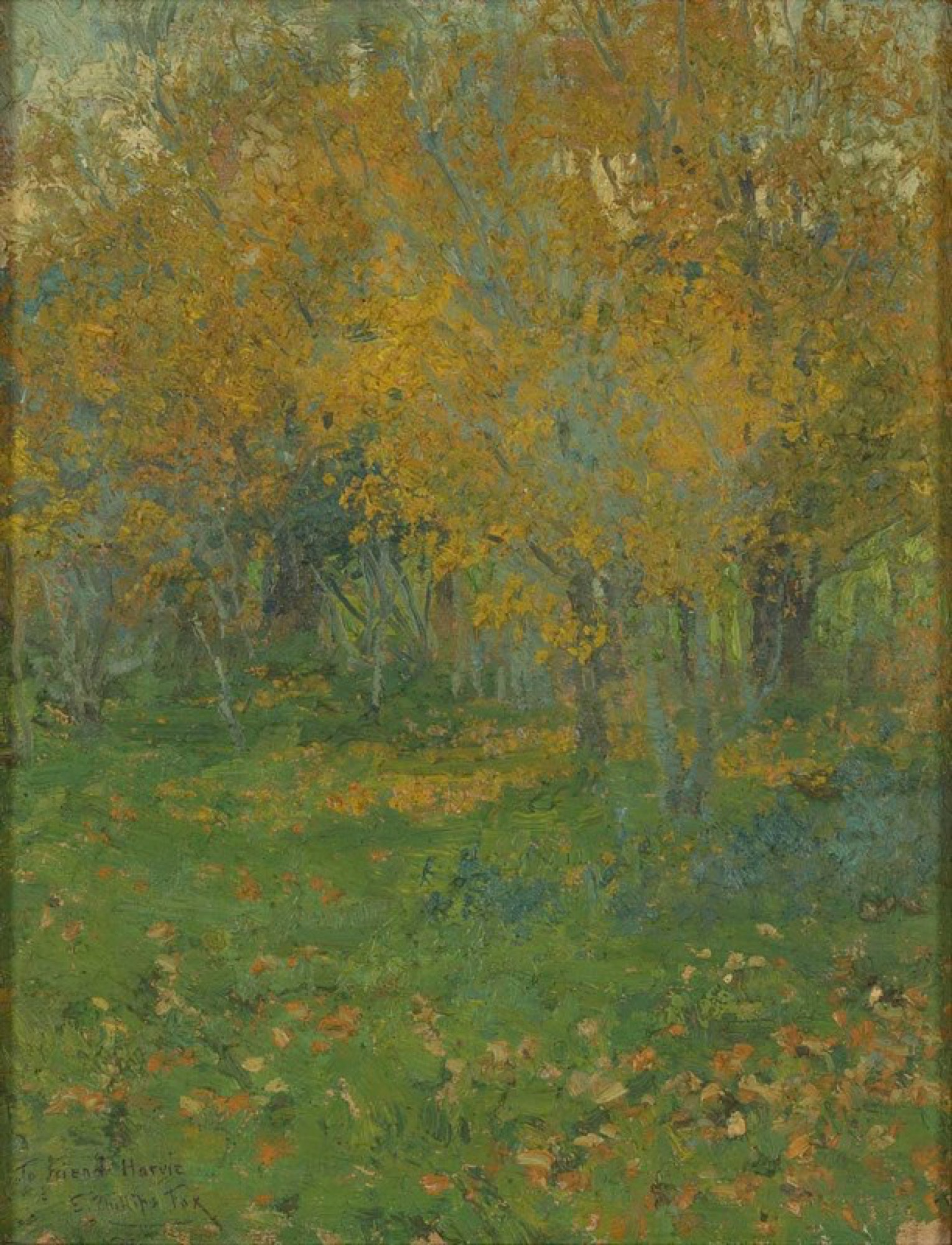
With the banking crash of May 1893, lack of income meant insecure housing was no longer a youthful lark. Bassett and Fred Williams left for the West Australian goldfields, followed by Anna Fraser, the Heidelberg Presbyterian minister’s daughter. She had been a visitor at both Mount Eagle and Charterisville, and she married Williams in Fremantle. Sonny Pole moved on, to set up a sign-writing business with Harry Recknall (though both returned later). Waugh rolled up a swag and “went bush.” In winter that year, Withers moved his family into Heidelberg village to be nearer the train and his paying pupils, and so that Fanny could also teach. It is unlikely she was truly happy rattling round in the old McArthur homestead, with two small daughters, a baby who died at five weeks and a husband, often away from home, who suffered from depression.
In contrast, for students who came to Charterisville with the Melbourne School of Art the romantic old house and overgrown garden were bliss: “as beautiful and neglected as could be,” Violet Teague told William Moore.17 Phillips Fox and Tudor Tucker had both arrived back in Melbourne late in 1892, after five years in Europe, and they opened a private art school in the city in February 1893. They had first met while studying at Melbourne’s National Gallery School in the 1880s. Both then trained in Paris at the École des Beaux-Arts and at Julian’s Academy, joining the annual summer exodus to Étaples. Fox also spent time at Giverny when Monet was in residence and at St Ives in Cornwall. He and Tucker both knew how productive and enjoyable art-colony life could be.
Their business plan was carefully worked out and clearly sound. They had a target market: well-to-do and professional families rather than wage earners. They distributed their prospectus in the leather-bound catalogue of the 1894 Intercolonial Loans exhibition of international art, offering outdoor landscape work as well as “a thorough art education on similar lines to the best Parisian Schools.”18 Theirs was “the ‘Julien’ [sic] system,” the Melbourne newspapers announced.19 Their student exhibitions were thoroughly reported in the press with prize winners listed on the Society Gossip and Ladies Pages as well as in the art columns. At least fifty students were enrolled between 1893 and 1901, including a number from the Gallery school.
Fox and Tucker took over Withers’s lease at Charterisville and had a timber studio built, 8 by 4.5 metres, high over the river looking out across the Yarra valley.20 Thenceforth, each year from 1894, they offered formal weekend classes: as described in one news report, with “cottages and outbuildings… like so many swallows’ nests for the Melbourne artists, which they leave, and to which they return, to take their artistic flight with a more or less assured stroke.”21 In the early autumns of 1897 and 1898, they held two-month residential camps in the homestead: the first plein-air art school in Australia (fig. 6).
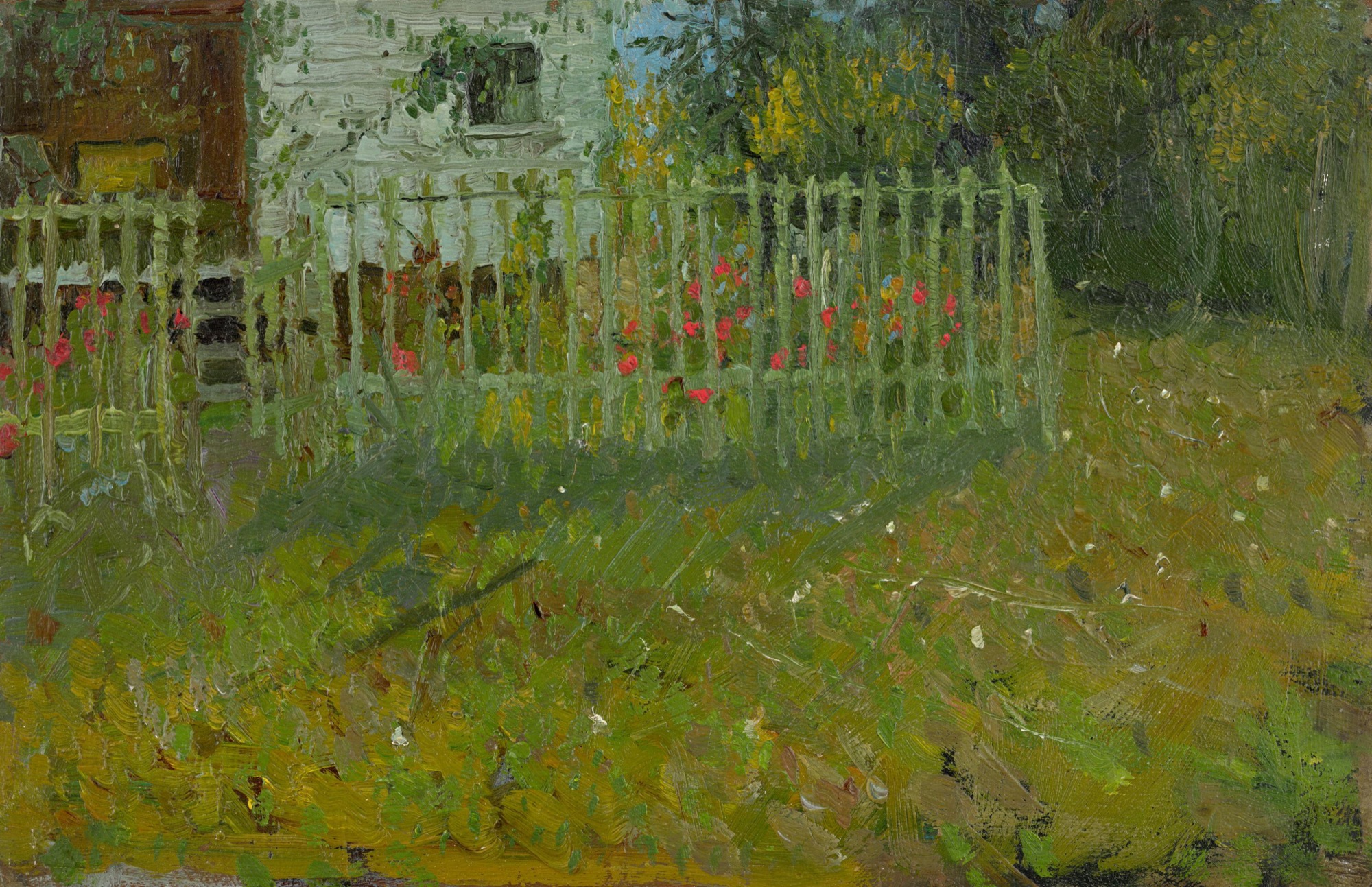
Importantly, because the teachers now had an income stream and their students were diligent, ambitious and mostly family-funded, there are sufficient paintings extant from these years to show clearly that, of all the artists who returned to Melbourne from Europe in the 1890s, Fox and Tucker had the most impact on the local scene both through their teaching and through exhibiting their own work. Fox probably had the greatest understanding of French Impressionist principles (although to many Australian critics Impressionism still equated with “unfinished”). Mid-1890s Charterisville is, without doubt, where Australian women artists are suddenly visible in numbers and Violet Teague’s recollections nicely match evidence from surviving works:
There was a wonderful variety of subjects. We chose our own, and setting up our easels we started to work … If the light was good we worked all day and did about four oil sketches which in the evening were put in a room, which we named “Burlington House,” where Mr Fox judged them … Out all day, we were starving at dinner-time. After the repast, one of us sat and the others did a charcoal study of the head of the sitter, who received Fox’s drawing as her reward. You would need to live in a community like that to fully appreciate Mr Fox’s kindness and his humility as regards his own work, combined with a burning enthusiasm to get even with nature in her most subtle harmonies and rapid changes. He had a very strong influence on his school and made it pre-eminently a colour school.22
Meals were provided by a housekeeper-chaperone. Other young women at these residential camps included Lilla Reidy, Cristina Asquith Baker, Lucy Sutton, Marion Barrett, Ursula Foster, Helen Peters, Bertha Merfield, Eva Brooks, Henrietta Irvine, the sisters Ina and Ada Gregory, Fox’s cousin Etta Phillips, and Mary Nanson, who later married Fox’s patron Felix Meyer and who told Ruth Zubans: “Plenty of panels and paint were always on hand … we were encouraged to take another panel when nature’s mood changed.”23 Ina Gregory remembered Tucker’s “slightly sauntering graceful walk,” his generosity with students and his knowledge of philosophy and music (fig. 7).24 Some male students also joined the outdoor classes: Ambrose Patterson from 1894, Hugh Ramsay in 1897, Albert Enes, and Edward Officer who with Lilla Reidy took over the School’s city courses after Fox returned overseas in 1901.
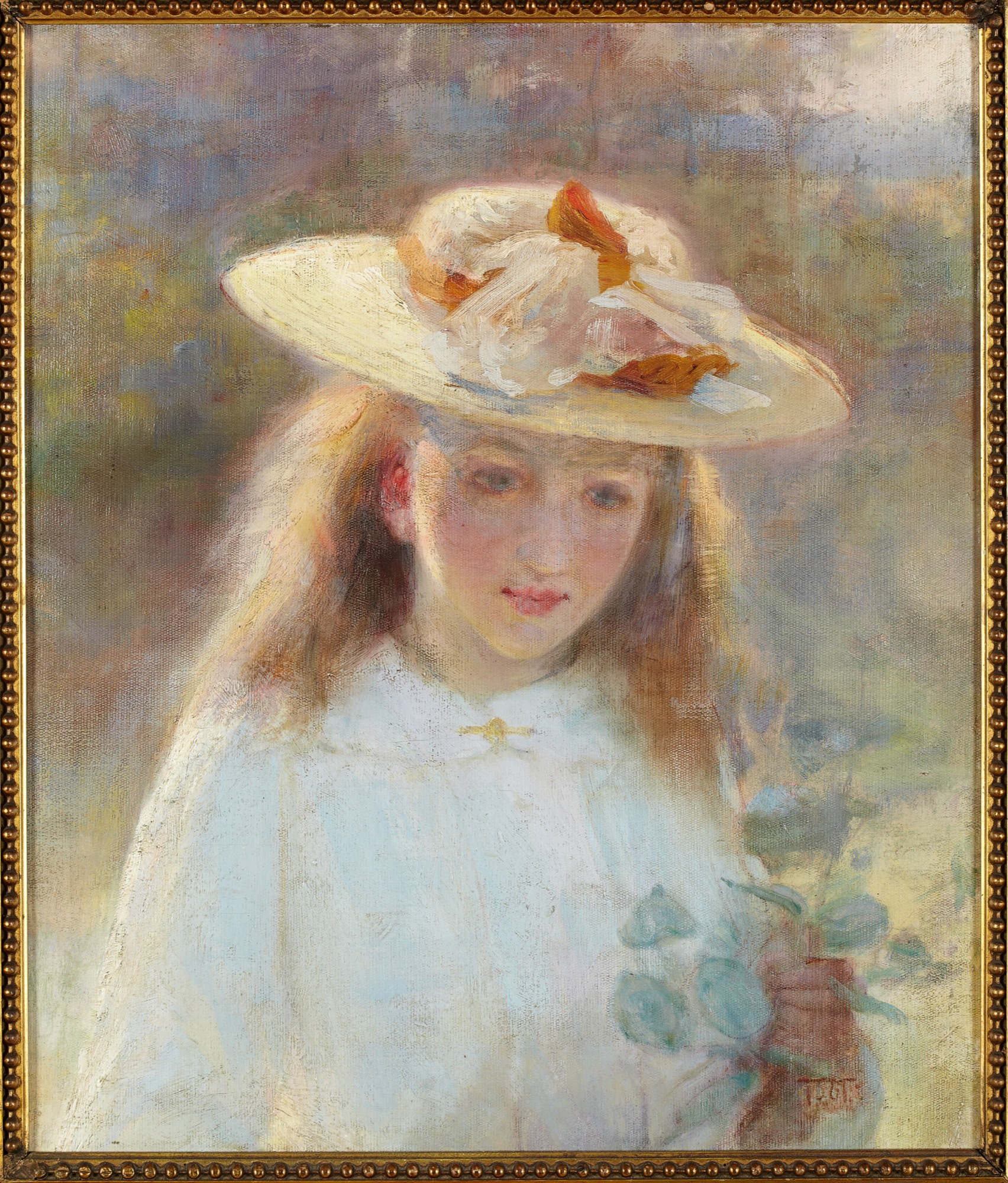
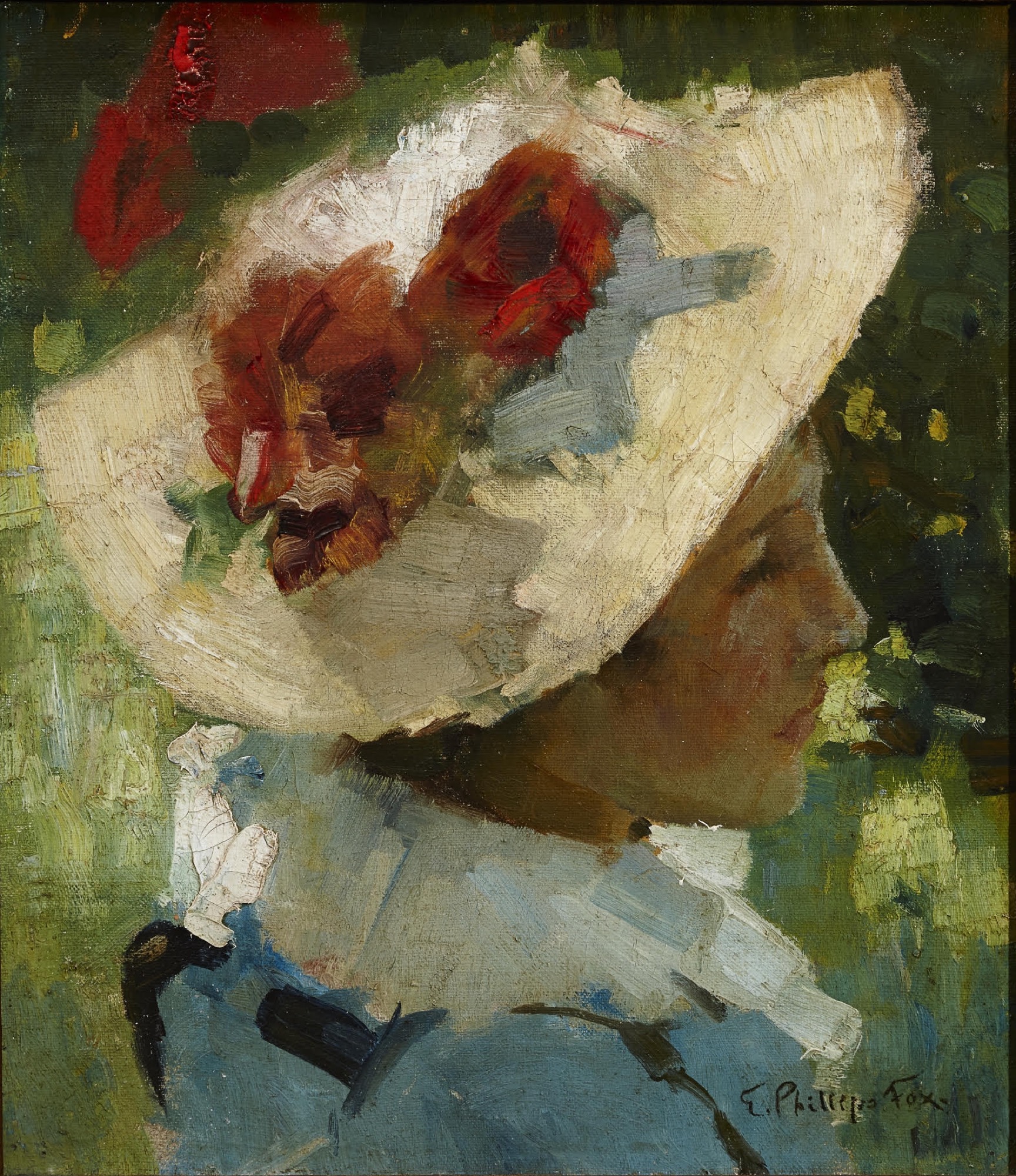
There is a look to 1890s paintings of the Charterisville landscape, by both the teachers and their students, which must have seemed instantly distinct from the square-brushed blue and gold of Streeton and his confreres at Eaglemont (and then in Sydney). Contemporary critics noted “poetry, vagueness, airiness and space in even the least of the sketches” and an “unerring knowledge of the effect of light which seems common to every student.”25 A very limited range of colours are applied directly, with small rhythmic brushstrokes building up interlaced layers. Rather than hot summer, they are mostly cool and moist looking, or fin de siècle nocturnes. There is no sense of a nationalist ethos. Rather, as Table Talk’s reviewer observed, “The students of the Melbourne School of Art are too much in earnest to hold any other creed than ‘art for art’s sake’” (figs. 8–10).26
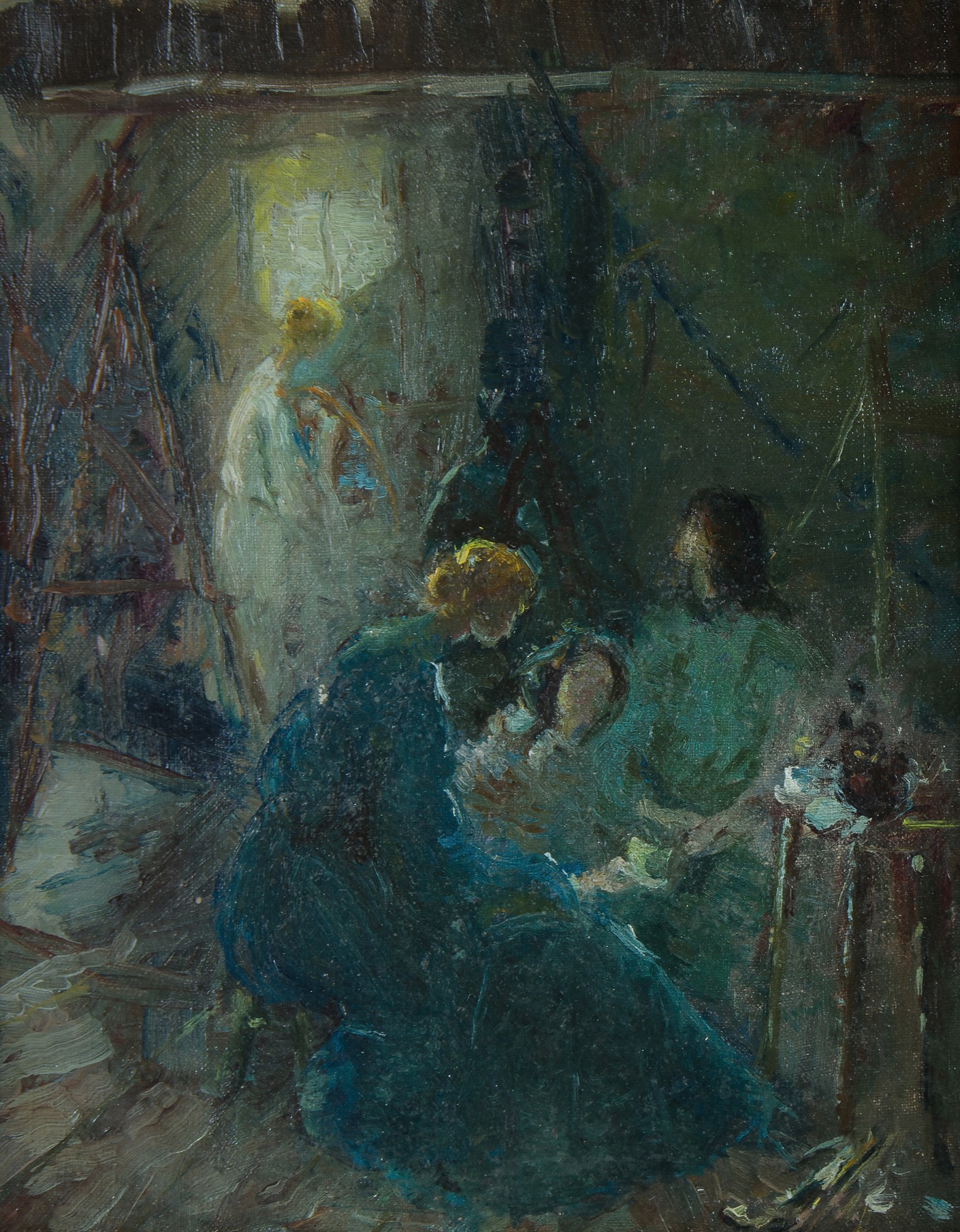
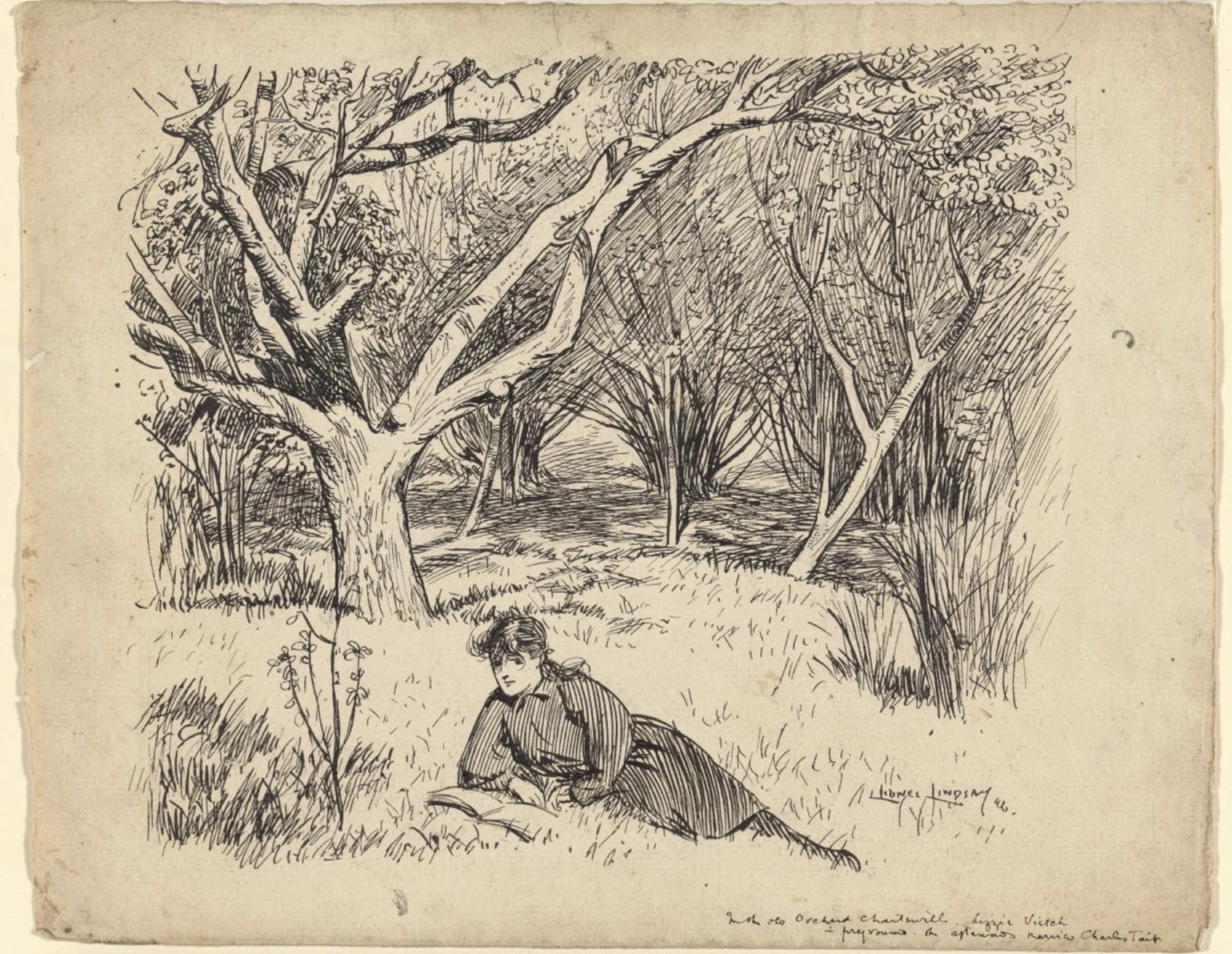
A dairy farmer still occupied the homestead’s north wing—now William Veitch with his family—so the students stayed in the south wing and possibly one of the cottages. Both Fox and Tucker painted portraits of Veitch’s beautiful daughter Elizabeth (fig. 11). Lionel Lindsay sketched her lying down in the old orchard: evidence of another and very different coterie in residence at Charterisville through the second half of the decade (fig. 12). It seems that with Fox, Tucker and their paying pupils quartered in the main house, the various cottages were often used by other artists and friends who had jobs in the city. However, details of these sub-sub-lettings are unrecorded. The whole property was still owned by the failed speculators Roberts and Ferguson, until their deaths respectively in 1899 and 1900 when it reverted to the de Castellas as mortgagees. While the worst of the depression had now passed, land in the Heidelberg district was still virtually unsaleable and farmers struggled to survive (this situation scarcely changed until a direct rail link to the city finally opened after the turn of the century). Perhaps Hubert de Castella, having returned to his native Switzerland, liked the fact that Charterisville was now an art colony: he had once studied art and architecture himself and exhibited his own oil sketches of the Upper Yarra in the 1860s.27
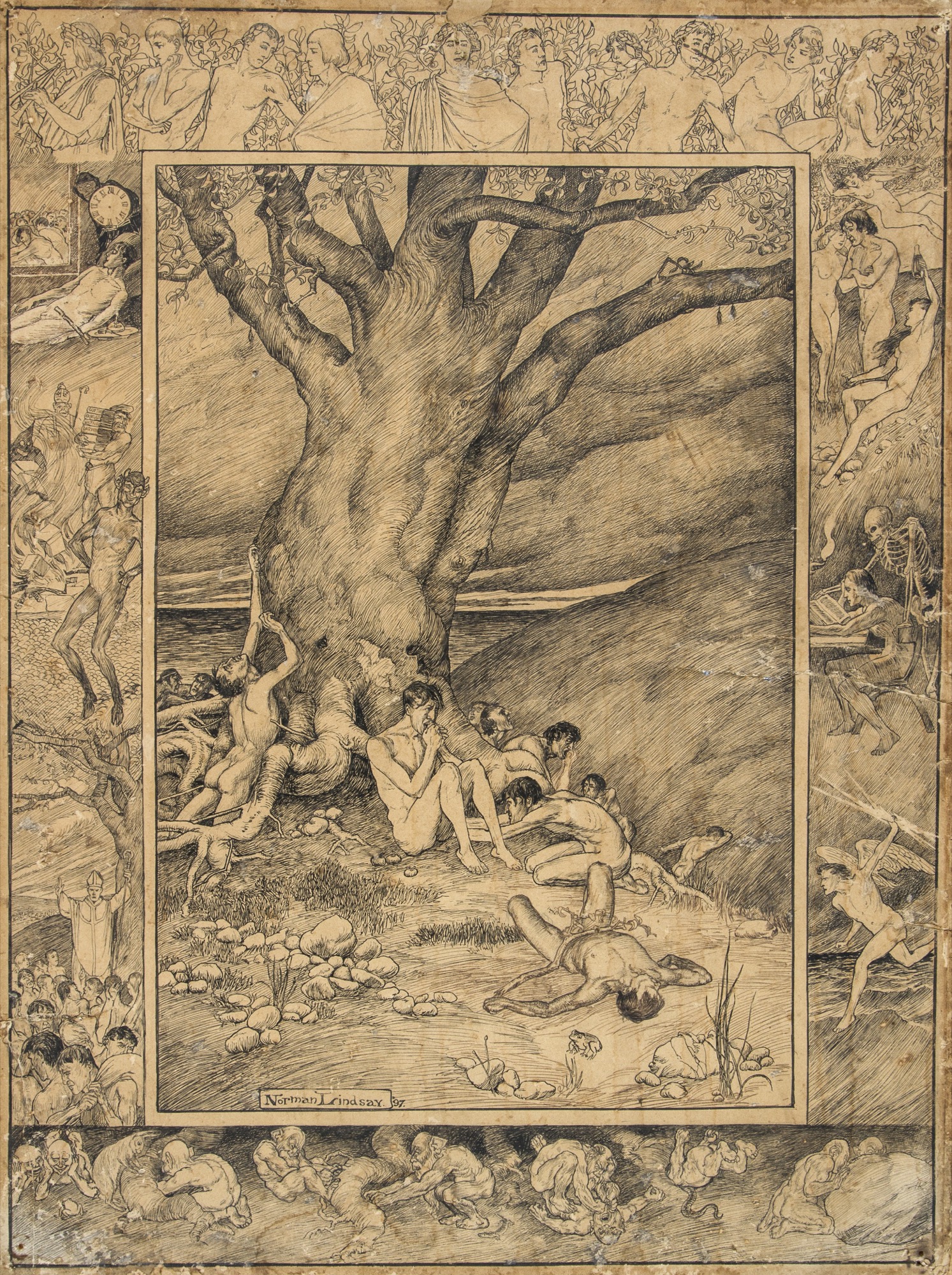
To judge from a few dated drawings, Lionel Lindsay, his younger brother Norman and their tragically short-lived friend Ernest Moffitt shared one of the cottages over the summers of 1896–7 and 1897–8 and probably came and went between times (figs. 13, 14).28 Their coterie, distinct from the plein-air Impressionist campers, made art primarily in graphic media. However, this period is when Phillips Fox and Norman Lindsay completed a joint portrait in oils of Mrs Veitch, a rather surprising collaboration, with Fox painting her head and shoulders and Lindsay the background.29 Percy Lindsay, the eldest brother, was also there for part of 1897, the family having quite likely first heard of Charterisville from Withers, when he gave them painting lessons in Creswick a few years before. Eighteen-year-old Norman’s 1897 self-portrait in ink—seated naked under the tree of life, on the cusp of total artistic freedom—encompasses heaven and hell, love, death, social fracture, and inspiration from Petronius, Rabelais, Darwin and Nietzsche.30 He created illustrations to Boccaccio’s Decameron and The Idylls of Theocritus around the same time, with Charterisville’s garden as his backdrop.31 Lionel later remembered: “The old garden at Chartersville [sic], and everybody down the river, either swimming or lying on the rocks in the hot sun. Moffitt, his whole body sunburnt, as bronze as a faun, and some of us climb the bank, and binding flowers and vine leaves about us, dance on the short grass, or chase each other shouting; and we think of happiness and pagan Greece, before Christianity came to throw its ominous shadow of melancholia and ‘purity’ upon the blytheness [sic] of life.”32
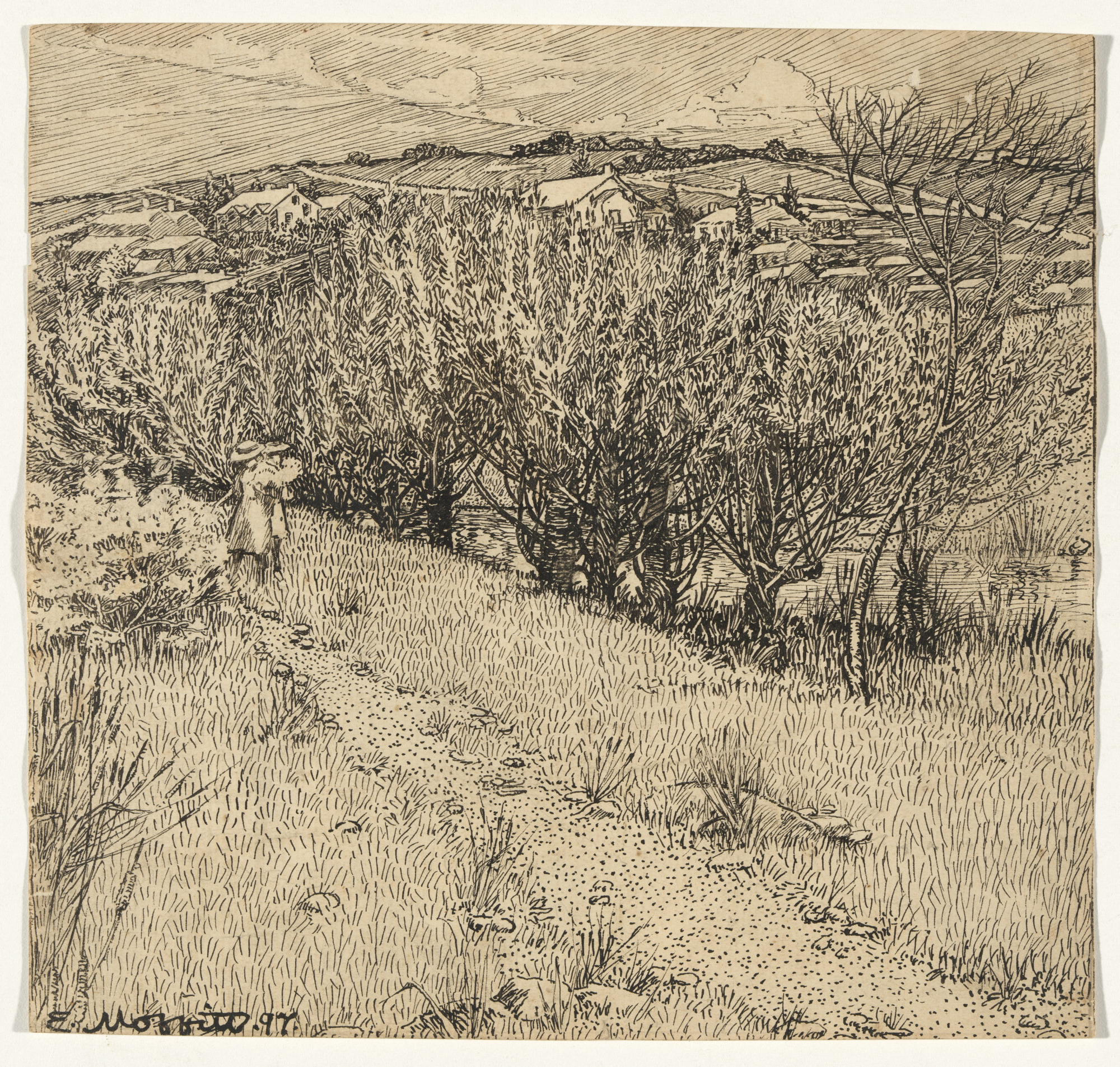
George Marshall-Hall, Professor of Music at Melbourne University, used another cottage. A renowned atheist, socialist, poet and passionate bohemian, Marshall-Hall was director of the Conservatorium where Ernest Moffitt was a student. He composed a sonata for Moffitt, now in the Grainger Museum at the University, which he inscribed “In the Orchard, Charterisville” and he later paid for the memorial book in which some of Moffitt’s Charterisville drawings are reproduced.33 The journalist Frederick Delmer joined Marshall-Hall, and so did Streeton on a visit from Sydney in 1896. Other non-artists taking advantage of the laissez-faire cottage rentals were Charles Tait, who married Lizzie Veitch and became a theatre impresario, the writer David Dow, who became a diplomat, and Marshall Lyle, a celebrity solicitor who had recently defended the Melbourne serial killer Frederick Deeming.
The comings and goings at this time clearly involved multiple casts of characters, sometimes distinct and sometimes overlapping. One of Norman’s sketchbooks contains drawings of Leon Pole, Moffitt and the Ivanhoe train station. One of Lionel’s includes studies of both artists and theatrical personalities.34 For Melbourne Cup Day in 1897, a printed invitation went out from “the Bohemians of Charterisville,” presumably the Lindsay and Moffitt cohort rather than Fox or Tucker. In the spring of 1898, the Melbourne School of Art gave what was no doubt a more genteel “tea and dance picnic at the Artists’ Camp … with songs and recitations.”35 Although the official teaching was held over autumn, there is evidence that some women students used the cottages less formally at other times of year: tragically, one of them, Eva Brooks, perished in the late spring of 1897 while bathing in the river.36 Long-suffering farmer Veitch was prosecuted in the Heidelberg Court for damaging several bicycles with his stockwhip. He had found these parked outside the Recknalls’ cottage by visiting artists, who left gates open and thereby let his cows into the vegetable paddocks.37
Tucker sailed for England in February 1899. Moffitt, who had moved to a cottage in Alphington, not far away, died suddenly of peritonitis in March: Marshall-Hall and Charles Tait were pallbearers at his funeral, along with Frederick McCubbin and John Longstaff representing the Victorian Artists’ Society. Lionel Lindsay vacated when he could no longer keep up payments on his bicycle: he had illustration work in the city and the train was not only slow, but expensive. Norman went to Sydney to become prolific, provocative and popular. Fox worked on at Charterisville through autumn and early winter in 1899 and 1900 but he was restless “to clear out,” he said, and he left for Europe in March 1901.38
The last art colonists at Charterisville were, it appears, only casual weekenders overnighting in Fox’s and Tucker’s hilltop studio after both had gone, and mainly sketchers rather than plein-air oil painters. Shirlow, himself an etcher, lists Frank Crozier, a painter, and the sculptor William Wallace Anderson, watercolourist Alexander McClintock, pastellist Alf Fischer, and W.S. Wemyss, “a dabbler.” “After the lamps were lighted, we gathered round and discussed Whistler, or Socialism, or Norman Lindsay (for Lindsay was becoming a power in the land), or theosophy,” Shirlow recalled.39 Apparently, they also antagonised the incumbent tenant farmer—perhaps still Veitch and probably more open gates—to the extent that he demolished the timber building not long afterwards.
That final coterie marked the end of a remarkable episode in Melbourne’s art life, with its entwined professional, social and personal networks, its sub-cultures—and its hopes and dreams. In Robert Harvie’s words, “Much could be written of the trials and sorrows in camp, but more perhaps of the friendship, optimism, and true romance.”40 There is just one postscript: late in 1906, old Hubert de Castella had returned to Victoria “to enjoy once more,” he said, “the warmth and brightness of the Australian sunshine.”41 He died at Charterisville the following year; and the homestead was owned by his descendants until 1964.
-
See, for example, Arthur Streeton, “Eaglemont in the ’Eighties: beginnings of art in Australia,” The Argus, Melbourne, 16 October 1934, supplement, 49, [http://nla.gov.au/nla.news-article10963000]{.underline}; and “Notes for Memoirs,” Streeton Family Papers, a part-manuscript, part-typescript composed by Streeton in his later years, probably in the 1920s/30s while working towards The Arthur Streeton Catalogue (A. Streeton, 1935); I am grateful to Olivia Streeton for allowing me access to this material and to Anne Gray for sharing her transcription. Key secondary sources include R.H. Croll, ed., Smike to Bulldog. Letters from Sir Arthur Streeton to Tom Roberts (Ure Smith, 1946); Jane Clark and Bridget Whitelaw, Golden Summers: Heidelberg and beyond (ICCA, 1985); Albie Thoms, Barry Pearce and Linda Slutzkin, Bohemians in the Bush: the Artists’ Camps of Mosman (Art Gallery of New South Wales, 1991); Terence Lane, ed., Australian Impressionism (National Gallery of Victoria, 2007); Anne Gray and Angela Hesson, eds., She-Oak and Sunlight: Australian Impressionism (Thames & Hudson and National Gallery of Victoria, 2021); and see bibliography. ↩
-
Arthur Streeton, ‘Still glides the stream, and shall for ever glide’, 1890, oil on canvas, 82.6 x 153.0 cm, Art Gallery of New South Wales, Sydney, purchased 1890, accession no. 859. Arthur Streeton, Golden Summer, Eaglemont, 1889, oil on canvas, 81.3 x 152.6 cm, National Gallery of Australia, Canberra, purchased 1995, accession no. 95.604. ↩
-
Sidney Dickinson, “Two Exhibitions of Paintings,” The Australasian Critic, Melbourne, 1 July 1891, 240. Bernard Smith adopted the art-historical label, the Heidelberg School, in the late 1940s and first acknowledged Dickinson’s influence in Documents on Art and Taste in Australia (Oxford University Press, 1975), 245–251; however, the less locally specific term “Australian Impressionism” is now most widely used by Australian art historians. ↩
-
Charles Conder to Tom Roberts, from Paris, 20 August 1890, quoted in William Moore, The Story of Australian Art (Angus & Robertson, 1934), vol. I, 76. ↩
-
Streeton, quoted in R.H. Croll, Tom Roberts: Father of Australian Landscape Painting (Robertson & Mullens, 1935), 16. ↩
-
Helen Topliss, The Artists’ Camps: ‘Plein-air’ Painting in Australia (Hedley, 1992); Ruth Zubans, E. Phillips Fox: His Life and Art (Miegunyah, 1995), 52–93, and “At Charterisville in the 1890s: Phillips Fox and Tudor St. George Tucker,” in Heidelberg to Heide: Creating an Australian Landscape 1850–1950, edited by Kelly Gellatly and Ted Gott (Heide Museum of Modern Art, 2001), 36–45; Mary Eagle, The Oil Paintings of E. Phillips Fox in the National Gallery of Australia (National Gallery of Australia, 1997); Elena Taylor, Australian Impressionists in France (National Gallery of Victoria, 2013), 71–81. ↩
-
Victoria Hammond and Juliet Peers, Completing the Picture: Women Artists and the Heidelberg Era (Artmoves, 1992); feminist art advocacy has been central to Peers’s important research and writing. See also David J. Angeloro, “An Australian Woman’s Impression and Its Influences (A More Complete Picture),” 2019, accompanying the sale of his significant private collection.<www.davidsonauctions.com.au/files/a_womans_impression_and_its_influences_2019_july.pdf> ↩
-
Moore, The Story of Australian Art, I, 72. Anna Reay (née Fraser), remembered the weekend “influx of brother-artists accompanied by their wives and girlfriends,” the former with painting materials and the latter with picnic provisions; quoted in Croll, Tom Roberts, 30. ↩
-
See Donald S. Garden, Heidelberg: The Land and Its People 1838–1900 (Melbourne University Press, 1972), 32–34, 46–47; “Charterisville,” Victorian Heritage Database Report. https://vhd.heritagecouncil.vic.gov.au/places/4390/download-report Even changes to municipal boundaries over time have affected art history. The Mount Eagle site is nowadays in the suburb of Eaglemont, while Charterisville is in Ivanhoe with a different postcode. In the 1880s and ’90s, both were part of the shire of Heidelberg, which was proclaimed a city in 1934. Eaglemont, East Ivanhoe, and the neighbouring modern-day suburb Heidelberg are now all within the local government City of Banyule. ↩
-
Ruth Zubans carefully documents sources for the estate’s layout in “At Charterisville in the 1890s: Phillips Fox and Tudor St. George Tucker,” in Heidelberg to Heide: Creating an Australian Landscape 1850–1950, ed. Kelly Gellatly and Ted Gott (Heide Museum of Modern Art, 2001), 37, 58–59. The earliest known photographs, in the ANZ Bank Archives, date from c. 1910–1920; others from the 1930s and c. 1980 are at the Heidelberg Historical Society. ↩
-
Fanny Withers, “A Short Biography of Walter Withers,” manuscript, c. 1919, in Walter Withers: The Forgotten Manuscripts, ed. Andrew Mackenzie (Mannagum Press, 1987), 109, 114–120. ↩
-
William Moore, Studio Sketches: Glimpses of Melbourne Studio Life (W. Moore, 1906), 75; Hal Waugh, “The Artists’ Camp at Charterisville,” The V.A.S., no. 3, June 1908, 3–4; John Shirlow, “Chartersville [sic]—The Closing Scenes,” The V.A.S., no. 4, July 1908, 4–5. ↩
-
John Shirlow, “Chartresville [sic], A Shrine,” The Herald, Melbourne, 7 August 1919, 4,http://nla.gov.au/nla.news-article242585672; Robert W. Harvie, “Heidelberg Artists—Charterisville and Eaglemont, To The Editor,” The Herald, Melbourne, 12 August 1919, 10, http://nla.gov.au/nla.news-article242583404; Fanny Withers, “Charterisville & Eaglemont, To The Editor,” The Herald, Melbourne, 16 August 1919, 9, http://nla.gov.au/nla.news-article242585506; MFC, “Charterisville, To The Editor,” The Herald, Melbourne, 18 August 1919, 4, http://nla.gov.au/nla.news-article242592920; Fanny Withers, “Charterisville—Further History Given, To The Editor,” The Herald, Melbourne, 23 August 1919, 4, http://nla.gov.au/nla.news-article242593342 (and “This correspondence closed” by The Editor). I believe that MFC, then writing from Ivanhoe, was Maria Farrant Curtis, widow of the artist J.W. Curtis (although they had earlier lived in Brighton); she claims that both McArthur and Streeton were her friends and that Curtis, Conder and she had spent four months at Charterisville in 1887 (when Conder was actually in New South Wales). ↩
-
Conder to Roberts, early 1890, quoted in Smike to Bulldog: Letters from Sir Arthur Streeton to Tom Roberts, ed. R.H. Croll (Ure Smith, 1946), 126. ↩
-
Harvie, “Heidelberg Artists,” 10. ↩
-
Charterisville paintings inscribed by Fox to Harvie have been in the art market in recent years, including Emanuel Phillips Fox, Autumn, oil on canvas, 43.5 x 33.5 cm, inscribed lower left: “To friend Harvie” (Mossgreen Auctions, Important Australian & International Art, Melbourne, 20 November 2017, lot 32) and Reflections or Watered Farmlands, oil on panel, 15.3 x 22.4 cm, inscribed “To my friend Bob” (most recently Mossgreen Auctions, Fine Australian & International Art, Melbourne, 4 June 2008, lot 912); as well as Withers’s Figure on path, oil on board, 22 x 22 cm (Leonard Joel, Australian Paintings, Melbourne, 24 July 1985, lot 780). There are intriguing photographs by Harvie of day-tripping picnic parties in Museums Victoria Collections at <collections.museumsvictoria.com.au/items/787875>; <collections.museumsvictoria.com.au/items/747459>; <collections.museumsvictoria.com.au/items/788552> ↩
-
Violet Teague, quoted in Moore, The Story of Australian Art, I, 77. ↩
-
Catalogue of the Loan Collections of Oil Paintings: Exhibited at the Melbourne, Sydney, and Adelaide National Galleries (Fergusson and Mitchell, 1894). ↩
-
The Sun, Melbourne, 3 February 1893, 13; “Melbourne School of Art,” Table Talk, Melbourne, 3 January 1896, 11, http://nla.gov.au/nla.news-article145920782 Fox’s large painting The Art Students, 1895 (Art Gallery of New South Wales) depicts young women working at the city-centre school. ↩
-
A 1906 drawing of the studio is reproduced in Shirlow, “Chartersville [sic]—The Closing Scenes”; and see Lexie Griffiths, “Our First Artists’ Colony: Many Famous Painters Worked on The Charterisville Estate, at Heidelberg,” The Argus, Melbourne, 23 March 1946, 8, http://nla.gov.au/nla.news-article22236194 ↩
-
“Amongst The Country Studios,” The Age, Melbourne, 19 May 1894, 14. ↩
-
Violet Teague, cited in Moore, The Story of Australian Art, I, 78–79. ↩
-
Mary Fisher Meyer (née Nanson) cited in Ruth Zubans, E. Phillips Fox: His Life and Art (Miegunyah Press, 1995), 88 and in Heidelberg to Heide, 44. ↩
-
Ina Gregory quoted in Moore, The Story of Australian Art, I, 79. ↩
-
“Melbourne School of Art,” Table Talk, Melbourne, 3 January 1896, 11, http://nla.gov.au/nla.news-article145920782; “Melbourne School of Art,” Table Talk, Melbourne, 7 January 1898, 5, http://nla.gov.au/nla.news-article145860739 Dickinson had returned to America early in 1893, so there is no record of his thoughts on Fox and Tucker’s school. ↩
-
“Melbourne School of Art,” Table Talk, Melbourne, 3 January 1896, 11.http://nla.gov.au/nla.news-article145920782 ↩
-
Joan Kerr, ‘Charles Hubert De Castella,’ 1992, updated 2011, Design & Art Australia Online. <www.daao.org.au/bio/charles-hubert-de-castella/biography](http://www.daao.org.au/bio/charles-hubert-de-castella/biography> ↩
-
Charterisville drawings by Ernest Moffitt and Lionel Lindsay are held at the National Gallery of Victoria. ↩
-
Ruth Zubans, E. Phillips Fox: His Life and Art, cat. 82, suggests a date c. 1899. ↩
-
Norman Lindsay, Self-portrait, 1897, pen and ink on card, 44 x 33 cm, Mitchell Library, State Library of New South Wales, Sydney, acc. no. V/296. ↩
-
See Sydney Ure Smith and Bertram Stevens, eds., The Pen Drawings of Norman Lindsay (Angus & Robertson, 1918). ↩
-
Lionel Lindsay, A Consideration of the Art of Ernest Moffitt (Atlas Press, 1899), 21. See also Lionel Lindsay and Peter Lindsay, Comedy of Life: An Autobiography, 1874–1961 (Angus & Robertson, 1967), 114; and Daryl Lindsay, The Leafy Tree: My Family (F.W. Cheshire, 1965). ↩
-
See Suzanne Robinson, ed., Passions of a Mighty Heart: Selected letters of G.W.L. Marshall-Hall (Lyrebird Press, 2015), 26; see <library.unimelb.edu.au/collections/southbank-collections/special-collections/special-coll-folder/marshall-hall/chamber#bassoon-01 ↩
-
Norman Lindsay juvenilia: sketchbooks and drawings, c. 1893–1903, State Library of New South Wales, Sydney, PXA 656, vol. 3; Lionel Lindsay, Sketchbook, c. 1895, including Moffitt, Pole, George Coates and Hugh MacLean, State Library of New South Wales, Sydney, DL PX 72. ↩
-
“Social Notes,” The Australasian, Melbourne, 1 October 1898, 46, http://nla.gov.au/nla.news-article138605349. ↩
-
Eveline Carol (Eva) Brooks (1867–97), “the young artist, who resided with other lady artists at Charterville [sic], near Heidelberg.” Numerous news reports include “The Fate of Miss Brooks,” The Age, Melbourne, 4 November 1897, 7, http://nla.gov.au/nla.news-article18814276; “Death of an Artist, Miss Eva Brooks Drowned in the Yarra,” Mercury and Weekly Courier, Fitzroy, Vic., 5 November 1897, 3, http://nla.gov.au/nla.news-article58572037; “The Death of Miss Brooks. Recovery of the Body. Death Due to Heart Disease,” The Argus, Melbourne, 18 November 1897, 6, http://nla.gov.au/nla.news-article9779645 ↩
-
“Heidelberg Court,” Mercury and Weekly Courier, Fitzroy, Vic., 19 May 1899, 3. ↩
-
Younger Melbourne artist Norman Carter wrote in 1899 that both Withers and Fox wanted to leave Australia, but only Fox did so; quoted in Zubans, E. Phillips Fox, 93. ↩
-
Shirlow, “Chartresville [sic], A Shrine,” 4. ↩
-
Harvie, “Heidelberg Artists,” 10. ↩
-
K.A.R. Horn, ‘Castella, Charles Hubert de (1825–1907),’ Australian Dictionary of Biography, vol. 3 (Australian National University, 1969); https://adb.anu.edu.au/biography/castella-charles-hubert-de-3178 ↩
Jane Clark is Senior Research Curator, Mona (The Museum of Old and New Art). An art historian, writer and lecturer, she was elected a Fellow of the Australian Academy of the Humanities in 2022. Jane joined Mona in 2007, during its initial planning phase, and has since then worked on all the museum’s major exhibitions and publications. Previously, she was Deputy Chair of Sotheby’s in Australia; and Curator of Major Special Exhibitions in both international and Australian art at the National Gallery of Victoria. She was co-curator of the nationally touring Golden Summers: Heidelberg and Beyond (1985), the first major exhibition of Australian Impressionist painting—on which she continues to research and write.
Bibliography
- Clark, Jane and Bridget Whitelaw. Golden Summers: Heidelberg and Beyond. ICCA, 1985.
- Clark, Jane and Felicity Druce. Violet Teague. The Beagle Press, 1999; authors include Juliet Peers and Jeanette Hoorn.
- Eagle, Mary. The Oil Paintings of E. Phillips Fox in the National Gallery of Australia. National Gallery of Australia, 1997.
- Garden, Donald S. Heidelberg: The Land and its People, 1838—1900. Melbourne University Press, 1972.
- Gellatly, Kelly and Ted Gott (eds). Heidelberg to Heide: Creating an Australian Landscape 1850–1950. Heide Museum of Modern Art, 2001; authors include Mary Eagle, Helen Topliss, Ruth Zubans.
- Gray, Anne and Angela Hesson (eds). She-oak and Sunlight: Australian Impressionism. Thames & Hudson and National Gallery of Victoria, 2021; authors include Ann Galbally and MaryAnne Stevens.
- Hammond, Victoria and Juliet Peers. Completing the Picture: Women Artists and the Heidelberg Era. Artmoves, 1992.
- Lane, Terence, ed. Australian Impressionism. National Gallery of Victoria, 2007.
- Lindsay, Daryl. The Leafy Tree: My Family. F.W. Cheshire, 1965.
- Lindsay, Lionel. A Consideration of the Art of Ernest Moffitt. Atlas Press, 1899.
- Lindsay, Lionel and Peter Lindsay. Comedy of Life: An Autobiography, 1874-1961. Angus & Robertson, 1967.
- Lindsay, Norman. My Mask: For What Little I Know of the Man Behind it. An Autobiography. Angus & Robertson, 1970.
- Mackenzie, Andrew, ed. Walter Withers: The Forgotten Manuscripts. Mannagum Press, 1987.
- Moore, William. The Story of Australian art. Angus & Robertson, 1934.
- Smith, Bernard. Australian Painting, 1788—1960. Oxford University Press, 1962 (revised edition with Terry Smith and Christopher Heathcote, 2001).
- Taylor, Elena. Australian Impressionists in France. National Gallery of Victoria, 2013.
- Topliss, Helen. The Artists’ Camps : Plein-air Painting in Melbourne 1885–1898. Monash University Gallery, 1984.
- Topliss, Helen. The Artists’ Camps: ‘Plein-air’ Painting in Australia. Hedley Australia Publications, 1992.
- Tunnicliffe, Wayne, ed. Streeton. Art Gallery of New South Wales, 2020.
- Zubans, Ruth. E. Phillips Fox: His life and Art. Miegunyah Press, 1995.