Art Colonies + Australia
To speak or write of art colonies in the context of Australia is undoubtedly a fraught proposition. In Australia—as in all settler colonies—the term colony is unequivocally associated with imperialist invasion, violent dispossession of First Nations peoples, extraction of resources and ongoing injustice and trauma.1 To reuse the word, albeit in the context of artists living and working alongside one another, risks offending some or, worse, reinscribing old wounds. So, what substitute to use? Collective, cooperative and commune infer utopic egalitarianism, art residencies entail competitive application or invitation, while art centres usually imply a level of official structure, sanction and education. Such alternatives satisfy some instances, but none serves as an umbrella term. Substitutions furthermore falter in the face of the historic use of the art colony and artist colony terms, both by artists and their contemporaries and by art historians. How to write about a phenomenon without employing the term used at the time? And should we even presume to use another term—particularly when the original was never intended to denigrate or harm others in the manner of a racial slur?
These ethical quandaries underlie this special issue of Index Journal. The ten articles presented here arose from a conference, Artists’ colonies in the world / The world in artists’ colonies, held at the University of Melbourne, 28–30 November 2022, wherein delegates from a dozen countries addressed a range of art colony permutations: from picturesque coastal and rural towns, where artists retreated from overcrowded cities during the summer months, to artists’ villages or mura (to employ the Japanese term) where traditional arts and crafts are kept alive, from patrician beneficence to radical anti-conformism, and from educational hubs to eclectic enclaves where anything goes.2
During the conference closing round-table discussion, the term art colony was heavily critiqued for its colonialist connotations though a satisfactory alternative failed to surface.3 Arguably the most excoriating response came from South African scholar Pfunzo Sidogi, who spoke directly to the term’s colonial underpinnings before coopting it to describe community art centres in Soweto, Johannesburg, as “black artists’ colonies.”4 Of course, this sort of retrospective reclamation fails in the cases of those thousands of artists who historically formed or joined what were then termed artist colonies. It is in full acknowledgement of such arguments, as well as in the interests of historical accuracy, that the terms art colonies, artist colonies and artists’ colonies (with the plural possessive apostrophe) are employed by the authors of this present issue, alongside the variants used by the artists and their contemporaries at the time: from artist camps to communes.
Perhaps inevitably for a modern nation state that began as a penal colony and swiftly reinvented itself as a settler colony, Australia has produced a veritable swathe of artist colonies. Indeed, from the ten articles presented here, focusing on art colonies in Australia and Australian artists in French art colonies (hence the ‘+’ in this editorial’s subtitle), it might be deduced that Australia is a nation of artist colonists. Since the late-nineteenth-century artist camps at Box Hill, Eaglemont, Ivanhoe and Balmoral (the names underscoring colonial erasure of Indigenous languages), artists in Australia have sought collegial camaraderie and support among their peers. While most of these camps have acquired near-mythical status in surveys of Australian art, other art colonies of the period remain lesser known. Charterisville, a rambling semi-rural homestead in Ivanhoe, overlooking the Yarra flats, is one such colony. Jane Clark’s essay for this issue examines the successive waves of artists who lived for periods at Charterisville, highlighting the many under-recognised women artists previously omitted or obscured from histories of the Heidelberg group.
Travel and expatriatism fed the growth of art colonies. Between the 1880s and the outbreak of the First World War, Australians regularly mixed with artists from Britain, Europe and North America in the villages of Britanny and Cornwall. From Mortimer Menpes in Pont Aven (1881–1883) and St Ives (1883–1884), where he and Walter Sickert boarded with their mentor James McNeill Whistler, to John Peter Russell in Polperro (1884) and Belle-Île (1886–1912), where he mixed with Claude Monet and Henri Matisse, Australians were among a myriad of nationalities in these international artist enclaves.5 As Catherine Speck details in her essay in this issue, the northern French port of Étaples became a favoured destination for many Australians, notably Iso Rae (who worked there from 1892 until the early 1930s), Alice Muskett, E. Phillips Fox, Ethel Carrick, Walt Withers, Tudor St George Tucker, Rupert Bunny, James Quinn, Edward Cairns Officer and Hilda Rix Nicholas, while from 1910 onwards the Breton port of Concarneau attracted New Zealanders Frances Hodgkins, Sydney Lough Thompson and Owen Merton. Further abroad, Rix Nicholas painted in Tangier, Morocco, with the American artist Henry Ossawa Tanner and his wife, from 1912 to 1914, sometimes painting the same models who sat for Matisse, who was also there at the same time. Speck argues colonies such as these offer a model of the sort of “horizontal, polyphonic and transnational art histories” that Piotr Piotrowski believed could circumvent the stranglehold of the centre-periphery narrative, an argument that Butler and Donaldson likewise make in defence of an art history constructed along the lines of art colonies rather than nationalities or canonical individuals.6
In the decades after World War I, Australians re-entered international artistic circles when they returned to the ateliers of Paris and the artist colonies of rural France. In 1927 Grace Crowley, Dorrit Black and Anne Dangar attended André Lhote’s first summer school at Mirmande, in the Auvergne-Rhône-Alpes region of southeastern France, while three years later Dangar joined Albert Gleizes’ colony of Moly-Sabata, an hour’s drive north of Mirmande, remaining throughout World War II until her death in 1951. Moly-Sabata is distinct from the earlier colonies examined in this issue in that it was established by one artist as a means of perpetuating his teaching methods and aimed at economic self-sufficiency. As such, it was particularly susceptible to power imbalances along gender lines. Rebecca Edwards’ essay here draws on her unparalleled access to a newly discovered cache of letters between Dangar and Gleizes, which in turn informed her curation of the major Dangar retrospective for the National Gallery of Australia over the summer of 2024–2025. Edwards’ account of the strains and cracks of interpersonal relationships at Moly-Sabata reveal some of the pitfalls of artist colonies often hinted at though rarely revealed with such candour.
Individual benevolence drove two very different artist colonies born on Melbourne’s outskirts in 1934. In that year John and Sunday Reed acquired Heide, a former dairy farm at Bulleen, fifteen kilometres to the northeast of the city centre, soon afterwards establishing their renowned salon with themselves as patrons to the likes of Sam Atyeo, Moya Dyring, Albert Tucker, Joy Hester, Arthur Boyd and John Perceval.7 The arrival of Sidney Nolan in 1938 (fig. 1), his entering a ménage à trois with Sunday Reed, and his subsequent abscondment from the army to hide under an assumed name at Heide where he painted his Kelly series at the kitchen table between 1945 and 1947, is so widely known—celebrated not only in numerous histories but also in fiction and on stage—as to require no elaboration here. Meanwhile in Eltham, a further ten kilometres northeast from Heide, on Melbourne’s eastern bush fringe, Justus Jörgensen and a small army of artist friends began building Montsalvat, modelled on the Provencal and Burgundian villages Jörgensen had visited in the 1920s with fellow Meldrumites Colin Colahan and Archie Colquhoun. Set on five hectares of land, the assortment of stone, recycled timber and rammed earth buildings that slowly arose at Montsalvat over the next two decades employed a medievalist vocabulary that underscored the widening chasm between Montsalvat and Melbourne’s modernists.8 Yet closer analysis reveals Heide and Montsalvat shared much in common, as they did with Merric and Doris Boyd’s Open Country at Murrumbeena (1913–1964) and Dunmoochin at Cottles Bridge (1954–), the latter being the subject of Debbie Robinson’s essay in this issue. All four groups were very much attuned to the land and nature, embracing environmentalist and sustainability philosophies decades before these entered the popular consciousness, while the flow of artists between them—including Perceval, Tucker, Hester, Arthur and David Boyd, Clifton Pugh and Matcham and Myra Skipper—reflected the complex networks of mutual assistance, friendship and sometimes antagonism among Melbourne’s artist communities.9
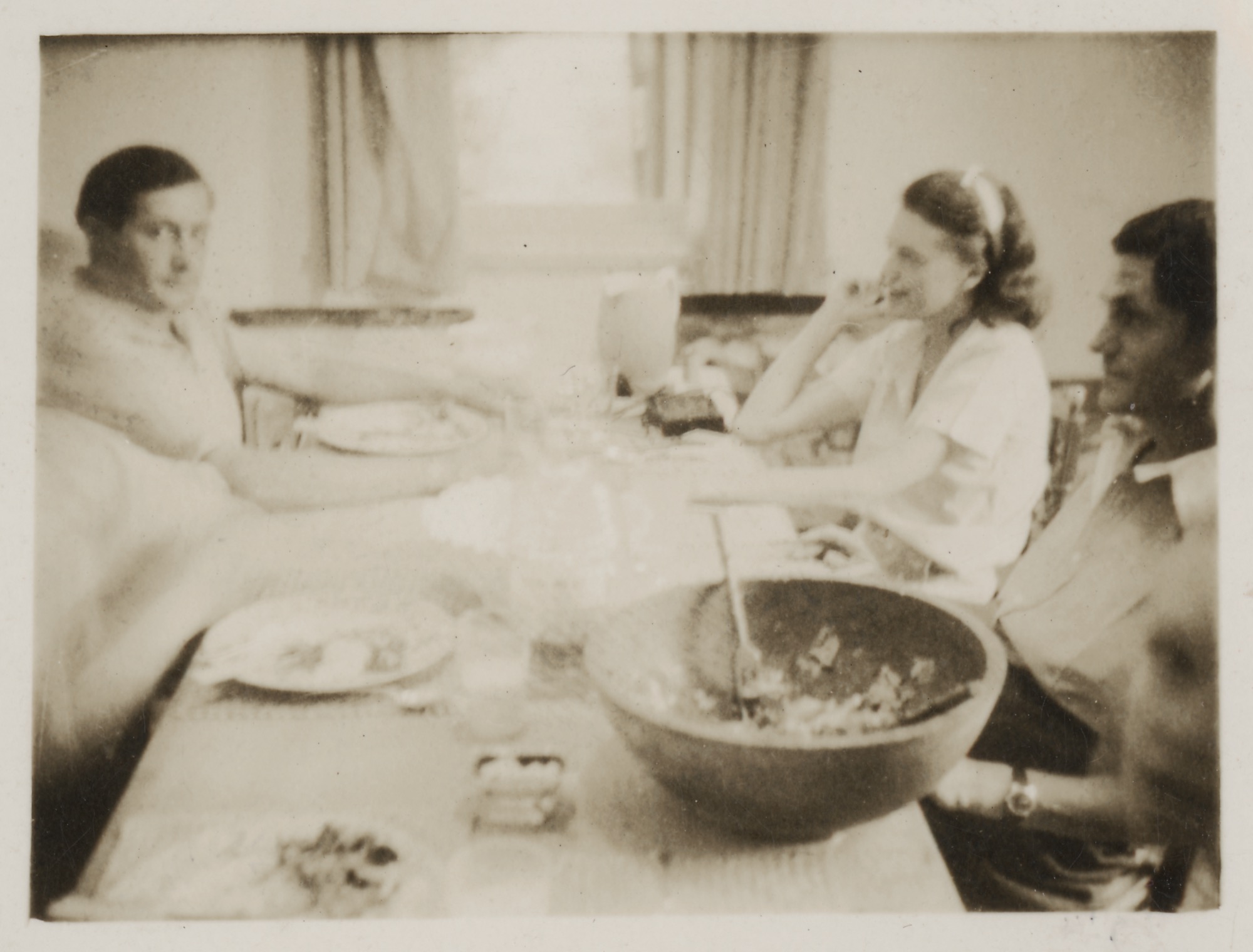
Relationships are key to understanding art colonies. At Lina Bryans’ Darebin Bridge House, in Melbourne’s inner north-east, Bryans cultivated a cosmopolitan circle of fellow modernist painters and writers a generation older than the Heide circle yet no less remarkable. Her sheltering and patronage of the reclusive Ian Fairweather alone merits celebration as does her openness to artists and intellectuals from elsewhere with, as Gillian Forwood recounts, the likes of Ambrose Hallen, Nina Christesen, and Dolia and Rosa Ribush finding at Darebin a sympathetic environment in an otherwise insular society. So too at Sydney’s Merioola, châtelaine Chica Lowe’s broadmindedness when it came to not only immigrants but also artists of varying sexual proclivities helped create what Andrew Montana argues amounted to a queer artistic space. On the other side of the globe, in the immediate aftermath of the Second World War, scores of young Australian artists found a similarly sympathetic host in William Ohly—an English-born German-trained sculptor and art dealer—at the Abbey Art Centre on London’s northern fringe, where they worked alongside European refugee artists and struggling young Britons amid an eclectic mix of salvaged buildings left over from a former outdoor folk park. Sheridan Palmer’s essay in this issue explores the Abbey’s temporal anachronism and the transnational friendships established there, finding it unique among postwar art colonies.
Mapping the networks of artists populating these interwar and postwar colonies produces a series of overlapping circles and multi-directional flows. We know this intuitively. Think only of the Heidelberg group and the Heide circle—the latter group taking their name from the earlier, pointing to the attraction of place as much as awareness of artistic precursors—and the flow of artists in and out of the central orbit. When Herbert Read referred to the cluster of modernists in 1930s Hampstead as a “gentle nest of artists,” his metaphor evoked not only circularity but also homeliness and safety.10 Circles, however, not only embrace but also exclude. Invariably a person or persons at the centre—Gleizes, Jörgensen, the Reeds, Pugh, Bryans, Lowe or Ohly—has the power to invite and to excommunicate.
Amaara Raheem’s artist project for this issue, In-residence in the colonies (2024–25), takes up this proposition. As a 2024 State Library Victoria (SLV) Creative Fellow, she investigated the origins of the present-day artist residency in Melbourne’s nineteenth-century artist colonies and was struck by not only the problematic nature of colonial occupation but also the recurrent motif of the circle. Alert to “the tensions of artist colonies, between establishment and anti-establishment, processes of settling and unsettling,” Raheem explores the “entangled past, present and future relationships between creative practice, patronage, power, and escape.”11 In collaboration with fellow dancers Preethi Athreya and Christine Babinskas and architect and artist Ying-Lan Dann, Raheem plays the role of host by inviting Babinskas into the SLV to perform a site-responsive sequence based on circles and cycles that embodies the shared structural relationships of both artist colonies and more contemporary artist residencies.
By the late 1960s, with the coming postcolonial turn, the artist colony became an increasingly anachronistic concept. Tongue only partly in cheek, Terry Smith dubs the ranks of ambitious young Australians attracted to New York in the 1960s and early 1970s—including members of the Art & Language group of which he was a member— “colonies of colonials” carving space for themselves in the international art-world’s postwar centre. Smith concludes that while their presence defied the usual understanding of an art colony, the experience for most was nonetheless transformational. Conversely, Rachel Weinberg examines the work of three artists—Mike Brown, Guy Stuart and Trevor Vickers—from the same period in an inner-city Melbourne sharehouse, considering the significance of locality to their work even as they connected with international debates. Despite differences in scale and location—from a few circumscribed blocks of SoHo lofts to a Carlton sharehouse—both instances reflect the organic word-of-mouth nature of the spontaneous colony that would later be codified, institutionalised and often gentrified in the form of artist residencies.12
Our final and most recent example of an art colony in Australia is also the most provocative. Darren Jorgensen considers a group of Yulparija artists living on Karajarri Country at Bidyadanga, on the north-west coast of Australia, as artist colonists. In the 1960s and 1970s a combination of factors, including depopulation and drought, caused the Yulparija to move from their desert country to the coast and settle at La Grange Mission, which in 1985 was renamed Bidyadanga. In the early 2000s Yulparija elders began painting stories of their desert country using ocean colours in response to and in acknowledgement of living on Karajarri Country. Jorgensen argues this sort of “diplomacy, conflict and negotiation” is typical of many other Aboriginal groups living on Country other than their own, concluding that the art of remote Australia is “a history of displacement and alienation from Country as much as belonging to it.” Jorgensen’s provocation will no doubt divide critics, though Rex Butler and A.D.S. Donaldson’s recent claim that Indigenous art centres, such as Papunya Tula, are effectively artist colonies in the degree of agency they afford artists might be seen as buttressing Jorgensen’s—albeit through a different set of arguments.13 The afterlife of the artist colony may therefore not be constrained to the present-day artist residency, but instead points to new decolonial studies of art communities in migration.
Acknowledgements
With grateful thanks to the Index Journal editorial board, particularly managing editor Giles Fielke for his encouragement, patience and copyediting prowess. Thanks also to the anonymous peer reviewers and the authors of these ten papers, without whom this issue would not be possible, and to Amaara Raheem and her collaborators for the artist’s project. This special issue arose from the conference, ‘Artists’ colonies in the world / The world in artists’ colonies’, at the University of Melbourne, 28–30 November 2022, funded through an Australian Research Council 2020–2023 Discovery Project, The Abbey Art Centre: reassessing postwar Australian art, 1946–1956, led by Ian McLean from the University of Melbourne. Both the conference and much of the ARC project and this special issue were carried out on the unceded sovereign lands of the Wurundjeri Woi-wurrung people of the Kulin Nation. Always was, always will be Aboriginal land.
-
On the ongoing structure of settler colonialism, see Patrick Wolfe’s now-classic formulation regarding the return of “the native repressed”. Patrick Wolfe, “Settler colonialism and the elimination of the native,” Journal of Genocide Research 8, no. 4 (2006), 390. https://doi.org/10.1080/14623520601056240 ↩
-
For further details, including a link to the program and abstracts, see “Artists’ colonies in the world / The world in artists’ colonies,” The University of Melbourne, 28–30 November 2022, https://arts.unimelb.edu.au/e/artists-colonies-in-the-world The conference in turn stemmed from an Australian Research Council funded 2020–2023 Discovery Project, The Abbey Art Centre: reassessing postwar Australian art, 1946–1956, led by Ian McLean, with Rex Butler, A.D.S. Donaldson and Simon Pierse as partner investigators and Sheridan Palmer and Jane Eckett as research associates. ↩
-
For further discussion, see the special issue of ARTMargins that eventuated from the conference: “Decolonising art colonies,” including my editorial, “Collectivity, communities, connectedness: decolonizing art colonies,” ARTMargins 14, no. 13 (2025): 3–13. https://doi.org/10.1162/ARTM.e.2 ↩
-
Sidogi subsequently elaborated on his round-table comments in Pfunzo Sidogi, “Black artists’ colonies in South Africa pre-1994,” ARTMargins 14, no. 13 (2025): 51–73. https://doi.org/10.1162/ARTM.a.5 ↩
-
For a survey of expatriate Australians in overseas art colonies, see Rex Butler and A.D.S. Donaldson, “Australia in the world’s art colonies / the world in Australia’s art colonies,” Index Journal, no. 5 (2022): https://www.index-journal.org/issues/secession/australia-in-the-world-s-art-colonies; and most recently, Rex Butler and A.D.S. Donaldson, “Not wholly fruitless: Australian artists in the world’s art colonies,” in The Abbey Art Centre in postwar London 1946–1956, edited by Jane Eckett, Ian McLean and Sheridan Palmer (Routledge, 2026), 85; 87; 89; 96–7.https://www.taylorfrancis.com/chapters/edit/10.4324/9781003566342-9/wholly-fruitless-rex-butler-donaldson ↩
-
This is Speck’s paraphrasing of Piotr Piotrowski, “Towards horizontal art history” in Crossing cultures: conflict, migration and convergence, ed. Jaynie Anderson (Miegunyah Press, 2009), 177. Butler and Donaldson, 2022, https://www.index-journal.org/issues/secession/australia-in-the-world-s-art-colonies; and Butler and Donaldson, 2026, 87–88. ↩
-
To cite just one among the ever growing literature on the Reeds and the Heide circle, see Lesley Harding and Kendrah Morgan, Sunday’s Garden: Growing Heide (Miegunyah Press, 2012). ↩
-
Montsalvat has generated far less secondary literature than Heide, but for two contrasting studies see Sarah Randles, “Rebuilding the Middle Ages: medievalism in Australian architecture,” in Medievalism and the Gothic in Australian culture, ed. Stephanie Trigg (Melbourne University Press, 2006), 217–24; and Sigmund Jörgensen, Montsalvat: The intimate story of Australia’s most exciting artist colony (Allen & Unwin, 2014), particularly 51–58; 80–82; 92–94. ↩
-
See Jörgensen, Montsalvat, 101–5; and David Hurlston and Alisa Bunbury, “Outer circle: the Boyds and the Murrumbeena artists” (NGV, 13 October 2014), https://www.ngv.vic.gov.au/essay/outer-circle-the-boyds-and-the-murrumbeena-artists/ ↩
-
Herbert Read, ‘A nest of gentle artists’, Apollo 77, no. 7 (September 1962): 536–40. ↩
-
Amaara Raheem, In-residence in the colonies (2024–25), video, 8 mins. 58 seconds. ↩
-
Institutionalisation also happens at the sites of these more bohemian colonies, as witnessed by the gentrification of SoHo, Carlton’s Drummond Street, and of Sydney’s Potts Point where the Yellow House at 57–59 Macleay Street transformed from a gallery in the 1950s to a brief-lived collective founded by Martin Sharp in 1970. ↩
-
Rex Butler and A.D.S. Donaldson, “Residencies unreflected in Papunya,” ARTMargins 14, no. 3 (2025): 113–23, https://doi.org/10.1162/ARTM.a.7 ↩
Jane Eckett is a lecturer in art history and art curatorship at the University of Melbourne.
Bibliography
- “Artists’ Colonies in the World / The World in Artists’ Colonies.” The University of Melbourne, 28–30 November 2022, https://arts.unimelb.edu.au/e/artists-colonies-in-the-world
- Butler, Rex, and A.D.S. Donaldson. “Australia in the World’s Art Colonies / The World in Australia’s Art Colonies.” Index Journal, no. 5 (2022): https://www.index-journal.org/issues/secession/australia-in-the-world-s-art-colonies
- Butler, Rex, and A.D.S. Donaldson. “Residencies Unreflected in Papunya.” ARTMargins 14, no. 3 (2025): 113–23, https://doi.org/10.1162/ARTM.a.7
- Butler, Rex, and A.D.S. Donaldson. “Not Wholly Fruitless: Australian Artists in the World’s Art Colonies.” In The Abbey Art Centre in Postwar London 1946–1956, edited by Jane Eckett, Ian McLean and Sheridan Palmer. Routledge, 2026. https://www.taylorfrancis.com/chapters/edit/10.4324/9781003566342-9/wholly-fruitless-rex-butler-donaldson
- Eckett, Jane. “Collectivity, Communities, Connectedness: Decolonizing Art Colonies.” ARTMargins 14, no. 13 (2025): 3-13. https://doi.org/10.1162/ARTM.e.2
- Harding, Lesley, and Kendrah Morgan. Sunday’s Garden: Growing Heide. Miegunyah Press, 2012.
- Hurlston, David, and Alisa Bunbury. “Outer Circle: The Boyds and the Murrumbeena Artists.” National Gallery of Victoria, 13 October 2014. https://www.ngv.vic.gov.au/essay/outer-circle-the-boyds-and-the-murrumbeena-artists/
- Jörgensen, Sigmund. Montsalvat: The Intimate Story of Australia’s Most Exciting Artist Colony. Allen & Unwin, 2014.
- Piotrowski, Piotr. “Towards Horizontal Art History.” In Crossing Cultures: Conflict, Migration and Convergence. Edited by Jaynie Anderson. Miegunyah Press, 2009.
- Randles, Sarah. “Rebuilding the Middle Ages: Medievalism in Australian Architecture.” In Medievalism and the Gothic in Australian Culture. Edited by Stephanie Trigg. Melbourne University Press, 2006.
- Read, Herbert. “A Nest of Gentle Artists.” Apollo 77, no. 7 (September 1962): 536-40.
- Sidogi, Pfunzo. “Black Artists’ Colonies in South Africa Pre-1994.” ARTMargins 14, no. 13 (2025): 51-73. https://doi.org/10.1162/ARTM.a.5
- Wolfe, Patrick. “Settler Colonialism and the Elimination of the Native.” Journal of Genocide Research 8, no. 4 (2006): 387-409. https://doi.org/10.1080/14623520601056240